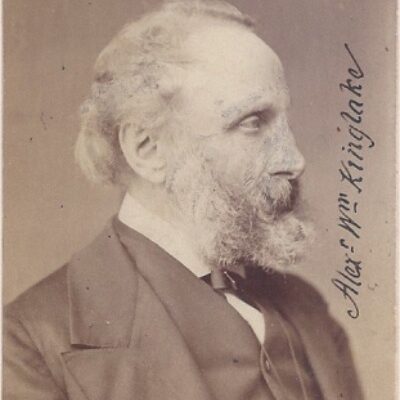
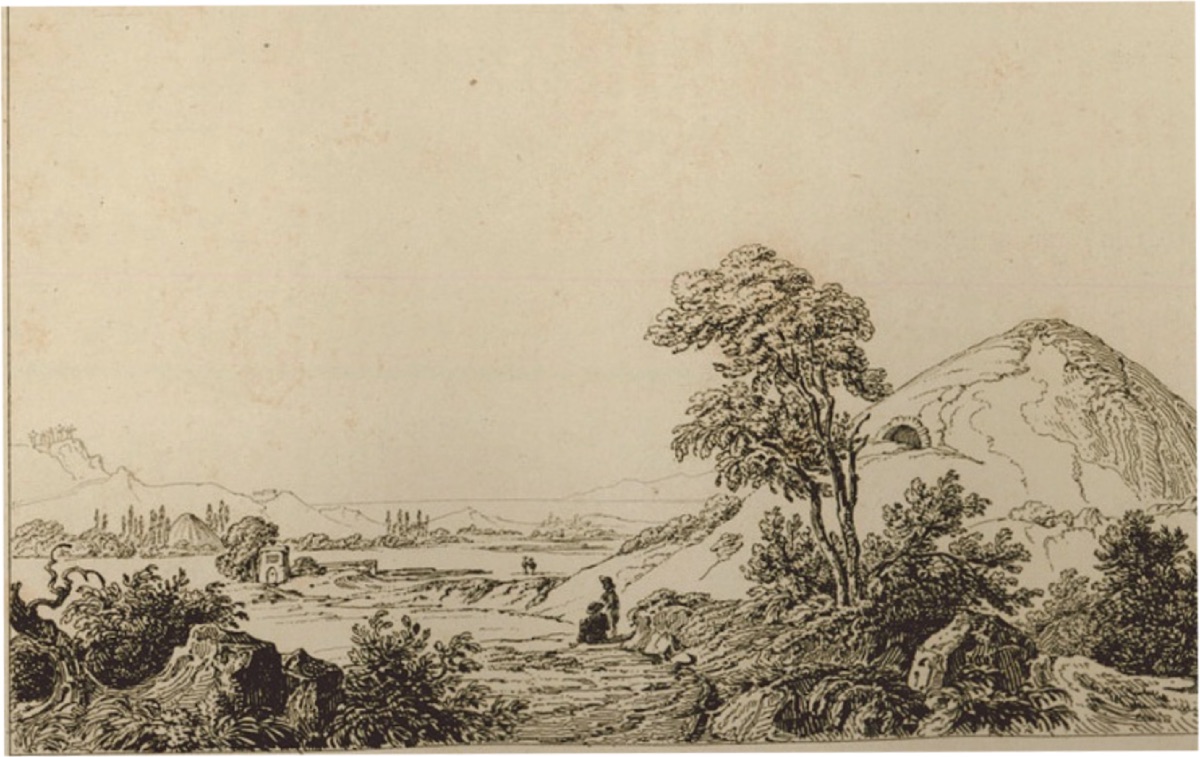
The Dardanelles from the Tumulus of Ajax (1835, François Charles Pouqueville) A. W. Kinglake (1809-1891), who was educated at some of England's most prestigious schools (Cambridge/Trinity College), continued his life as a travel writer and historian. Alexander William Kinglake, an orientalist traveler who visited Ottoman lands during a time when its territorial integrity was beginning to weaken, gathered information and held important official positions. In his travel book Eothen, written in 1844, he produced exaggerated and crude orientalist texts about places considered the East of the world, especially the Turks. In his book, Kinglake not only provided information about the places he visited but also offered interpretations on "reading" those places. During his travels in Ottoman lands between 1834-35, he also visited the Çanakkale Region:
"Methley quickly recovered, and we decided to pass through Troy. Our companion was a perfect Greek. His unique memory and classical knowledge were arranged in a Gothic style, worthy of a rich folk song rather than Greek poetry, giving them an original and barbaric air...
I too loved Homer, but this love was not as deep as that of a scholar. My mother, the most humble and devout of women, was too proud to teach her firstborn son Watts' hymns and daily prayers. From a young age, she taught me to love and wander with Old Homer and his songs...
What directed me to the plains of Troy with such great longing was not the memory of what I learned at school and university, but the things I read with great seriousness and pleasure as a child.
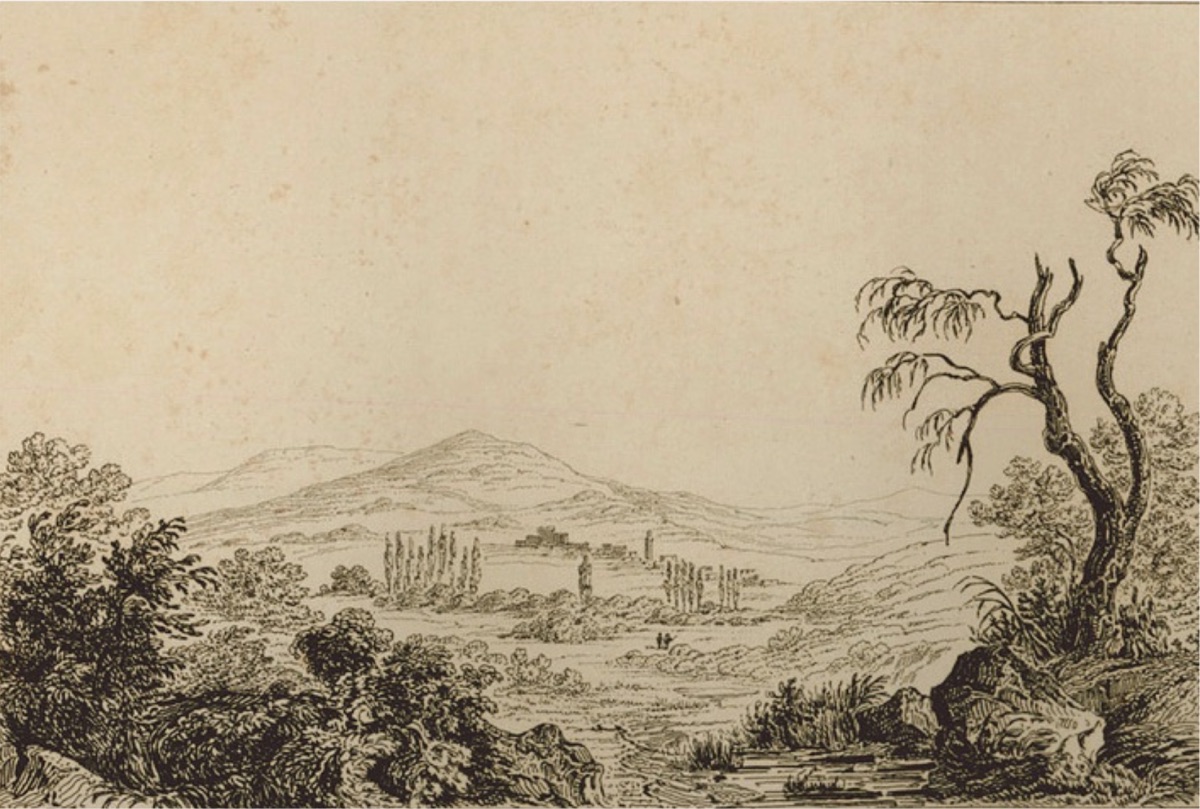
Separating from our men and horses, Methley and I began to walk aimlessly along a stream that flowed quietly through a flat plain, lined with willow trees. There was no movement in the air above. The voices of those working in the fields were not heard, there was no sign of life around. The world seemed to have slept under the leaden, gloomy air of a Sunday for three thousand years, stagnant and dead... Pınarbaşı Village and Ballıdağ (1835, François Charles Pouqueville)
We mounted our horses again and proceeded south, following the coast at a certain distance towards the plain between Troy and the place where the Greeks camped.
Was I dreaming, or had my mind returned from the Dardan plains to lovely England, or was it thinking of Ida? Or was the land preventing me from seeing the sea? I do not know now, nor do I dwell on it, but slowly, as if the rise and fall of a wave, the same sea that the Greeks saw was now before my eyes and flowing into my mind. Imagine! During the time up to the ninth year of the siege, how those immortal shores, that unchanging horizon, the visions of those rocky islands were etched into the memory of the Greek warriors. Imagine!"