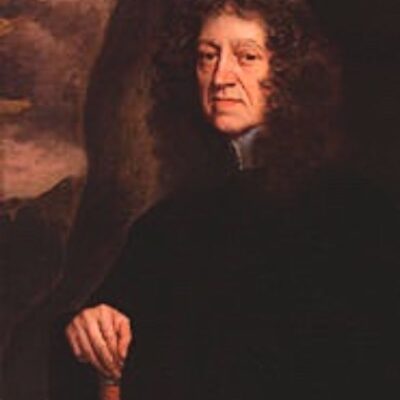
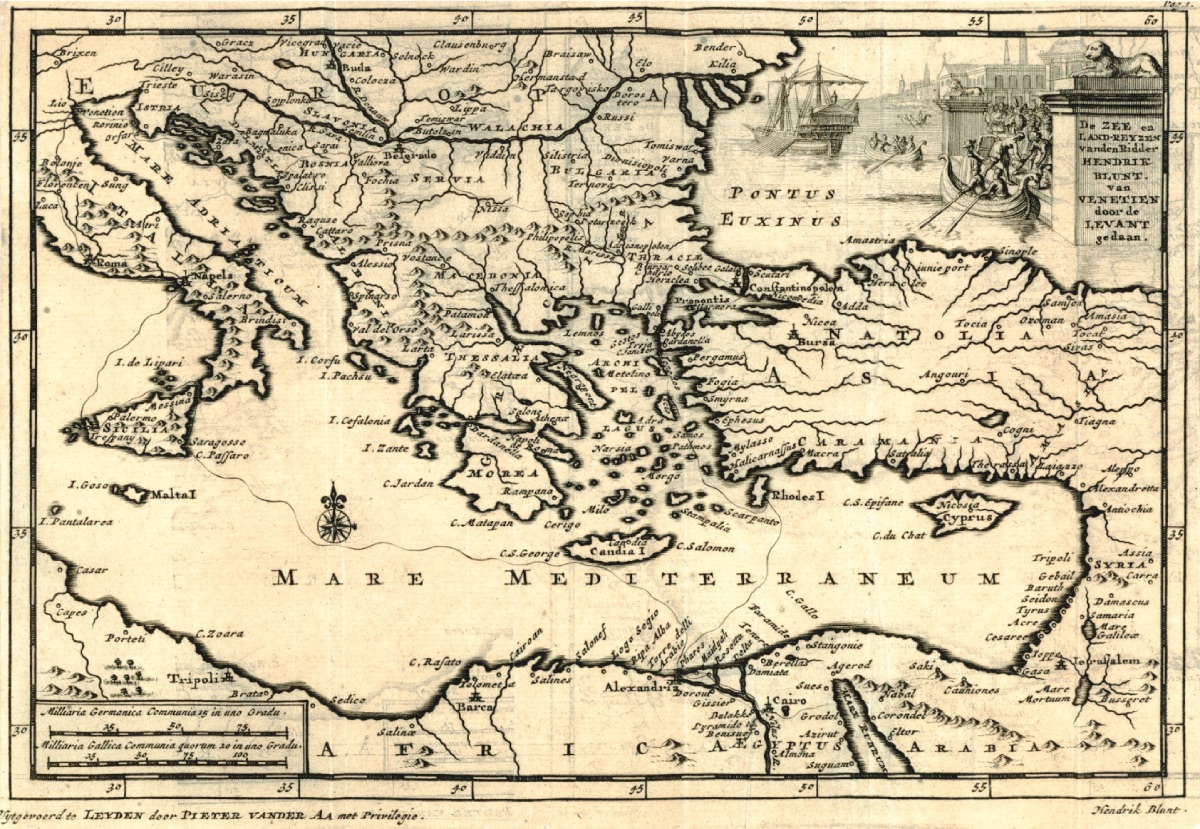
Anatolia and the Dardanelles (1634, Henry Blount) Henry Blount, who came from a noble English family, undertook extensive travels in Europe and the Levant region. He published his impressions of these travels in London in 1634. His thoughts on the Turks can be summarized in his own words as follows: "If there is ever a race that could rule the entire world, it is the Turks.""...they have a not very pleasant drink which they call coffee.""Even if I had a hundred lives, I could dare to trust the word of a Turk, especially if he is a pure Turk.""The Turkish nation's preservation of their old clothing habits was an honorable act. Because just as the French court set an example for this part of the world in terms of fashion, the Turks set an example in the Eastern Mediterranean.""The Turks are irreversibly determined to make a revolution in an 'all or nothing' manner. I attribute the greatness of their empire to the greatness of their spirit." In his impressions of the Çanakkale region, we can see the ancient knowledge about Troy that was prevalent among intellectuals in Europe at that time:
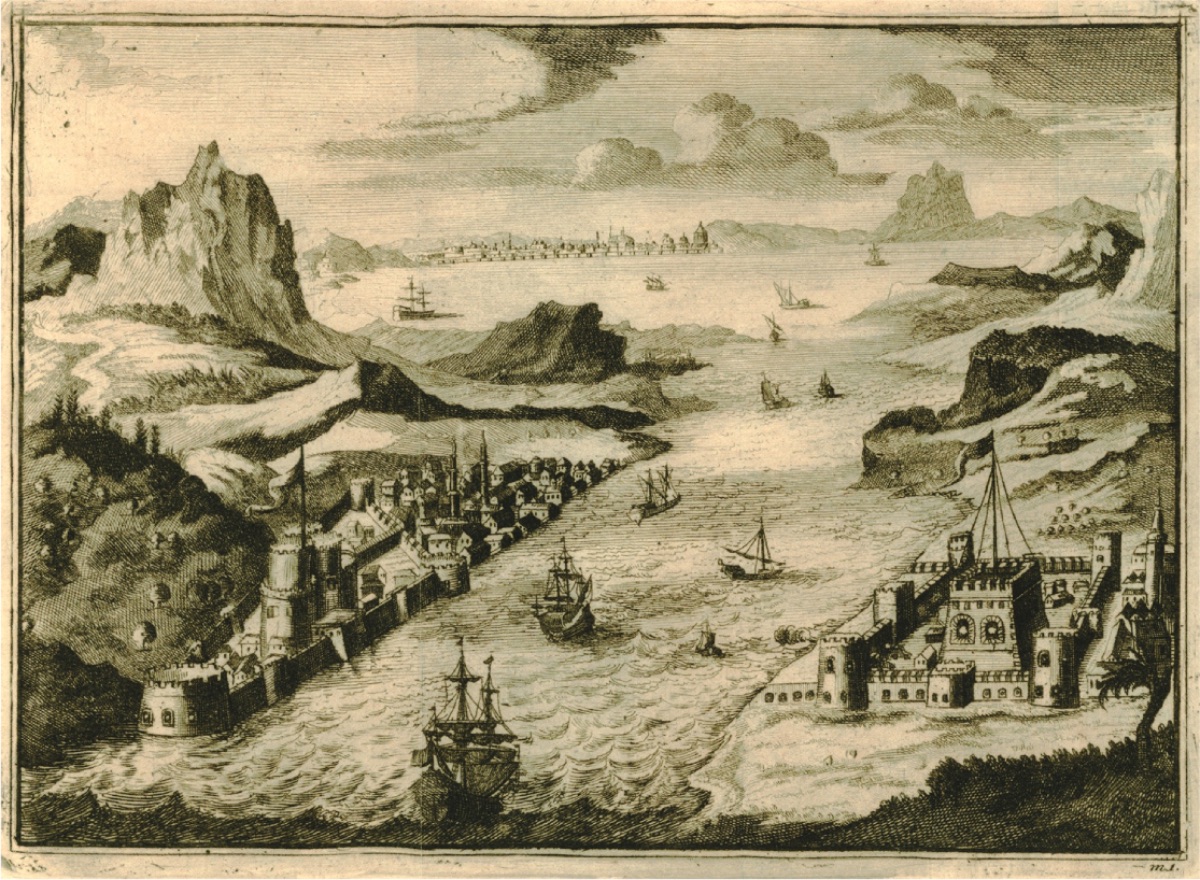
"I had the opportunity to kiss the hand of His Majesty's Ambassador, the Honorable Sir Peter Weych, and join the Black Sea fleet to go to Egypt. He was setting out for Alexandria three days later. Here, I met a French gentleman and De Flamn. We boarded the Admiral's Galleon and arranged the artillery room reserved for the captains. The French and Flemish were converts and spoke good Italian. Immediately, all 86 ships set sail towards the Marmara, passing through the Dardanelles and reaching Gallipoli in two days. The French, who left monuments in many parts of the Eastern Mediterranean with their ambitions, gave this island its name (Gallipoli). We anchored at night and stayed here, waiting for some orders to come after us, or rather, according to my estimates, news from the Rhodian ships. The next day, we met them a little below the fortress. They were to be our convoy against pirates and Christians. About thirty miles below Gallipoli, there is the straightest part of the Dardanelles, half a mile wide. It was once famous for Xerxes' bridge but was much more magnificent during the time of Hero and Leander's love. These fortresses, called Dardanelles (Çanakkale), are responsible for regulating the passage and ensuring the security of Istanbul on that side.
On the European side, Akbaş (Sestos) consisted of two interlocking towers. Due to the hill they stood on, the inner tower was taller. Each tower was semicircular, and the outer wall was triangular. The other leg on the Asian side was much more solid as it was at marsh level. It is square with four round towers. In the middle, there is a square tower that dominates all of them. It was formerly called Abydos (Aydos at Nara Burnu). But the buildings generally did not remain the same; they were often rebuilt in the same place.
(...)
The Dardanelles and Fortresses (1634, Henry Blount) After sailing about 40 miles on the Asian side on this plain, we reached Yeniçeri Burnu (old Promonatorium Sigaum). The Trojan horse was once here, but apart from a forty to fifty-step wall by the sea, there are no remnants; thus Vergil says the city was built by Neptune. In other words, that famous city now had no existence outside of immortalized poetry. Since their works suited the imagination of people, they transcended the reality of their subjects. Besides the grandeur of such a ruin, I evaluated the judgments of ancient times in this location and found that it was not much more extraordinary in terms of entertainment, goods, and power. The cape formed an angle surrounded by the sea on two sides, turning from west to north on the compass, from southwest to west. On the other side, there was a sandy, barren plain now called Troade. This city, 15-20 miles from the sea, was surrounded by a mountain range, the most notable of which was the mountain the Turks now call Ida. But I understood that this was the Ida where Prince Paris, distancing himself from all the state's skilled affairs and the court's preferences, led an effeminate and luxurious life and, according to the story, preferred Venus over Minerva and Juno, giving her the golden apple of his youth, and in return, Venus favored him in the abduction of Helen. However, since neither Minerva nor Juno assisted in this event, it was understood that what Paris did was both foolish and dishonorable. About two leagues to the west, there is the small Tenedos (Bozcaada), known for the hiding of the Greek fleet during the capture of Troy. Thus, we descended among the archipelagos, those islands echoing ancient tales.
"Nullum sine nomine saxum (there is not a single stone without a story to tell)."