
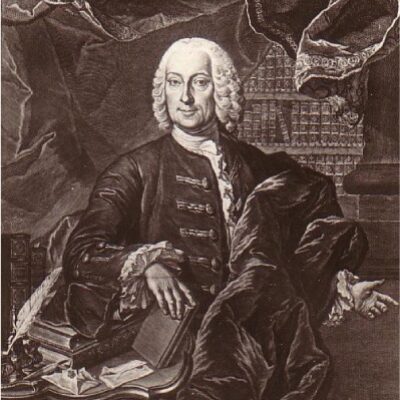
"Since April 29, I have been working here with my friends, Mr. Schmidt, the director of the observatory in Athens, and Ziller, the architect of the Academy building in Athens. We initially continued the work with 5, then 22 workers, and on the next day, our last day, the 20th day, I will employ 36 workers.
Unfortunately, our very esteemed ambassador in Istanbul, Mr. Baron von Prokesch, could not join this planned trip. But the embassy advisor, his son-in-law Baron Reyer, and the Istanbul Embassy attaché Mr. von Strauss visited us and stayed for six days. Both Baron Prokesch and Baron Reyer contributed greatly to the excavations, allowing us to excavate larger areas than I initially planned.
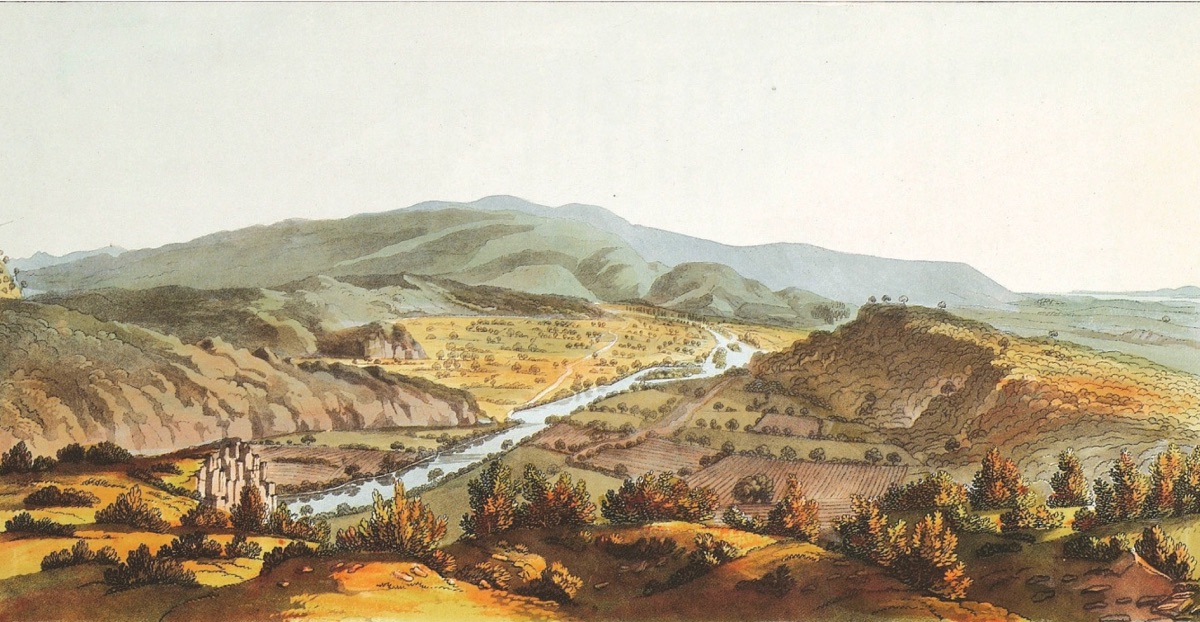
We are staying at the house of Molla Mehmet, the richest man in Pınarbaşı, but despite this, there is neither whitewash nor glass windows in the rooms. However, light seeps through the gaps in the ceiling boards, and at the same time, the wind blows the carpets we brought with us into the air. There is no table or chair. Bread and wine, even barley for the horses, have to be brought from Yeniköy, which is two hours away. Here, only meat, eggs, and milk (at double the price) and the unnamed but very tasty fish caught in the Pınarbaşı water, which I consider to be Simoeis, are available. Due to the lack of regular supply, life resembles that of hunter-gatherer communities fluctuating between abundance and scarcity. The weather is cool, sometimes even cold, and we have experienced the first rainy days. In the early morning, the surroundings are too rocky even for ox carts, we ascend to the upper castle and return to the village after sunset.
Join us on this journey.
After a 20-minute ascent from the elevation starting southeast of the aforementioned village to the summit, one first reaches the burial mound (tumulus) attributed to Hector. This mound, visible from the village, is a heap made of small pieces of limestone, and a pit still visible at the find site draws attention.
180 steps to the south, there is a second, larger tumulus, with its entrance covered by a layer of humus. This pit, which continues to the bedrock inside the tumulus, was opened a few years ago by Mr. Frank Calvert. Here, only a few pieces of pottery shards were the sole findings obtained.
220 steps later, the third tumulus in the same row, possibly not fully completed, follows. From this mound, 800 steps towards the eastern summit of the castle, there is a wider area, but very steep on both sides. We estimate the width of this area to be approximately 250 steps..."