
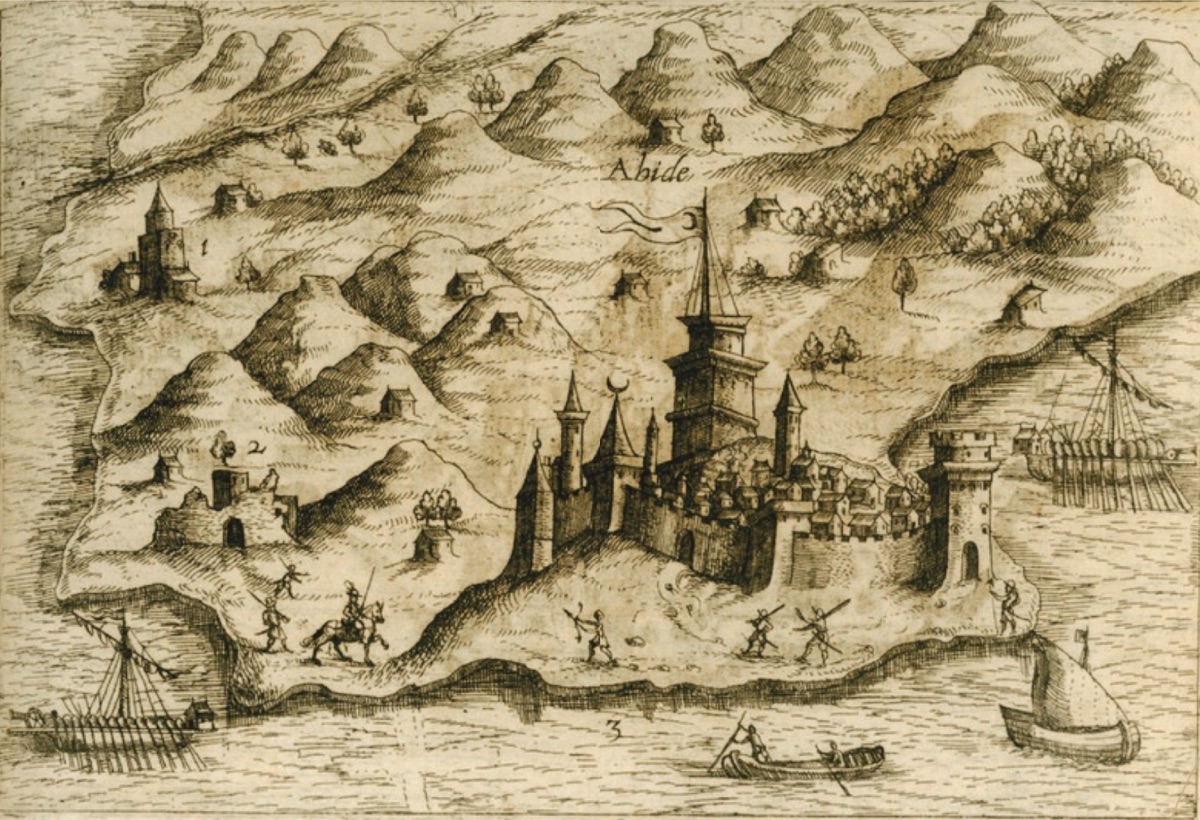
"A few miles below Gallipoly (Gelibolu) is the strait passage of the Hellespont (Çanakkale Boğazı); it is not more than half a mile wide. Although this place is generally known for Xerxes' bridge, the love story of Hero and Leander is much more magnificent. The castles here that control the strait are known as the Dardanelles and protect the strait from this side. The ancient Sestos on the European side consists of two intertwined towers, the inner one being taller; due to the sloping ground on which they are built, the outer walls resemble three semicircles with a triangular shape. The other castle on the Asian shore is more solid and built on a marshy area. It is quadrangular with a tower at each corner; in the middle is the command tower, which is higher than all the others. Although generally referred to as Abydos, it is not usually the place described with the ruins in the same location... After a while, we reached the cape of Yenişehir (Janizar), known as the Sigaeum plateau by ancient writers, where nothing remains but ruined and old walls, once the site of Troy."