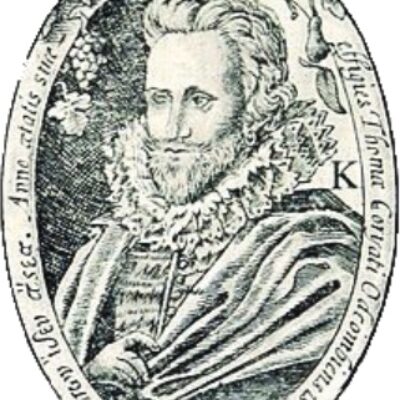
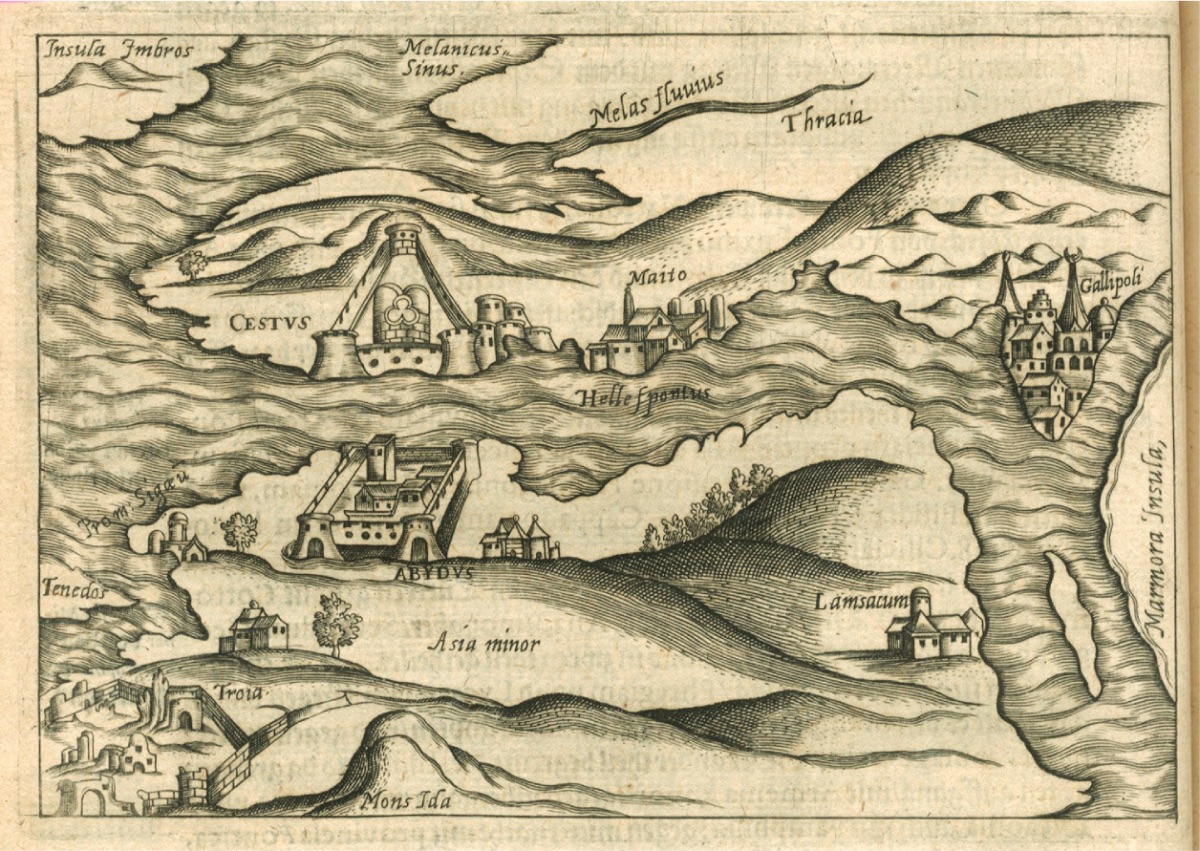
Castles and Troy (1612, Hans Jacop) The Englishman Thomas Coryat (Coryate/1577-1617), often described as the "first real tourist," was actually a traveler. Known for undertaking his journeys mostly on foot, Coryates became famous for the letters he sent from the places he visited. After receiving education at Winchester and Oxford Universities, he was employed by Prince Henry at the English Court. From 1607 onwards, he traveled across Europe on foot. He published his memoirs under the title "Coryates Crudites" and embarked on a journey to Asia in 1612. He traveled on foot through countries like Iran, India, and Mongolia, continuously sending letters describing his impressions from the places he visited. After a Mediterranean trip, he arrived in Istanbul in 1613. During this time, he visited the shores of the Dardanelles. He accepted the ruins of the city of Alexandria Troas, opposite Bozcaada, which was considered Troy at the time, as the remains of Troy/Ilium from Homer's epics and described them as such. The ruins of Neandria (Ezine-1) nearby were first described by Coryates. In later periods, Coryates walked from Istanbul to Jerusalem and continued his travels in India. He died of dysentery in Surat, India, in 1617:
"The most precious thing in my life, which I neither wanted nor hoped for until now, but rather expected, the most fortunate events of fate have happened to me. After many violent storms and struggles against the wind, I arrived at the most renowned place in the world (except for Jerusalem, blessed by God), the ancient city of Troy, the old ruined Ilium, which is the daughter or rather the queen of Asia, surpassing even our most splendid English settlements, along with my fellow countrymen. I think of those who will enjoy seeing these famous ruins, which have completed their fame by attracting thousands of my fellow countrymen along these shores, where distinguished events caused by the great god have taken place, as well as some of the most famous people in the world, like a magnetic stone. The greatest soldier who ever lived, Alexander the Great, built an altar here in honor of Achilles, whose lineage traces back to his mother Olpias, and made sacrifices to his spirit at his tomb, which can still be seen today, expressing his happiness for having a poet like Homer to recount his heroics. After him came the learned Emperor Hadrian; our emperor Septimius Severus visited after destroying Byzantium; his son and successor Astonius Bassianus Caracalla came here from time to time, visiting the ruins honored by the best and unparalleled poet of the time, who was highly respected (I can say this with confidence).
(To speak in the words of the prince of Latin poets) "Campos ubi Troya fuit" (where once was Troy, now turned to stone and earth)...
...
Just behind the middle entrance I mentioned earlier, as you go towards the inner part of the palace, there is another magnificent arch ahead; I think this was a decorated city entrance in ancient times. This arch, the largest among those on the right and left as you approach the palace, has another magnificent arch opposite it; I think it adorned the entrance going on the same side of the palace. After this, we saw another part of the palace...
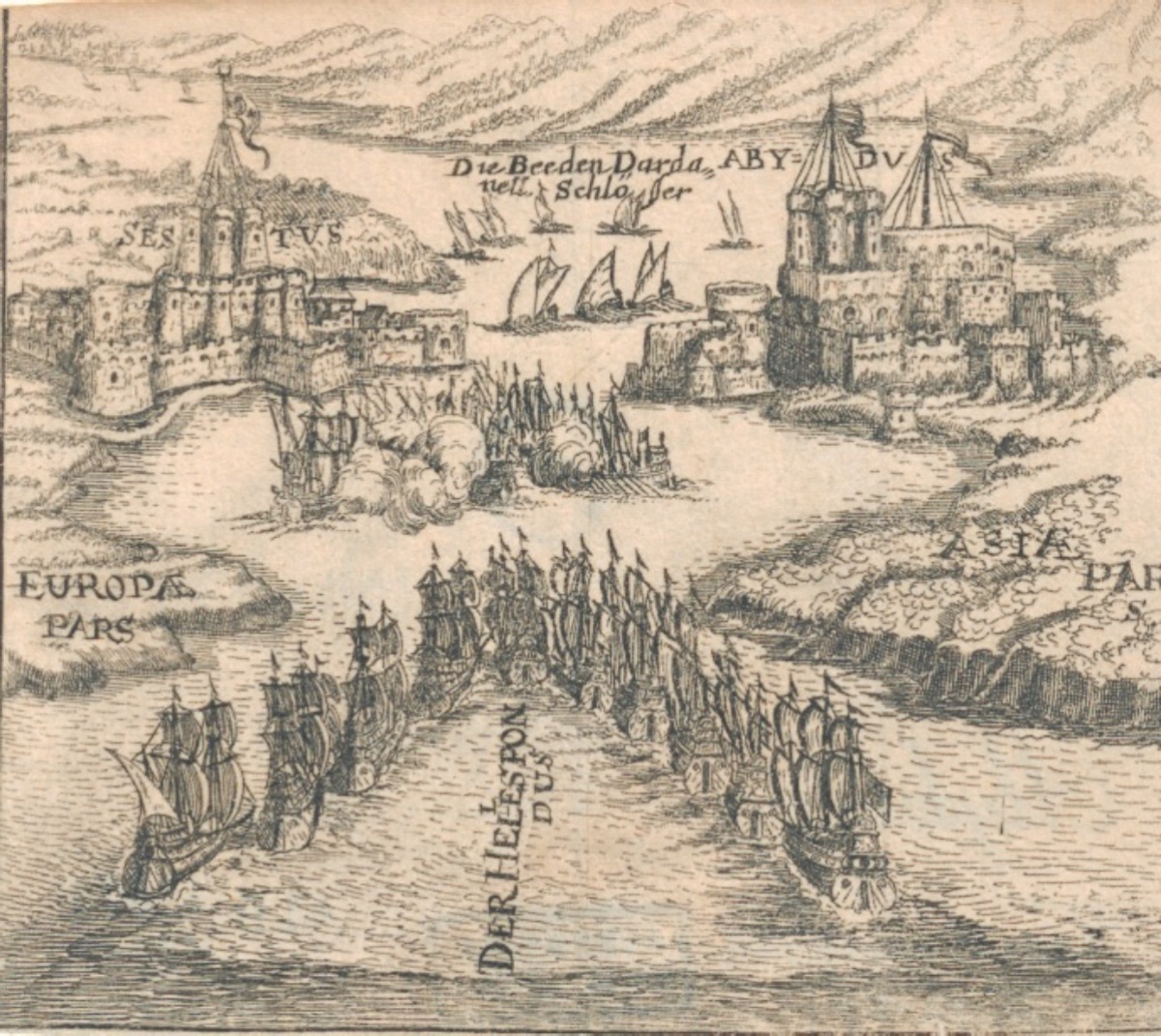
After touring the palace with a Turkish guide, we came across other ruin remains a few miles away, slightly above the surface, but if excavated, it is certain that large remains would emerge from beneath the ground. Inside the magnificent arch, there are very beautiful thick walls; the upper part of the arch is geometrically constructed, and I guess no iron or beams were used. The Turks told us these remains were once a magnificent palace structure. Other parts of the structure have been so dismantled and destroyed that only small remains are left. Stones, marble columns, and other pieces have been transported to other countries. The rich remains of Troy have been taken to many neighboring regions like Istanbul (Constantinople), Limni (Lemnos), Midilli (Lesbos), Anatolia (Natolia), and İzmir (Syo) for use in public and private buildings. Turks in Troy and other regions transport stones to other places by ships every day. Furthermore, according to what they told, this palace was for the residence and protection of Trojan queens. They showed the location of a large treasure found in these ruins a few years ago. The person searching for the treasure worked diligently with candles and torches and placed part of the treasure in the chests of the Great Turk living in Sultan Ahmet now. Warships in the Dardanelles (1700, Alberti Veus)
After seeing all this, as we headed to the seashore to return to our ship by boat, we thought that the three things we examined were related in value; the first is the fountains and springs. The strong arch serving water stood alone, but I hadn't seen a single drop of water on the arch; the spring had dried up, and there was only a similar well nearby. The second is the walls extending southward from the region, so thick that it will seem incredible to many readers. When I measured it exactly, it was geometrically thirty steps thick. The stones of the wall are somewhat rough and hard stones, but the inner parts of the same wall towards the interior of the region are built with better square stones, like the large wall I mentioned earlier. The third is the ruins of the quite long and once very beautiful fortress or defense walls built on the summit of the mountain, where only shepherds roam today."