
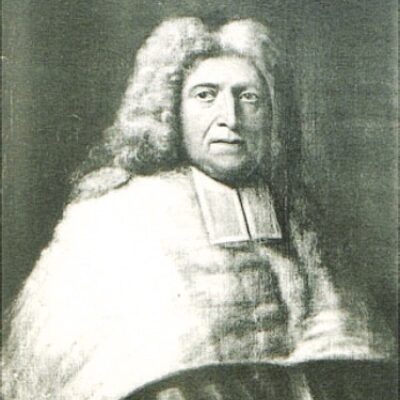
Thomas Dallam (1570-1614) is a renowned organ master from the settlement of Dallam in England. He undertook long journeys due to the organs he crafted. The English placed great importance on developing good political and commercial relations with the Ottomans; (constantly trying different ways to obtain new and broader capitulations. R.A) For this purpose, Queen Elizabeth I of England commissioned master Dallam to make a five-meter-tall organ as a gift for Sultan Murad III. Thomas Dallam set sail to present this gift from the queen to the Ottoman Sultan, but the journey, conducted under difficult conditions, took longer than planned. During the journey, Murad III passed away, and Mehmed III ascended to the throne. While passing through the Dardanelles during this journey, Dallam recorded his travel impressions. When master Dallam arrived in Istanbul, he spent a long time assembling the organ as its parts had deteriorated, but during this time, he had the opportunity to witness the "mysterious" side of the Ottoman Empire. Dallam skillfully completed his work and presented the organ to Ottoman Sultan Mehmed III before returning to his country. Afterward, master Dallam crafted many famous organs, such as the one in the Chapel of King's College, Cambridge, but the organ in the Ottoman Empire was dismantled and later burned by Mehmed III's son, Ahmed I, because it was considered a "heathen invention": 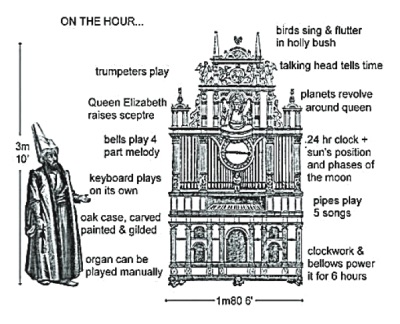
"On the nineteenth of July, we arrived at the island of Bozcaada (Tenedos); at the southern end of the elevation directly opposite here lie the ruins of the great city of Troy. The wind began to blow directly towards us, and at the same time, there were strong currents coming from the Dardanelles (Hellespont Strait). We proceeded to anchor at the shore of the southern entrance of Troy; most of the entrance is still standing, and some large pieces that could have been the walls of yore are visible.
On the twentieth day, we wanted to set sail again, but as the wind and current were against us, we had to anchor at the same place again.
On the twenty-first day, a young man named John Felton, born in Yarmouth, died.
On the same day, I and some from our group went ashore and saw some of the works like the walls and marble columns of Troy. We returned to the ship; some soldiers of the Great Turk (Sultan) came towards us, some rowing, some sailing. As our captain was about to anchor, they could not come aboard, and at midnight the wind began to blow again, and we were able to anchor again...
Two hours after the ships left, the wind began to blow, and we came to the right of Yenişehir (Jenisarie), which some call Janisaries Point. Here we went ashore with some merchants from our ship and encountered a small village inhabited by Greeks (Greeks). We bought some bread and chicken here.
Here we saw larger house and wall ruins than those in Troy. With a good hammer that my friend Harvie carried along with other items, I brought back to London a piece of white marble column that I broke with my own hands. This Yenişehir (Jenisarie) point is ten miles away from Bozcaada (Tenedos).
We returned to our ship and entered the Dardanelles (Hellespont Strait) on the same day and anchored near the castles called Sestos (Sestose) and Abydos (Abidose). Sestose is in Thrace and Abidose is in Asia Minor. These two castles strongly guard the Dardanelles (Hellespont Strait), which all ships going to Constantinople must pass through.
On the twenty-fourth of the month, the captain of the castles came to our ship with a gift. Meanwhile, many other Turkish captains and the consul of Gallipoli (Gallipelo) also came to our ship. The consul is reliable and very kind. During the time we waited for the wind here, we went ashore many times, I am skipping what we saw and experienced here. But when our ambassador in Constantinople heard that our ship had been waiting for the wind for a long time, he sent us a messenger boat with a letter and gifts. Mr. Thomas Glover, Mr. Baylye from Saulsburie, and a janissary came out of the boat. There is a distance of about one hundred and fifty miles from Constantinople (Istanbul) to here.
The next day, on the fifth of August, not only us but also our preacher Mr. Maye and other gentlemen left the ship to visit the ambassador with us, as we thought a sailor on the ship had the plague...
On the sixth day, we arrived at Gallipoli (Gallipilo) and visited the house of the Italian consul, who received us very kindly, but as we did not have time, our visit was very short, and we could not see the city."