
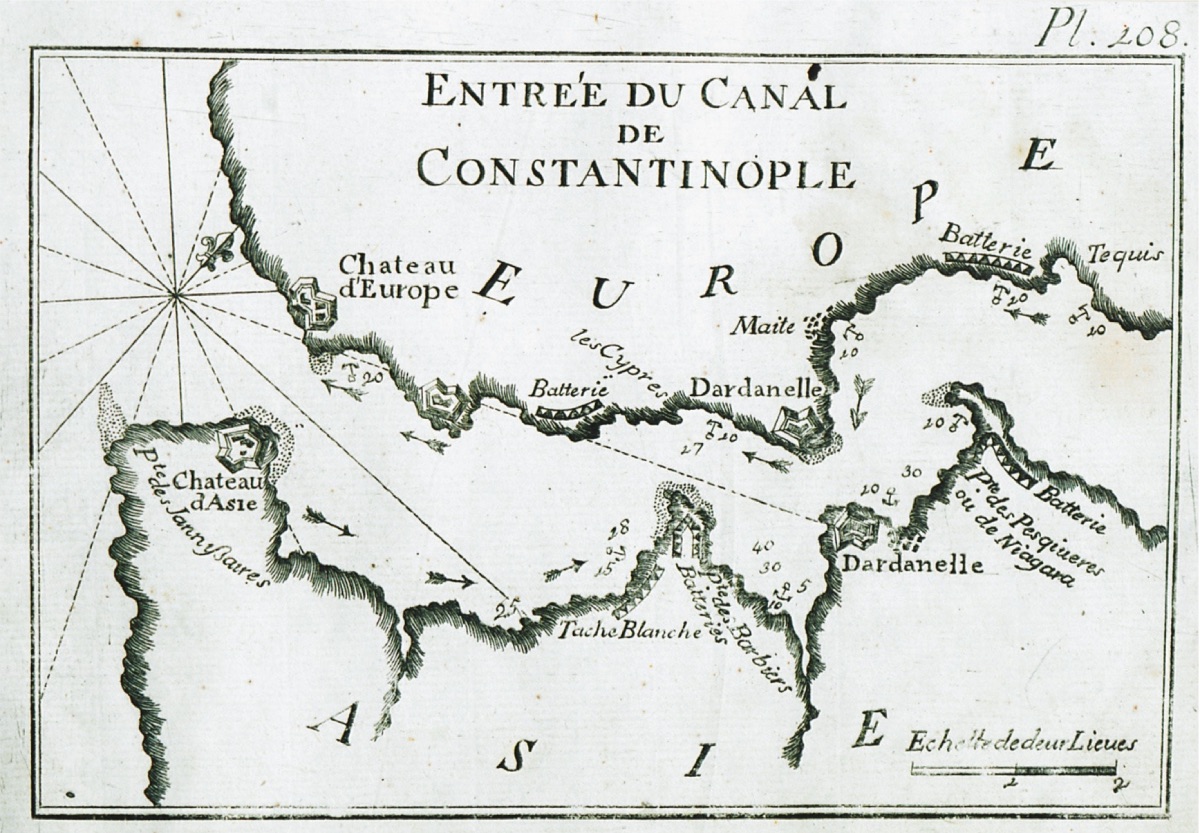
"The geography of the western part of the Ida region, surrounded by the slopes of the Aegean Sea and the Hellespont (Dardanelles), is very different from its mountainous eastern part. The natural beauties of the Troad are accessible by sea, but beyond all this, the praise given to some scenes in the Iliad has led to this region being visited much more than other parts of Anatolia by many travelers.
The most remarkable places in the Troad are Assos, Lektom, Hamaxitus, Larissa, Colonae, Alexandreia, Kebren, Neandria, Kenchreae, Scamandria, Sigeium, and New Ilium.
The two most important ones, where a large part of the population has been located since ancient times, are Alexandria, founded by the successor of Alexander, and New Ilium. These settlements continued to be the most important centers during the Roman Emperors' period...
New Ilium (Troy R.A.) is located 5 miles southeast of the lowest fort of Kumkale or the Dardanelles, on the plateau coming from the east towards Kum Köy and Kalafatlı village. The walls of the fort have been largely destroyed. There are very few preserved remains of some structures belonging to the city at the foot of the western slope of the hill. After the settlement was abandoned, it served as a kind of quarry for modern buildings. The villages, farms, but especially Turkish cemeteries are filled with inscribed or patterned stones brought from New Ilium.
Old Akça Köy, in direction and distance to New Ilium, as Strabon described as the village of the Ilians, is located 30 stadia east of New Ilium in the direction of Ida and Dardania. Paleo Kastro near the Turkish village of İt Gelmez (Erenköy R.A.) is situated on a height overlooking the strait. This is most likely the Aenteium located on the elevation by the sea and the settlement of Rhoteium where the tomb of Ajax can still be seen. The other settlement is Sigeium in Yenişehir. The other Paleo Kastro (Old Castle) is located at the small river mouth near the Pınarbaşı river. This is most likely the small village and the port of Agameia...
On the same height, as many believe, the city of Ilius and its successors have been located since very ancient times. Indeed, many truly intellectual travelers have reached a consensus that this place at Pınarbaşı is the Homeric Ilium in the Troad..."