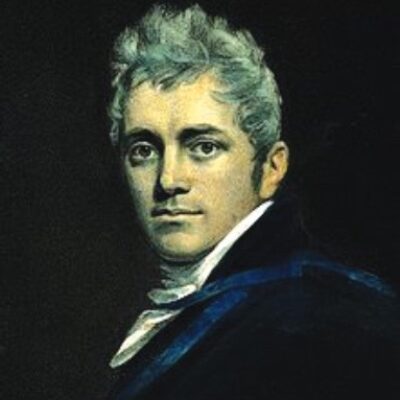
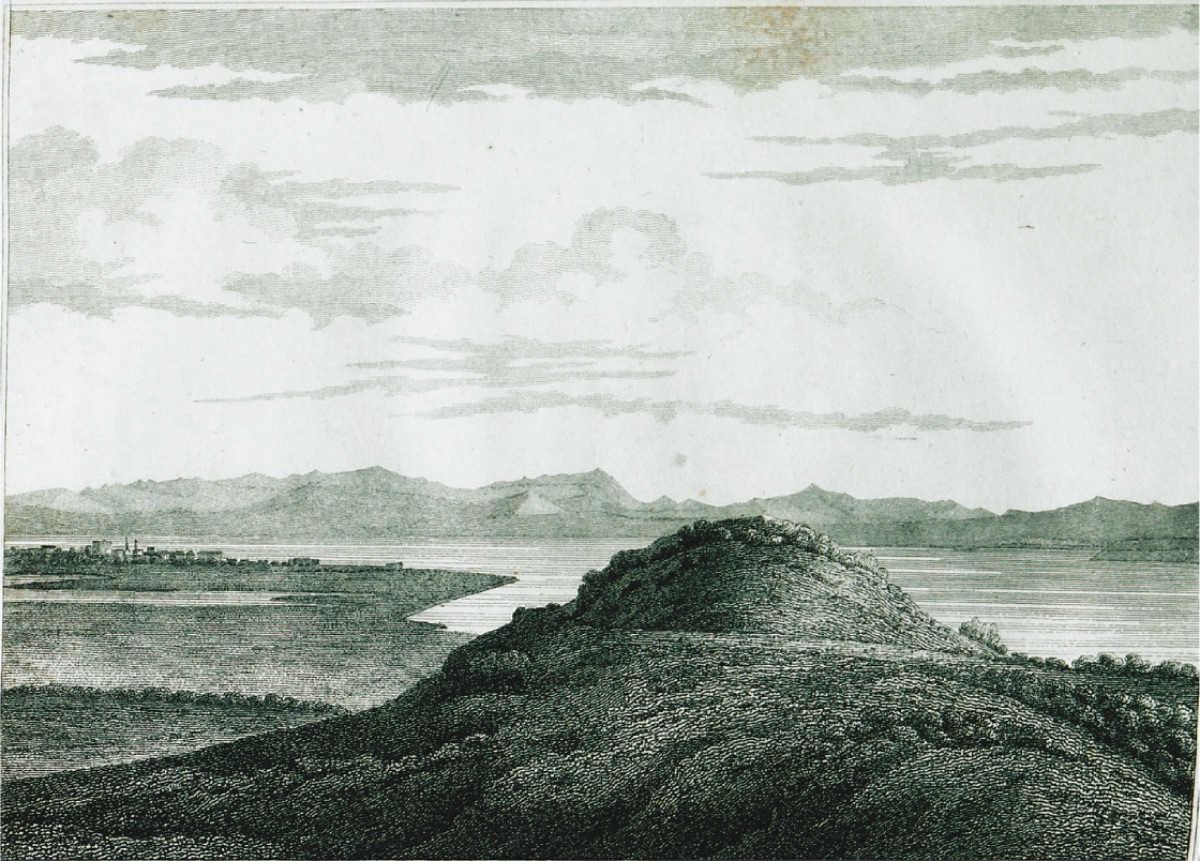
Old Kumkale and Entrance of the Strait from the Tumulus of Ajax (1801, Edward Daniel Clarke) Edward Daniel Clarke (1769-1822), educated in London as the son of a writer and grandson of an archaeologist. He specialized in mineralogy and later completed his doctorate at Cambridge University. In 1799, at the age of thirty, he traveled to many European countries with the aristocrat J. M. Cripps. He visited Scandinavian countries, Moscow, and the Ottoman Empire, particularly Istanbul and the Çanakkale Region, Cyprus, Jerusalem, Egypt, the Greek Islands, and mainland Greece. He returned to London in 1804 and later served as an Anglican priest. He published his travel notes in six volumes with eighty-five engravings between 1810 and 1823. In the first volume of his book, he details the geography of Jerusalem and the significance of Ottoman coins. In later sections, after detailing Istanbul, Clarke discusses his journey to the Dardanelles and the region. His research in the Çanakkale Region is described as the most detailed epigraphic and archaeological study conducted up to that time. The geographical features of the region, known as Troas in antiquity, are re-examined in detail in terms of Homeric philology and the localization of Troy by previous researchers. For the first time, Hisarlık Tepe near the village of Çıplak is considered archaeologically. It is now known that Alexandria Troas has no relation to Troy. Clarke, therefore, critically evaluates the publications of almost all travelers who came to the region before him:
"The entrance from the Sea of Marmara into the Dardanelles (Hellespont) channel is not as magnificent as the Thracian Bosphorus. Both shores are more monotonous and less exciting, and also not as ornate. The scenery is only beautiful where the strait narrows and the European and Asian fortresses are located. Until reaching these points, all that can be seen are a few houses and a windmill belonging to Lapseki (Lamsaque), all of which are remnants of ancient Lampsacus. Its wine is no longer of ancient quality.
We anchored about three miles above the fortresses, landed, and walked towards the town of Dardanelles. On our way, we saw numerous columns made of granite; some were placed vertically on the ground, set this way to moor ships, while others were scattered around in a neglected manner. Stopping at this small port before reaching the town is very convenient to see the narrow point of the strait believed to have been crossed by Xerxes, and it is quite striking here. Tournefort found the adventure of Leander impossible due to the great distance separating Abydos and Sestos. The worker of the Imperial consul of Çanakkale (Dardanelles) has swum across the wider part of the strait from the Asian side to the European fortress multiple times and performed the return swim after resting for only a few minutes. Ruins at Alexandria Troas
When we arrived, all the shops were closed. The Turkish fleet had passed through the day before, and the various barbarities committed by these men, who had come to join the navy from different parts of Anatolia, caused great fear among the townspeople. Very often, these men, who have never seen the sea, are sent directly to the deck. When the ship anchors, they can go ashore and then cause great disorder. The Captain Pasha himself told us that sometimes he hanged ten or a dozen of them in a day to force them into order; "but later," he continued, "how can I pardon so many people?"
The wine of Çanakkale (Dardanelles) is sent to Istanbul (Constantinople), Izmir (Smyrna), and Damascus (Allepo), and even to England. They last for many years, and if a good year is found, Tenedos wines are preferred. Both types are red wine. Dardanelles wines lose their color after twenty or thirty years, but the taste remains the same. They are largely made by Jews and given an Italian name (this language is spoken throughout the Levant); Vino della Legge; because according to a rule among Jews, it is forbidden to adulterate wine. If of good quality, a bottle costs eight para, about two pence.
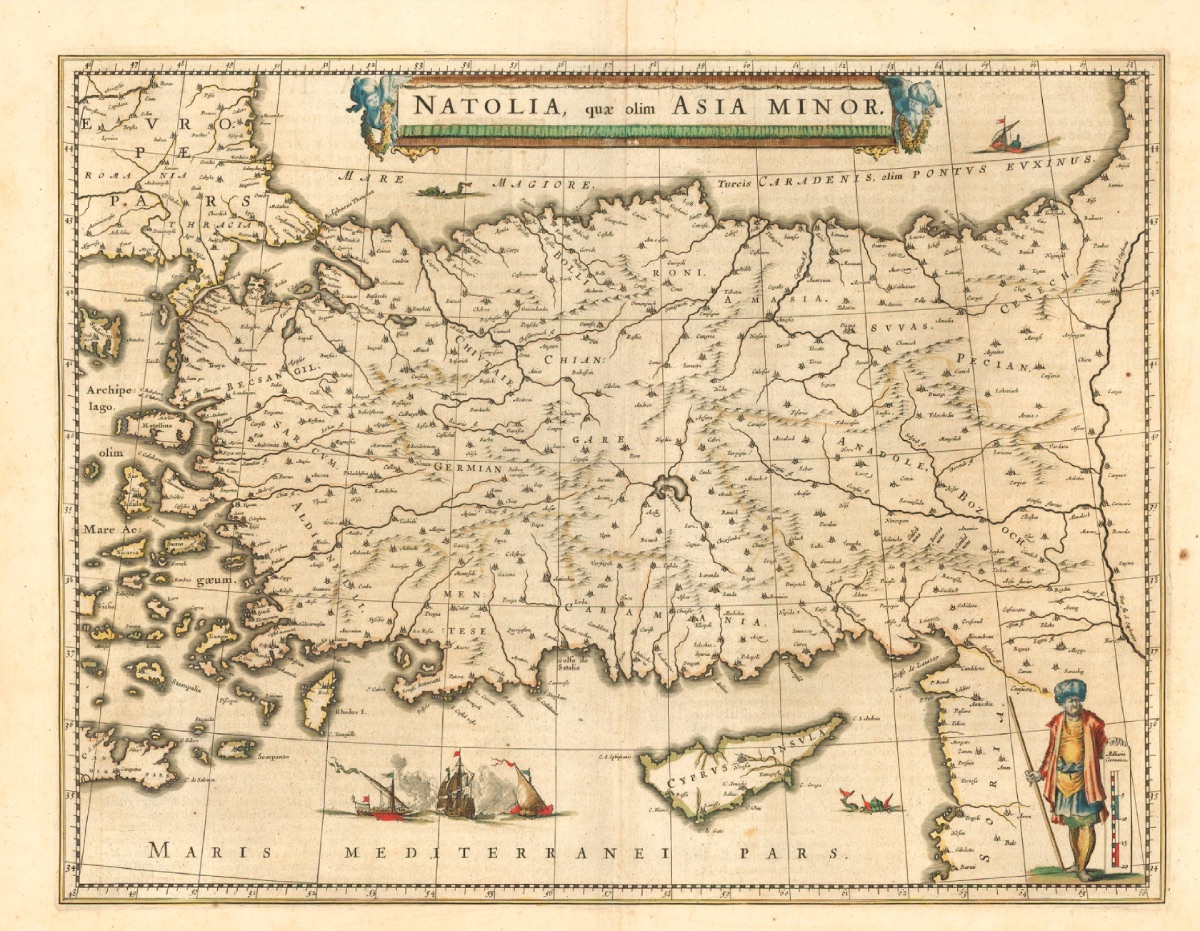
Map Showing the Regions of the Beyliks in Anatolia (1640, Willem Janszoon) On the European side of the strait, especially where Sestos is believed to be, three tumuli can be seen from D'Anville. According to a foolish tale among the Turks, these hills were formed from the chaff and barley grains that came out when a dervish winnowed his wheat. The largest is named Ses Tepe. Ses means echo in Turkish, but there is no echo there, on or near the burial mound; it is not true that the name Sestos etymologically comes from this, perhaps the answer can be found in the settlement. Next to this tomb is a place called Akbaş (Akbash), where ruins are said to be, and a dervish living here recently took medals and other ancient artifacts he found here to Çanakkale (Dardanelles). Three English miles away from Akbaş towards the Upper Sea of Marmara, on the same shore, are the ruins of a port; its name Gaziler İskelesi (Gaziler Eskielesy), meaning the shore or port of the conquerors, is quite remarkable; it can now be identified as the place where the Dardanelles Strait was crossed during the Persian invasion or by the Turks themselves, passing from Phrigia and Mysia, from Thrace, Macedonia, or Greece. Some people, in their own languages, have preserved many ancient descriptions, albeit not completely, in some river and place names...
The next morning, we bid farewell to the crew and went ashore again. On the shore, we met the envoys of the Pasha of Dardanelles (Governor of Çanakkale) who wanted to see us. When we entered his palace, the antechamber was filled with guards; we found him sitting on a magnificent divan in the sitting room. He seated us opposite him, and our interpreter, the Russian consul, knelt. Meanwhile, those around offered us coffee, food, and jasmine hookah. The Pasha wore a robe with a green pattern. He told us he would go to Old Stamboul (Old Istanbul/Alexandria Troas) and could take us on his boat and accompany us there. We asked for his pardon, fearing to disturb him: he added that he would go into the interior of Mount Ida and that we could visit him there. We declined this as well and later explained that our reason for declining was our desire to conduct research on land with his assistance. We then chatted a bit, he mentioned the name of an Englishman he had seen before and expressed his desire to acquire English weapons; he said he could give all the antiquities of Troas for them. After this, we rested a bit. The Pasha went up to the deck of his boat, and we followed him with our own boat, the cannons of the fortresses fired a salute. Kurşunlu Tepe Near Bayramiç Believed to be Ancient Gargaron (1801, Edward Daniel Clarke)
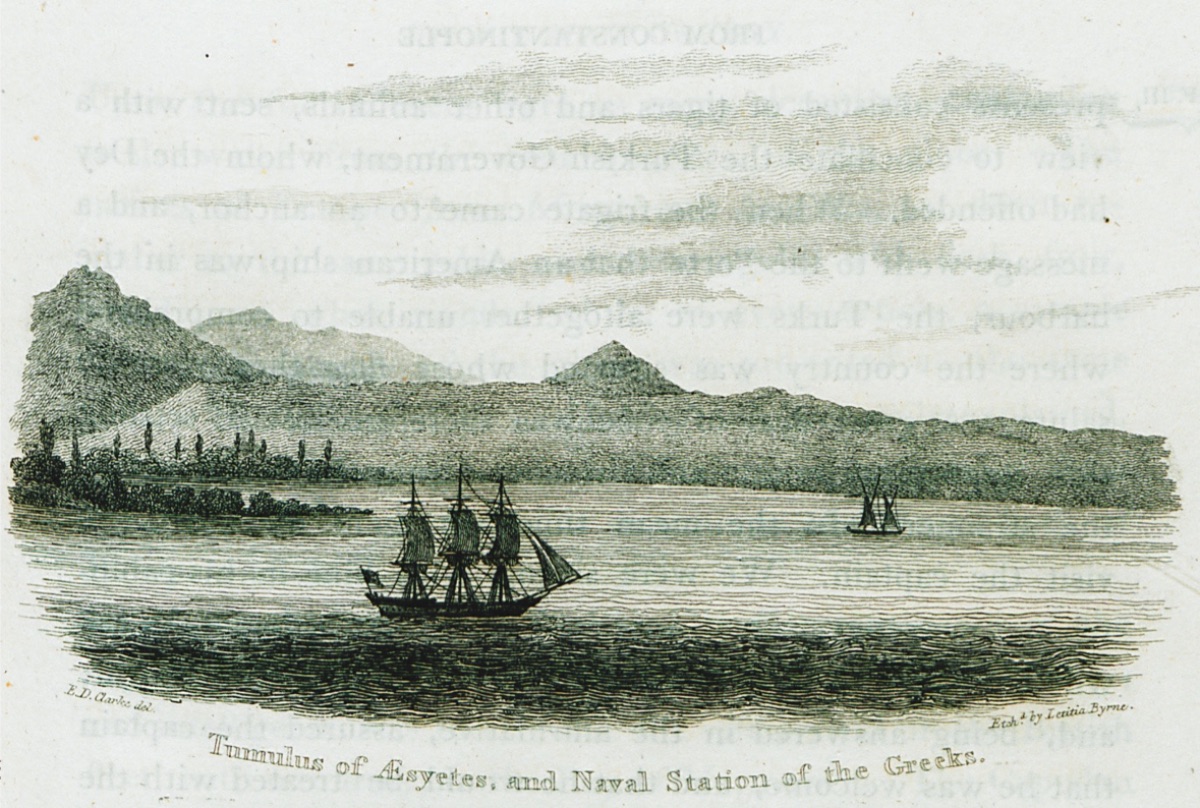
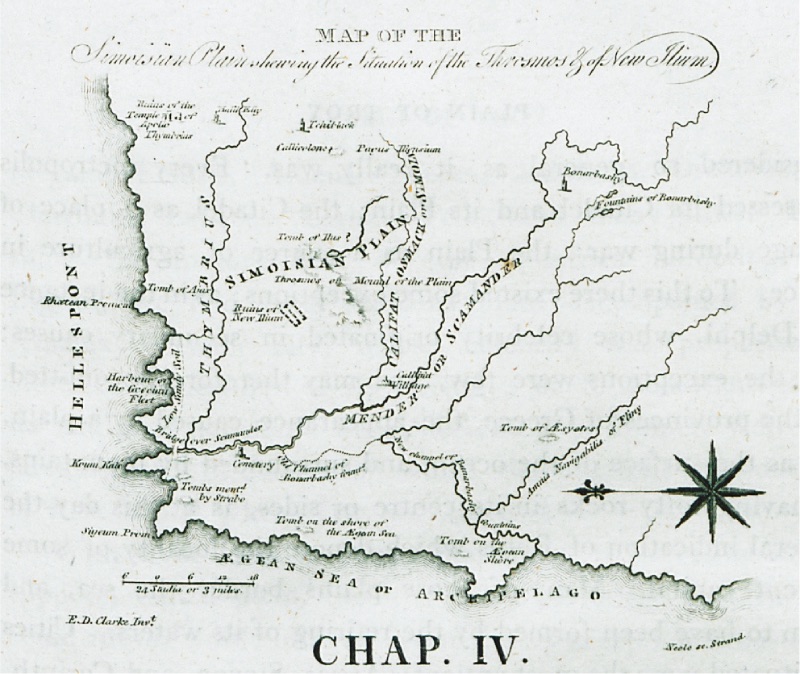
Aestes Tumulus from the Sea and the Beginning of the Plain of Troy Believed to be the Greek Camp Area (1801, Edward Daniel Clarke) The weather was very calm, there was no wind, not a single cloud in the sky. There is nothing more impressive than the beginning of the Aegean Sea. To the northwest, in front of the Dardanelles Strait (Hellespont), is the mountainous Gökçeada (Imbroz), behind it the snow-capped peak of Samothrake (Samothrake). Then, to the west, Bozcaada (Tenedos) appears, and the small islands opposite the Cape of Yenişehir (Siegean) form a group. There is no sound breaking the silence of the water surface except the sound of our boat's oars. The distant islands of the Aegean reflect on the surface as if there were a mirror. Thus, we pass the Rhoetean cape on our left, seeing the burial mounds (tumuli) on the heights descending downwards, and on the right stands the one known as the tomb of Ajax. As Plinius mentioned a burial mound, we come across a sandy bay, the port of the Greek fleet; from a distance, we also see the other two tumuli called the tombs of Achilles and Patroklos on the Sigean cape...
We land at Kumkale and rent horses necessary for our research trip. The protruding area on which the settlement is established has no accumulation in later periods and indeed no later soil accumulation. As the name suggests, it is built on the foundations of the fortress, but the flowing waters of the Dardanelles Strait (Hellespont) from this strait must significantly prevent the nearby river from flowing into the delta.
...
Western Troad Region (1801, Edward Daniel Clarke) Our journey from Ezine to Türkmenli directed us to the very beautiful plain of Bayramiç.
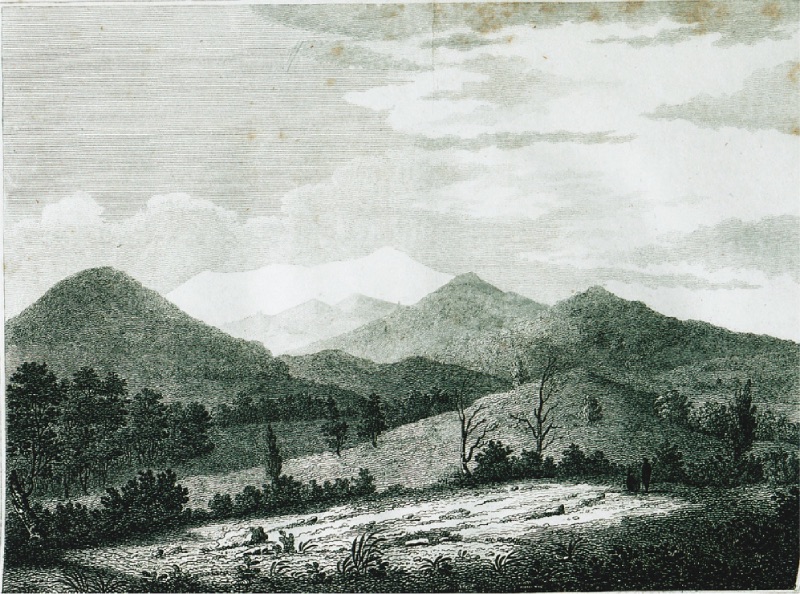
This region appears to be one of the happiest places in nature, with regularly plowed gardens and surrounded by mountains. It takes two and a half hours between the two places. Occasionally, we encountered single and double-humped camels and saw oxen used in fieldwork everywhere. Most of the road had an ancient pavement. We also crossed an ancient bridge. Before entering Türkmenli, we saw a few granite columns, some standing upright, and an earthen mound, and other remains indicating that there was an ancient fortress or temple here. The different ancient remains seen throughout this route are quite abundant near Türkmenli. When we approached here, the appearance of Gargaros, belonging to the Ida mountain ranges, was quite impressive; but there was so much snow on it that we feared we would not be able to reach its summit. The north wind was also blowing sharply; we had reasons to fear that the difficulties ahead of us might be greater than they appeared. Nevertheless, we continued our journey and reached Türkmenli. Here, we were met with quite clean hospitality and friendship, befitting the character of those living in the mountainous region. Our host took us to a large and airy room with a hearth where wood was piled, and flames were rising. A sheep was immediately slaughtered and skinned, not only for us but also to prepare food for our journey. The atmosphere in the room reminded us of the atmosphere in our oldest English homes, where all family members, important or not, gathered. Our ancestors likely adopted the lifestyle in their homes, that is, the house with a high platform for important guests, from the East during the Crusades. In addition to all this, the walls were covered with small cupboards, and the windows were decorated with different patterns of metal or wood, adorned from floor to ceiling. Many people came to visit to say hello and pay their respects to the foreign visitors...
...
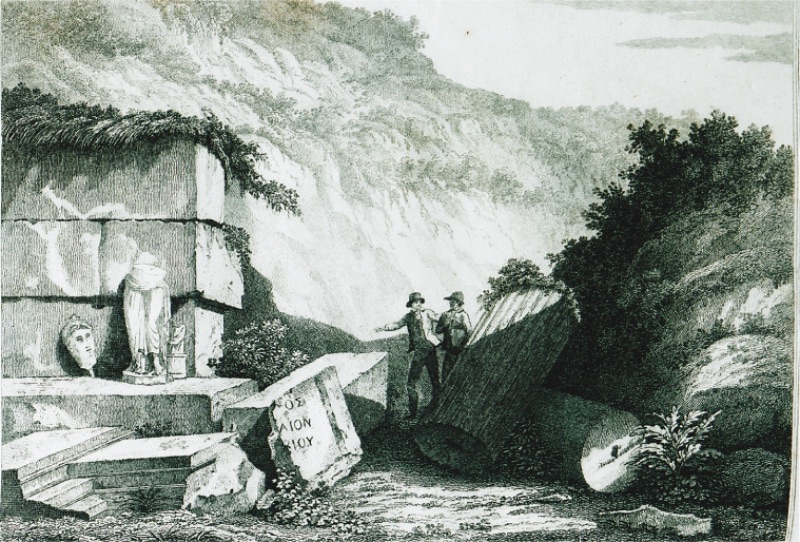
An hour after leaving here, we arrived at Bayramiç, which is under the jurisdiction of the Pasha of Çanakkale (Dardanelles) and is the current center of Troas. Temple Ruins at Kurşunlu Tepe in Bayramiç (1801, Edward Daniel Clarke)
It is a large place filled with shops. Its houses seem better and more orderly built than those in Istanbul. As I mentioned earlier, all the surrounding land belongs to the Pasha, who has almost nothing left due to the high tax pressure of the palace. In and around the inn, there are different Doric style marble columns that we have not seen anywhere outside of Troas before. Instead of being longitudinally patterned, the columns are made at an angle, thus obtaining a very wide surface. Others are like those in the ruins on the hill of Çıplak (Tschiblack). These columns stand in the middle of a place that serves as a public fountain, made entirely of ancient remains. All these, along with other stones of remarkable quality in the buildings, were brought from the ruins on a lightly elevated hill discovered shortly before, which we will pass after leaving Bayramiç for our journey to the source of the Menderes river; the Pasha has conducted quite extensive excavations there to find marble and other building materials. In the streets of Bayramiç, we saw more than one structure made entirely of granite and Soros marble, brought by the locals from the same place. One of the locals told us that he recently found many broken statue pieces and that if we could get permission from the Pasha to take them, he could give them to us. This permission was granted, and we later took these pieces to England (These artifacts now stand at the entrance of the Cambridge University Library). The place where all these finds were located is Küshünlü Tepe, two hours from Bayramiç towards Gargarus, resembling a conical mountain more than a hill...
...
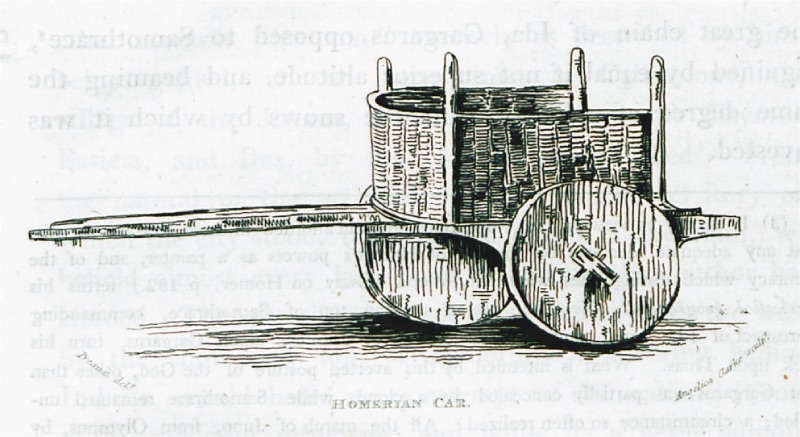
Ox Cart Used by the Villagers of Çanakkale (1801, Edward Daniel Clarke) We returned via the Enez (Ezine) road from Türkmenli and decided to go to Alexandria Troas, turning onto the road to Gökçebayır (Bergaz), two hours away, where we spent the night. We saw that the stones used in the fountains and structures used by the people on this route were column capitals and column pieces brought from ancient ruins. The next day, on March 14, we passed through Kemallı (Chemale), an hour from Bergaz. Kemallı is full of ancient remains. We copied many inscriptions in the cemetery, but they were not good enough to be completed...
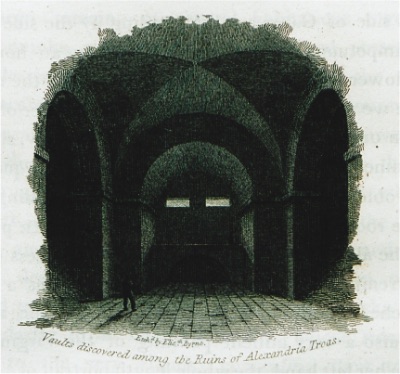
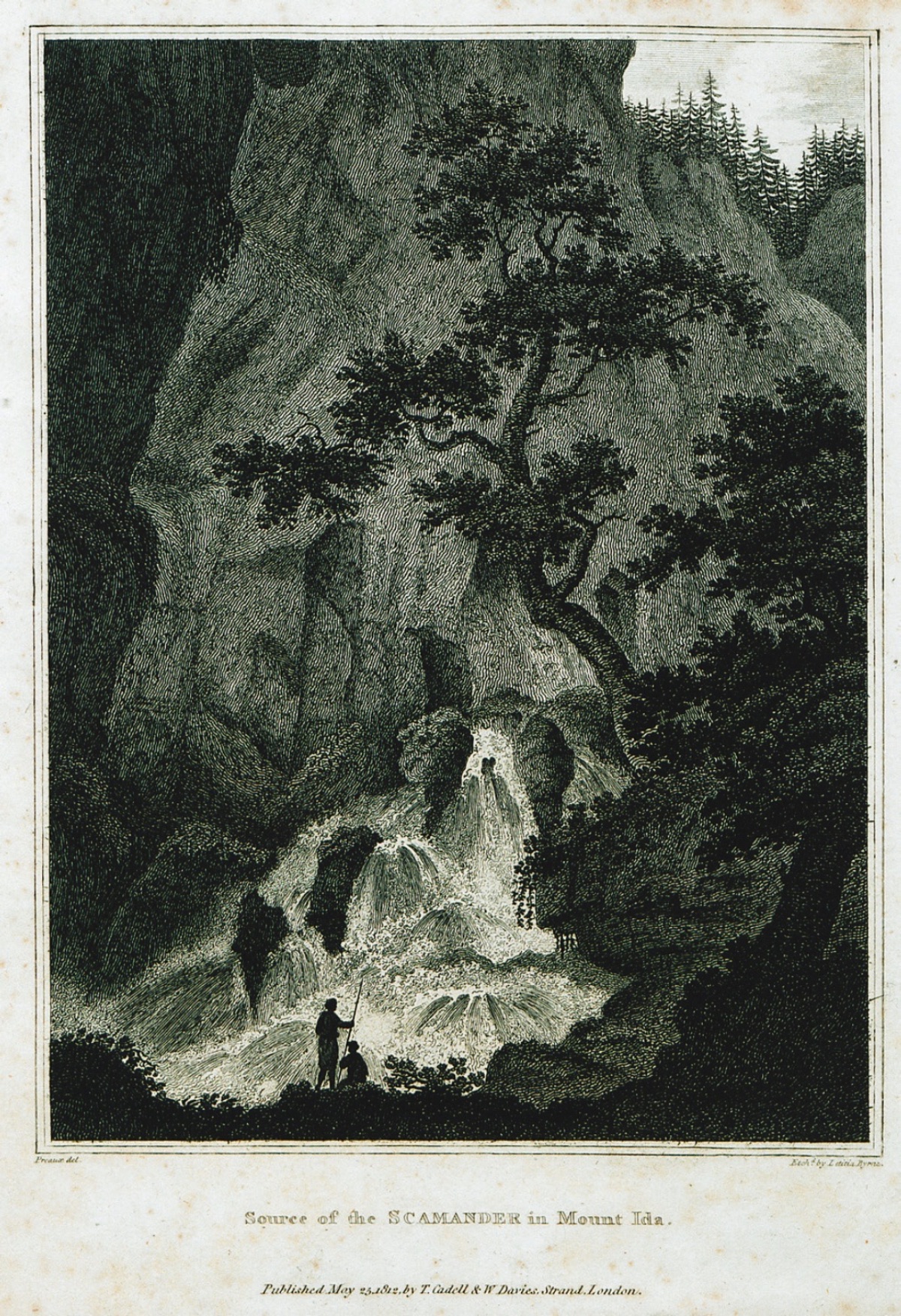
Despite so many remains being taken away, it is truly wonderful that so many remains still exist. The ruins are scattered, but quite abundant. The first finds we encountered coming from Kemallı are the large stone aqueducts built by Herodes Atticus. The city walls are also built with magnificent stones of the same style... Water Sources in Mount Ida (1801, Edward Daniel Clarke)
...
From Yerkesik Köy (Erkessy), we reached Siegum or today's Yenişehir (Yeny Chery) in an hour and fifteen minutes. The name of the cape where today's village is located is Yenişehir cape (Janisarry). Its inhabitants, all Greek (Grek), live quite cleanly in their small houses and show hospitality to foreigners, a tradition of their ancestors. The inhabitants here have found many valuable ancient artifacts from different periods. They brought us a very rare bronze Siegeum medal... The famous Siegean inscription stone was recently taken from here by the British ambassador..."