
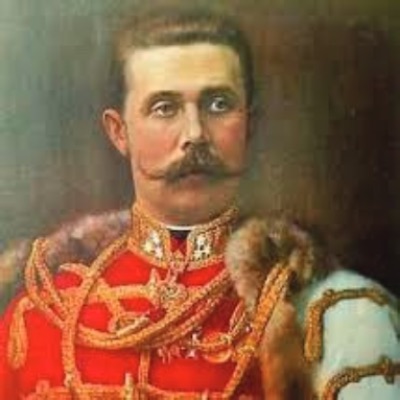
The son of a Hungarian nobleman who sought asylum in Turkey with Ferenc Rakoczi and later went to France with the Bercsenyi light cavalry division, where he was elevated to baron. He was born on August 17, 1733, in the village of Chamigny, France. At a young age, he joined the division where his father served and became a lieutenant in 1754. In 1755, he came to Istanbul as the secretary of his brother-in-law Vergennes, who was appointed as an ambassador by France to the Ottoman Empire. In fact, the French government tasked him with learning Turkish, examining the state of the Ottoman Empire, and gathering information specifically about Crimea. Returning to Paris in 1763, Baron de Tott was appointed as a representative to the Neuchatel region of Switzerland three years later, but he was soon asked to leave. In 1767, he was sent by the French government to the Crimean Khanate as a consul to conduct investigations about Crimea and incite the Tatars against the Russians, being awarded the Saint Louis medal and the rank of major. During his time there, he played a significant role in the outbreak of the Ottoman-Russian war in 1768. In 1769, he participated as an observer in the successful military operations initiated by the Crimean Khanate. The same year, he left Crimea and returned to Istanbul, where he was tasked by the Ottoman government to fortify the Strait against the Russian fleet pressing the Dardanelles after the Çeşme disaster (1770). He defended the Dardanelles Strait against Russian Admiral Orlov.
After returning to Istanbul, between 1771-1776, he attempted to implement some reforms in the Ottoman army, partly following in the footsteps of Bonneval Pasha (Humbaracı Ahmed Pasha). Despite not being an expert, he had cannons cast, established a rapid artillery corps, commissioned military pontoons, had fortresses built in the Strait, and opened a school of engineering in the Golden Horn. Baron de Tott is mostly known for his memoirs, which he wrote primarily in French. This work, containing important information about the history of Turkey, had its second edition published in Paris in 1785 and its third in Maastricht in 1786. The work was translated into English, German, and other Western languages shortly thereafter, and it was translated into Turkish and published approximately two centuries later, in 1975:
"Due to the Sultan's urgency for me to go to Çanakkale as soon as possible, I set off without waiting for any of the necessary items to begin my work. The Sultan had issued a definitive order for everything to be at my disposal. I had requested that an official be assigned to me. They appointed Mustafa Bey, the grandson of the famous Canım Hoca, to this task. Without wasting any time, I hired a French ship to reach Çanakkale. The official from the Sublime Porte had arrived in Çanakkale a few hours before me, and when he indicated with the orders he brought that Moldovancı Ali Pasha was under my command, it turned against me.
I must clarify that I did not trust this man's friendship agreement with me due to the right of salt and bread...
My first task was to examine the condition of the fortresses; however, it was enough to look at the soldiers defending the fortresses to understand that there was no good in the material situation as well as the moral situation. The atmosphere of terror had so enveloped their minds that they spoke of abandoning the batteries at the first cannon shot...
The excess waters coming from the Black Sea, which do not evaporate, create such strong currents as they pass through the Istanbul Strait to reach the Mediterranean via the Çanakkale Strait that even ships sailing with full sails have great difficulty overcoming them. Captains had to choose their routes from places where the current was least effective if the wind was sufficient. The strong currents running from one end to the other pose difficulties in terms of navigation, and not knowing the currents can lead to great dangers. The captains of the Turkish ships provided me with significant information on this matter, allowing me to identify the points in the strait suitable for defense. Accordingly, with a battery placed on the promontory between the first and second fortresses and a second battery placed directly across on the opposite shore, the firing ranges would intersect, and the Turks could easily bombard the vanguard and rearguard of the fleets attempting to cross the strait. The enemy, while opening cannon fire from their broadsides, would necessarily come perpendicular to the direction of the current and be severely challenged. This measure would also make the cannonballs more effective against enemy ships that had filled all their sails with wind to cross the strait, and ships weakened by torn sails would likely run aground...
A Turk residing in the Rumeli side fortress and one of the leaders of the people, after carefully observing the works I had done, requested that I leave the construction of the battery near him at Değirmen Burnu to him. My workers are ready, I hope they will do a very good job, you can come and inspect the work from time to time, he said. The diligence and attention of this Turk convinced me to accept this task. From the next morning, the shore was filled with carts loaded with branches, and the new engineer was teaching the workers what to do. My admirer, who was meticulously attached to my method, did not neglect to feed the workers at his own expense. This became one of the best of these battery structures. Meanwhile, the official from the Sublime Porte, amazed by the effort, intelligence, and especially the expenses made purely out of benevolence by this Turk, informed the government and ensured that he was awarded a compensation of 300 kuruş. The Turk, who was summoned for this purpose, after receiving the official's appreciation very coldly, absolutely refused the compensation offered to him. He stated that if he accepted the payment, he would lose all the fruits of the work he was trying to accomplish, and that it would be a great shame for a Turk to use his wealth and virtues while sacrificing himself for a French defense. No matter how much he was insisted upon, he did not deviate from this patriotic decision; when I came to them, the official's admiration was still ongoing...
After the works were completed, the cannons were placed, and the ammunition depots were sufficiently filled, the remaining task for me was to place suitable individuals in the batteries. However, before anything else, it was necessary to convince those around me that the 6.5m thick battery parapets guaranteed people's lives much better than the feeble walls. Habit prevailed, and according to the news I received from all sides, the units dispatched to the batteries would take their positions merely to comply with orders, with the intention of abandoning their positions at the first sight of the enemy. I decided to resort to a solution that would be considered completely ridiculous if it were not done to overcome ignorance. The next day, I announced that the batteries would be tested at ten in the morning. I went alone to one of the batteries, while at the same time, my men were positioned at a battery directly opposite, ready to fire their cannons at the battery parapet protecting me as soon as my ship departed from the shore. The gathered crowd awaited the outcome of the test with great excitement. All the thirty-six caliber cannonballs shattered on the battery parapet without causing any damage; this test proved to the Turks that they could safely take my place; meanwhile, I noticed that they primarily preferred the tested battery. Eventually, we were able to convince the soldiers that all the batteries were constructed with the same solidity. The batteries established from the mouth of the Strait to Nara Burnu would be able to crossfire the enemy over a length of 30 kilometers. I believed that the Russians, who had attempted to pass when the Strait was defenseless, had now abandoned this plan. Even if the defense of the fortresses was in question, staying in Çanakkale would be less beneficial than not returning to Istanbul; in Istanbul, I would participate in the establishment of a cannon carriage production and an artillery school, two important issues that had been neglected until now."