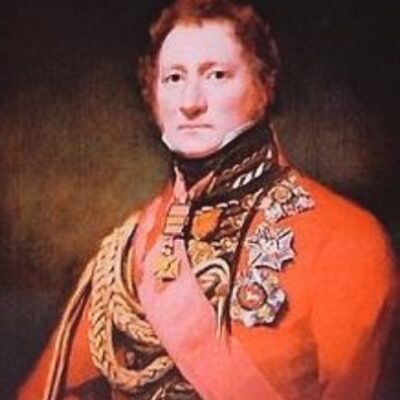
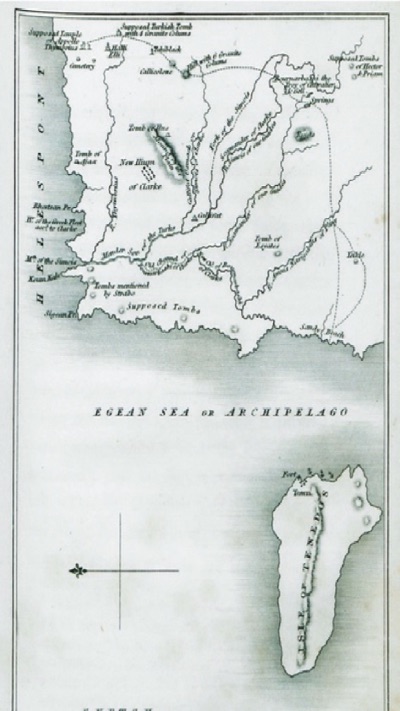
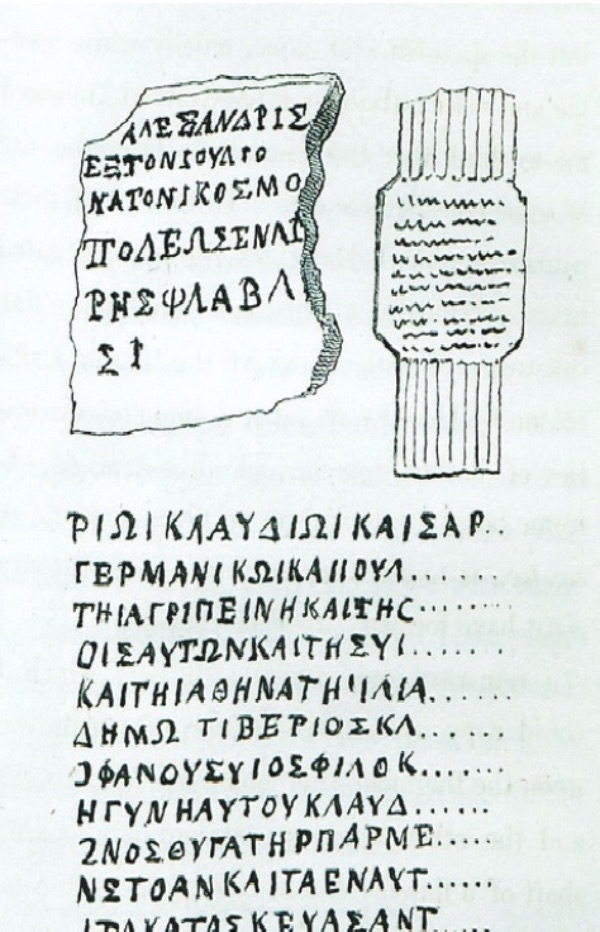
Bozacada and the Surroundings of Troy (1827, Charles Colville Frankland) Charles Colville Frankland (1797-1876), whose father was an English clergyman, was born in Bath, England in 1797. He entered the Royal Naval College in 1813 and served as a lieutenant in the British Navy. While still a naval lieutenant, Frankland embarked on a 15-month journey from Vienna to Southeast Europe and the East in 1827, and published his travelogue in a newspaper shortly after his return. He made severe accusations against Ottoman officials and administration. In his work, written in the form of a diary, he describes in detail his route from Vienna through Hungary, Transylvania, Wallachia, and Bulgaria to Istanbul. After visiting the most important places in Istanbul, Frankland passes through the Dardanelles on his return journey. Here, he particularly visits Bozcaada and the places believed to be Troy at the time. It is understood from his descriptions that he had read the works of travelers who visited Troy before him very well. From Troas, he goes to Izmir and Athens, visits the islands of Aegina and Poros. Then, Frankland travels to Cyprus, Syria, and Alexandria, and later reaches Italy and Vienna via Malta:
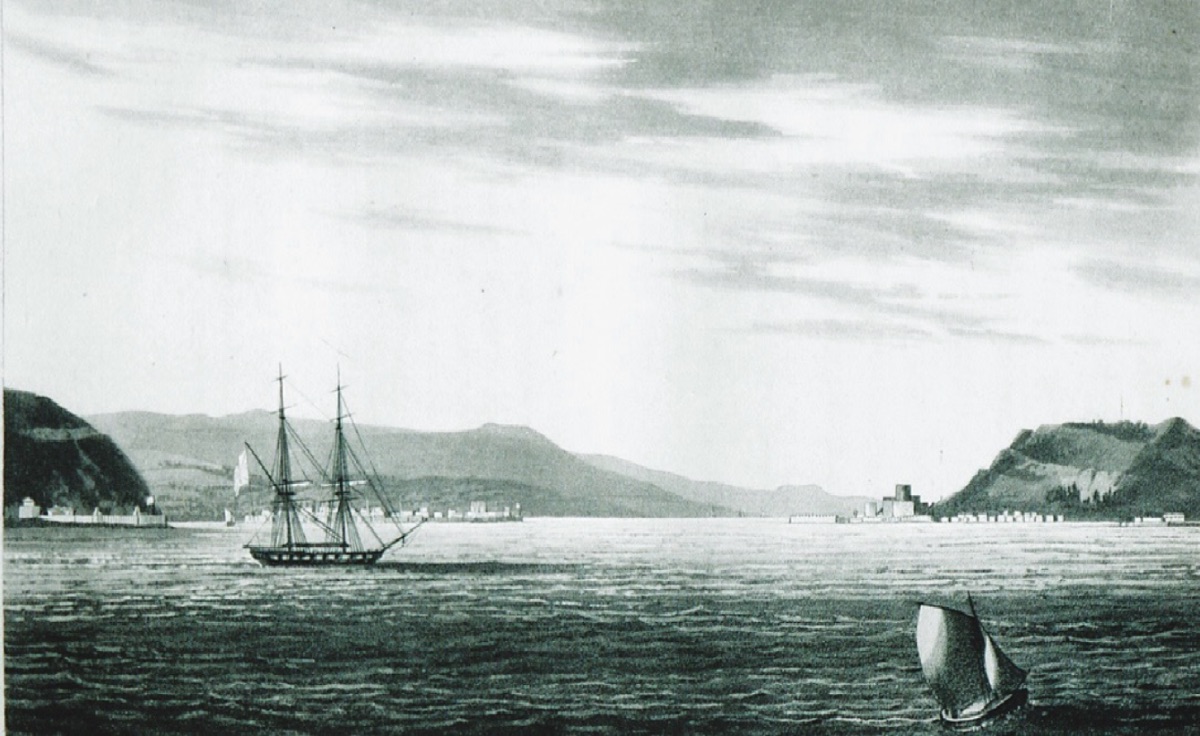
"June 3. Windless and hot. I swam for a short while. We continued with a bit of wind towards noon, and as the wind increased a bit more in the evening, we passed sweetly by Gelibolu, Lampsaco, Sestos, and Abydos. The scenery is very beautiful, and as we advanced, the castles of Çanakkale (Dardanelles) began to appear magnificently. At sunset, we anchored at Nagara or the old Abydos point.
June 4. The morning is hot and windless. The scenery around is very beautiful. While the captain and others went ashore to visit the honorable consul, I made drawings of the enemy castles and gathered information about their positions. Towards noon, I went ashore to go to the English consul's house. My aim was to get his opinion on the trip from Bozcaada (Tenedos) to Troas, and later, if our ship does not wait on the island for the convoy, on the journey overland to Izmir (Smyrna)...
The city of Çanakkale (Dardanelles) in Asia is famous for its pottery, and it is estimated that the ancient city of Dardanos is nearby. As our ship was rapidly drifting with the current, I didn't have much time to explore here, and as advised, we hope there will be a warship to protect us against the not-so-friendly pirates waiting to negotiate with someone who falls into their hands as we continue to Bozcaada (Tenedos). We waited for an hour and a half for the captain to finish his port visit, he did not come, and we drifted out of the range of the cannons in the castle. With our sails full, we passed the tomb of Ajax, the three tumuli on the Asian shore, and the tomb of Aeyestes. Towards evening, the weather calmed, and we finally slowly advanced towards Bozcaada (Tenedos).
It is very difficult to describe the view created by the ships scattered in the Aegean Sea at sunset on the islands of Bozcaada (Tenedos), Limni (Lemnos), Gökçeada (Imbros), and Samothrace. And all these are intertwined with the ideas evoked by a true view of the plain of Troy, the classical lands I read about with emotion and melancholy in my early youth, although it is no longer so. Ancient Artifacts Found Around Troy (1827, Charles Colville Frankland)-2
June 5. We anchored at the town of Bozcaada (Tenedos) before sunset; a league to the northwest, depth ten fathoms. Here we saw the Sardinian frigate, La Christina with forty guns. I went aboard to ask the commander if he would give us a convoy to Izmir (Smyrna). A nice little ship, ready for battle, like the English. Their captain, Le Chevalier Serra, received me quite kindly and ordered with all his authority for a messenger to come from Constantinople.
In the afternoon, I went ashore with two others to see the island and saw the deputy consul; the commander in Çanakkale (Dardanelles) had tasked him to assist us in our planned trip to Troas. We toured the island briefly, the seaside is bare and barren, but the interior is well-kept and beautiful. The north is quite high, conical, and hilly, and despite the burning sun, we enjoyed the view of Mount Ida and the plain of Troy, Gökçeada (Imbroz) and Limni (Lemnos) to the southeast, and far to the northwest, the beautiful view of Mount Athos on the mainland.
The Dardanelles and Fortresses from the North (1827, Charles Colville Frankland) Tenedos, as the whole world knows, is famous for its wine. Here, described as a town, there are a few mud-brick huts, three hundred Turkish and two hundred Greek houses. To the north, there is a secure castle with forty-two Turkish-made cannons and a small harbor. The back is completely controlled from the heights; to the south, a league below the town, there is a sandy bay and a road for landing.
As we descended from the mountains, we stopped to rest in the shade of a wild fig tree, where I made a drawing of the castle. We found the deputy consul at home, sitting cross-legged and looking ordinary (Allow me to describe the portrait of a Levantine deputy consul. These supposedly responsible persons receive neither salary nor money from the places they are attached to, but they do this job because they believe the duty is important. These officials are always chosen from among the locals, usually Greeks). In a somewhat acceptable room, like a kind of staircase, we were greeted by a very lovely Greek girl with hair down to her waist, adorned with jewelry made of gold coins on her hair and neck, embroidered stockings, and yellow slippers. She disappeared shortly after and returned to offer coffee, sweets, and flowers in accordance with the country's traditions. We arranged for a boat, horses, guides, etc., for our trip to Troas tomorrow. But before returning to the deck, we went to visit the Agha of the island. We found him sitting cross-legged under a kind of arbor made of tree branches, on a carpet laid on the ground, in a place with plenty of water, by the seaside, open on all sides to catch the breeze. He was busy smoking his hookah, while many officers were amusing themselves playing backgammon. He wrote a Teskere for us and ordered the commander on the other shore to provide us with horses. During this business, we spent a pleasant half-hour with a hookah and some coffee. Now we have returned to our frigate... Ancient Artifacts Found Around Troy (1827, Charles Colville Frankland)
June 6
Around eleven, we arrived at a very beautiful garden-like place. About a quarter of a mile away from the Turkish village of Pınarbaşı (Bournarbashi), near the Skamander, there were several springs on its side. These springs are called "Kırk Göz" by the Turks, and it is believed that these waters are the source of the Skamander... Later, we began to climb the large limestone hill near these springs. According to Le Chevalier, this hill was the acropolis of Troy..."