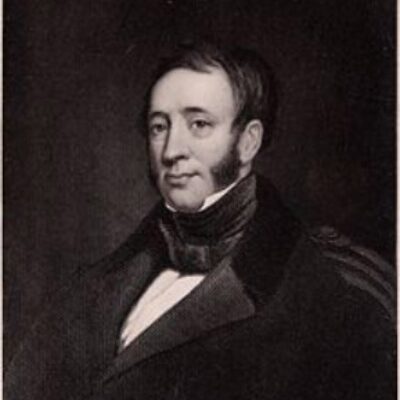
Irish doctor, writer, and historian Richard Robert Madden (1798-1886) dedicated his life to fighting against slavery.
Born as the son of a silk manufacturer, Madden received his early education in private schools. He studied medicine in Italy, Paris, and London. After marrying in 1828, he paused his travels for five years. Although slavery was banned in the British Empire from 1807, it continued. In 1833, Madden worked in Jamaica as a civil servant of the British Empire to abolish slavery. Madden, who died in Dublin in 1866, wrote many works about his travels. In 1825, Madden passed through Çanakkale, and like many European intellectual travelers of that period, he set out to search for Troy.
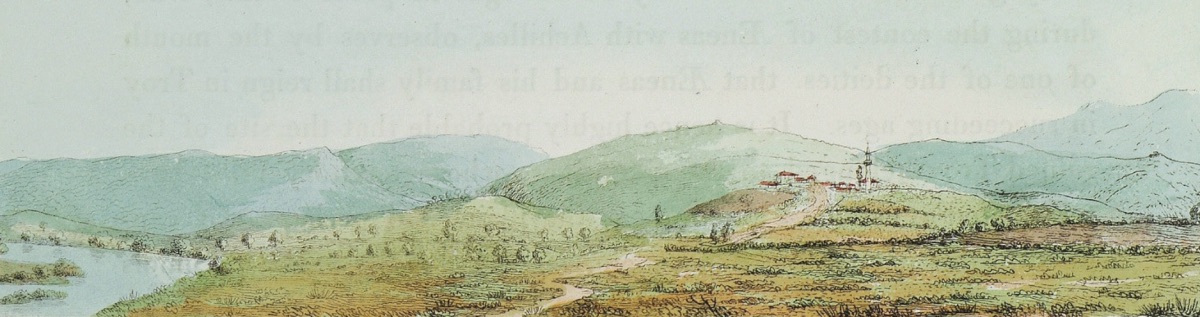
Arabs Strait and Pınarbaşı Village (1801, William Gell)
"
Letter Eleven.
Dardanelles (Çanakkale), January 15, 1825.
I do not envy the company of travelers who, like the poor man who carefully examined the walls of Jerusalem and discovered that they contained no ancient stones, look upon the Hellespont and laugh at the story of Leander. God knows, the zeal of these travelers wore out early enough, before learning of its devastations, and certainly, even if the most melancholic period of life came to the minds of travelers; the poetry of those days, which narrated the arbitrary tyranny due to that transient love in maturity, had immediately vanished.
I believe with all my heart that the present-day poor village of Pınarbaşı (Bounarbashi) is the site of the city of Troy from three thousand years ago; that the two small rivers nourishing the plain today are the Simois and Scamander rivers where Priam's daughters washed their clothes and where the rival goddesses bathed before going to the beauty contest. I owe my belief, which deeply affects me, to the group I have acquired through years of reading. We set out on horseback from Çanakkale (Dardanelles) with the Austrian consul of Candia. At noon, we arrived at Alexandria Troya, now called Çıplak (Chiblak) (the author confuses Alexandria Troas near Dalyan village with the ruins near Çıplak village R.A.). This place is described as ancient Troy in many books; I also know that some modern travelers have made mistakes about this. As with all other cities founded by Alexander the Great in the East, no remnants of the grandeur of the old period remain in this city. There are only broken columns and some temple frieze pieces. Very close by are the remains of a once magnificent temple said to be dedicated to the sun. From here, we went to the Sigeum plateau, now called Yenişehir (Janissary) cape, where the Greek fleet pulled their ships: nearby are the tombs of Achilles and Patroclus. A few years ago, the former French ambassador found a metal urn, a piece of a sword, and a small statue with decorations resembling the patterns on the statue of the Egyptian goddess Isis here. Near the shore, there are remains of a harbor, and it is debated that this could be the possible camp site of the Greeks...
Nine miles from the shore, where the plain ends and at the foot of Mount Ida, lies the settlement of Troy where the modern village of Bounarbashi (Pınarbaşı) is located. Not a single stone of this famous city stands now. Not even a small piece of a statue remains, and the nature of the ruins is completely incomprehensible. After searching for traces of the past in the morning, I saw a marble seat with a flat surface next to the mosque and, upon closer inspection, saw a long Greek inscription on the underside: Just as I was copying it, I was prevented by the mosque's imam for doing something so close to his sacred area...
We returned to the Agha's house in Pınarbaşı (Bounarbashi) to spend the night, but he was not home, and we were turned away. We asked many villagers, but no one wanted to stay in the same house with infidels. The nights in January were very cold, and spending the night on the plain, even if it was Troy, was not acceptable. As we tried our luck one last time to sleep in a shabby hut, the weather quickly darkened, and our request was granted. I believe this was done more out of hospitality than for any humane purpose.
For dinner, we ate a dish mixed with thick milk called yogurt (Yaourt) and boiled rice in a wooden bowl...
...
At noon, on our return, we had a rather dangerous adventure that showed the cruel attitude of the people here towards innocent Christians.
We approached the inn built by Hasan Pasha, intending to ask for permission to rest for half an hour: our request was answered by the opening of the gate leading to the courtyard and a pack of guard dogs being set upon us. In an instant, twenty to twenty-five starved mongrel dogs lunged at our throats; thankfully, our boots protected our feet and legs, but our clothes were soon in tatters. My friend, the consul, unfortunately, fled in fear of the attack. I defended myself sometimes like the heroes of Homer. I threw stones at those attacking me, sometimes kicked left and right in a manner not at all classical, and finally showed my pocket pistols.
Upon this, the Turks (who were enjoying our predicament) began to make threatening gestures for me not to fire the weapon.
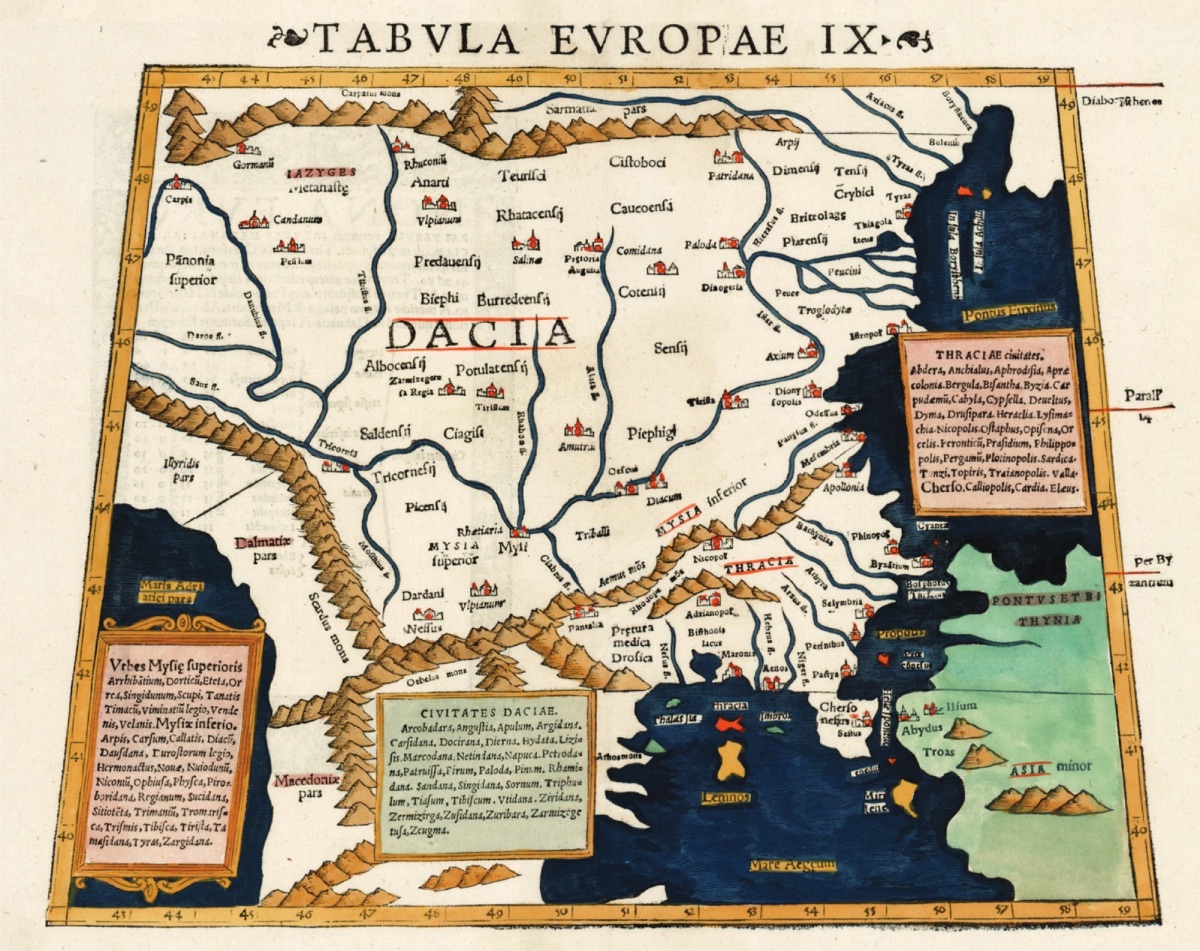
Asia Minor (Anatolia) and the Troad Region in Medieval European Maps (1550, Sebastian Münster) I, on the other hand, pleaded with them to call back the dogs. But the more I pleaded, the more they enjoyed it, and one of them said: "a dog is trained to eat each other." Were we food for them, piece by piece; this must have been a joke, and at one point, I thought we were a source of amusement for them. Thankfully, in the end, a young man intervened and convinced many of them, who over the years might have gained positions, to stop their merciless friends who could have caused our death. I suspected we were in a completely dangerous situation. I could have tried to have these attackers punished, but as usual, a Christian's complaint would be laughed off.
We reached Çanakkale (Dardanelles) without any hindrance. Here, a respectful Rayah (reyha) brought me an old coin collection. He swore that his brother found these coins at the tomb of Ajax; upon examination, I found half a dozen coins of Constantine and two coins of Louis XIV. Sestos and Abydos are just two existing names, but nevertheless, the latter boasts of having ancient wall remains four or five feet long. Lord Byron swam from the European side opposite at a speed of four or five miles per hour; but I believe he thought swimming from Abydos to the European side was not easy at all.
The fortresses on the Asian side of Çanakkale (Dardanelles) are now more strongly defended than ever. I wonder if our navy's heroism in 1806 could have been achieved with this much damage today, but conquering these fortresses from the land is very easy, as they all extend towards the sea. In the fortress on the Asian side, there is a cannon at water level; this cannon is capable of firing large marble balls weighing two hundred and ninety pounds. Loading such a large caliber cannon takes a lot of time. I have not seen such balls being fired from the mouths of cannons."