
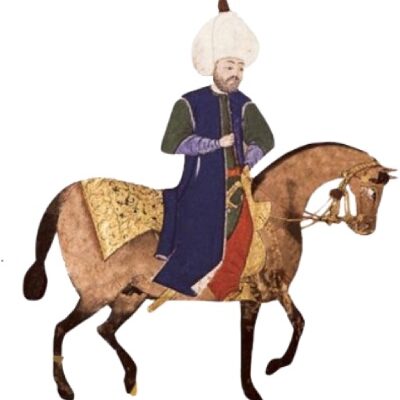
According to the information in the Seyahatname, Evliya Çelebi, born in 1611 in Istanbul to a wealthy family, was a devout Muslim who adhered to traditions and was confident in the superiority of the Ottoman Empire. This is reflected in his writings. Alongside his naive piety, as a typical 17th-century Ottoman, he also possessed a broad tolerance. In his Seyahatname, he mentions visiting churches and quotes Christian prayer texts, and although he did not use it himself, he kept forbidden alcohol for his guests, demonstrating how tolerant an Ottoman intellectual he was. The Seyahatname was written in the 17th century, during the years before the 1683 Vienna defeat when the Ottoman Empire reached its widest borders, but it was only published two centuries later, in 1896. Evliya Çelebi, who traveled a vast geography from Europe to the Near East, visited Çanakkale in 1659. Like the travelers of his time, Çelebi primarily described monumental structures, and due to his cultural background, he naturally narrated Ottoman and Islamic works and stories, sometimes joyfully, sometimes exaggeratedly. In his descriptions of his visit to the Çanakkale region, starting from the Karabiga Fortress, he includes details not found in other travelogues:
"The features of Bay Boğa land, that is, Karabiga Fortress
The first to conquer this land was a renowned person named Bay Boğa, one of Sultan Alaeddin's beys, who, along with Ertuğrul Bey, the great ancestor of the Ottomans, conquered and settled these lands. The people of Karaman used to call these places Bay Boğa Fortress, but when it was in the hands of the Rum infidels, it was called Kalopiga, meaning (...).Then, in 1365, Sultan Murad I, also known as Sultanoğlu Gazi Hudavendigar, faced difficulties while conquering it from the Rum infidels with sheer force and destroyed some parts after the conquest. The first conqueror was named after Kara Biga Bay. They also called it Kara Biga Bay, but they softened the word 'Bay' and it became known as Karabiga.
Its fortress is still a hexagonal, cornered, steep and dock-like structure in a ruined (...) place.
The town is a well-maintained and decorated town with gardens and orchards, situated in a wide plain at the foot of a low mountain. It consists entirely of (...) single and two-story old masonry buildings, all covered with tiles.
And there are (...) mihrabs. First, within the market, there is (...) mosque, covered with lead, an old place of worship with a large congregation.
There is the Lesizade Madrasa, but there is no special darülhadis or darülkurra. There are 6 primary schools and (...) Halveti, Kadiri, and Bektashi lodges.
And there are (...) well-equipped and excellent land and sea merchant guesthouses and inns.
And there are (...) baths, but the Lesizade Efendi Bath is a very pleasant, airy, and old bright bath where not a drop of sweat falls from its nine magnificent domes, a famous bath.
And there are (...) shops of every craft in the sultan's market, but there is no bedesten. In short, it is a beautiful city adorned with all the structures of an imaret, decorated with vineyards and gardens, where everything is available.
Its people are of the Etrak tribe and the Yörükan tribe, but they are known for their very proper conduct, they love strangers who are far from their homeland, and they have noble people who generally wear cloth and colorful kaftans. Their women wear white veils, but there is never a woman in the market.
Due to the sweetness of Karabiga's water and air, there are many beloved ones.
Among the admired ones, the jujube tree in its vineyards and gardens is famous worldwide, and its jujube fruit is renowned. Therefore, in this city, there is no disease like jujube illness, throat and mouth pain, or swelling, as dried jujube water and mulberry sherbet are very beneficial for such ailments. It informs about the places to visit in Karabiga:
(...)
Çavuş Village: It is a well-maintained Muslim village with a mosque and an inn. From here, again to the west, Çınarlıdere station: The entire Islamic army camped in a plane tree grove. From here, again to the west,
Akyer Altı station: This is a place like a Persian garden with plane trees, shade, airy, and like a tulip garden, where 50 Hasan Pashas were killed, and the front of the sultan's tent became a lake of blood. From here, in six hours,
The features of Çardak town
The first builder, Gazi Hudavendigar Murad Han, built a small pavilion on the seashore while going on the Edirne campaign, and later it was called Çardak because the mentioned pavilion was built on four arches, hence the name Çardak from 'çartak.'It is a well-maintained, decorated, and charming busy pier on the shore of the Rum (Marmara) Sea in the Anatolian Province (...) land. On the opposite Rumeli side is the city of Gelibolu, located in a wide open space by the sea, with gardens and orchards, consisting entirely of 1000 old-style, generally single-story and tile-covered houses, all solidly built.
And it has 17 mihrabs, but among them, the large domed, lead-covered Ece Yakup Mosque is a well-maintained, decorated, and old mosque with a large congregation. The owner of this mosque is among the brothers of this humble one's great ancestors, whose lineage reaches the Turkish Türkan Hoca Ahmed Yesevi, and from there to Muhammed-i Hanefi. They were mighty, brave, and skilled men who, with Orhan Gazi's son Süleyman Pasha, Ece Yakup, Kara Mürsel, and Kara Koca, crossed to Rumeli for the first time with leather rafts from Kapudağı Cape, first conquering İpsala, and since they performed the first prayer there, it is called İpsal from 'İbtidasala.'
(...)
The description of Çardak Imaret town: Its sharia judge is a 150 akçe district, and it has a total of (...) sub-district villages. It has a janissary commander, deputy, affiliate, and subaşı. It has well-maintained mosques, lively dervish lodges, several primary schools, the Fatih Sultan Mehmed Han Inn in the market, and a few more inns, with 300 well-maintained shops and a pleasant bath, with countless vineyards and gardens in the qibla direction and east side.
(...)
The features of Lapseki town
The reason for its name is that there was a fig forest on a slope away from the seashore. The Etrak tribe calls figs 'lop.' It is still a known word used as 'lop fig' in the local language. The slope with figs was named after it, and it became famous as Lapseki from 'lop seki.'On the seashore (...) in the land of (...) its ruler, with a 150 akçe rank, has a judge, a janissary commander, deputy, subaşı, tax collector, and inspector, but its notables are few, and its reaya consists of Rum and Armenian houses. However, there are 1300 Muslim houses with gardens and orchards, generally tile-covered and occasionally two-story. It has a mosque, inns, and a low bath, but its market is very small, though it has many vineyards and gardens. Among the admired ones; the Lapseki watermelon is famous in Rum, Arab, and Persian lands, a red watermelon that is like 'Şaraben tahur.' Its grape pickles, bulama, müselles, and syrup are also very famous. From here, again to the south along the seashore,
Purgaz town station: It is a well-maintained village with gardens and orchards, 700 tile-covered Muslim and Rum reaya houses, all facing the sea, located at the foot of a mountain in the Bosphorus sea, a cannon station away, and its ruler is from (...) side (...). From here, again along the seashore to the south,
Karacaören Village: It is a well-maintained village overlooking the sea on a high slope. From here
Two strong and durable embankments, the features of Sedd-i İslam Kilidü'lbahreyn Fortress
May Allah protect it from the calamities of the world
This fortress was first built by Sultan Mehmed II, known as Fatih Mehmed Han, before conquering Istanbul, to cut off the supplies to the kafir of Istanbul from this strait, preventing the Mediterranean kafir ships from aiding Istanbul. After this, the supply of the Black Sea strait was also cut off. Eventually, due to the distress of famine and scarcity, Fatih and the Tekfur King made peace (...)
The date of its construction is 'Built by Mehmed Han (1452).
After conquering Istanbul, he further developed these fortresses, sending the imperial navy on the Morea campaign while he went by land (...). The inscription above the gate of this Anatolian Fortress is the date of Süleyman Han's imaret (1551).
Its gate facing the west side towards the Rumeli Fortress across the sea are double thick iron gates, but the circumference of this fortress is exactly one thousand steps, a very solid fortress. However, as it is located on a sandy low place by the sea, it has no moat, each of its towers, bastions, and battlements are built in a shaddadi style, a bright fortress like a white swan. Inside the fortress, there are 70 tile-covered soldier houses, a wheat granary, Fatih mosque, and apart from the armory warehouses, there are no other structures. It has a dizdar and (...) Cezayir levendi style dressed useful veteran gunners, armorers, and levends.
(...)
The features of the Anatolian suburb: To the west and north of the fortress, in a close wide plain with gardens and orchards, there are very well-maintained tile-covered and two-story 2000 houses, which are spacious from each other. The roads are not narrow. There are clean streets.
And (...) mihrabs. Among them, the excellent Fatih Sultan Mehmed Mosque is a Lead-covered Selatin mosque. Being in the market, it has a large congregation and is a spiritual mosque. Again, in the market, the inscription above the Yeni Mosque's gate is: (1645)
Again, in the market, Rüstem Pasha Mosque is a delightful beautiful mosque.
Apart from these, there are mosques, 3 abdalan dervish lodges, and 7 primary schools. In total, there are (...) inns and (...) baths. Among them, the Fatih Bath is a bright structure with pleasant air. Rüstem Pasha Bath is also a heartwarming bright bath.
And there are 800 shops. Every craft guild is found, and it is a decorated sultan market, most of which is Fatif endowment.
And there are abıhayat fountains, but their number is unknown. However, the date of Sultan Ahmet Han Fountain is: (1616).
Due to its very sweet water and air, there are beloved ones here and there, but its young people wear Cezayir dayısı style clothes, and its brave men and other people are large levends.
It has many vineyards and gardens. Among the admired ones, its various grapes, sweet syrup, müselles, grape pickles, bulama, köfte, pastık (pestil), and molasses are famous.
(...)
The stations from Kale-i Sultaniye to Bozcaada
(...)
Its size is 60 miles, but it is located lengthwise towards the qibla, (...) miles close to the Kazdağı side in Anatolia. Inside, there are (...) well-maintained, lively, gardened and orchard villages, abıhayat waters and wells, and all its mountains are vineyards. It has muscat grapes that are not found anywhere else in the world. Even in the vineyards of Rumei Kadıaskeri Dahki Efendi, there are 17 types of fragrant grapes that are not found in Mount Sincar (...).
The Shape of Bozcaada Fortress
On the eastern side of the island, on a rock facing Anatolia, it is a heptagonal fortress adorned with closely aligned towers and decorated with battlements, a ready-made fortress built of cut stone, filled with weapons inside, outside, and between the gates (...).
Inside the fortress, there are (...) tile-covered houses, the dizdar, kethüda, imam, and muezzin houses are well-maintained. It has an armory, granaries, water channels, and a (..) royal mosque, but no imaret.
(...)
The description of Bozcaada Fortress suburb:
On the (...) side of this fortress, by the seashore, its suburb (...) inside (...) a total of (...) single and two-story masonry buildings, all covered with tiles.
And they all have (...) mihrabs. The mosque (...) other mosques, but there are more Rum infidels than Muslims, but there are no Armenians, Jews, or Franks. There are 19 small and large churches. It has an inn and bachelor rooms by the harbor, a bath (...) school (...) and fountain and sebil (...) and (...) markets, but no bedesten.
Due to the pleasantness of its water and air, there are beloved Rum beauties and Rum keratses. (...)
(...)
The features of Maydos town:
In the land of Gelibolu, by the seashore, its ruler is the subaşı. By the seashore, there are 800 winged, tile-covered, multi-story palace-like infidel houses, dazzling to the eyes. Because the infidels of this town are the master carpenters who built all the houses in Istanbul, they live here, and since Maydos carpenters are famous among the Rum, each of their houses is a masterpiece. Here, apart from the ruler, there is no Muslim, and it has many churches and vineyards. Therefore, Maydos wine is famous. Outside the town, there are windmills, fine and white flours, and charming mischievous Rum boys.
(...)
The land of the Sea Servant veterans, the description of Gelibolu Fortress
This Gelibolu Fortress, by the command of the Living and Powerful Allah, is built on a rocky hill on the Rumeli side of the Rum (Marmara) Sea, a hexagonal, longitudinal cut stone solid and durable, shaddadi stone structure, a beautiful fortress with no vulnerability on one side.
And it has a total of 70 towers and 1200 battlements. Its moat is a cut rock steep moat. Over time, the sea used to flow inside, but now there is no water in the moat. (...)
Inside the fortress, there are a total of 300 single and two-story, gardenless and orchardless tile-covered soldier houses. The dizdar, kehüda, topçubaşı, and cebecibaşı houses are here. Its armory, grain warehouses, and water cisterns are here, but the entire market is completely outside the suburb.
The description of the large suburb of Gelibolu:
To the south, west, and north of the fortress, there is a wide rose garden, vineyard, and vegetable garden valley, with the east side being the Rum Sea. However, most of the large structures and strange works, charitable and benevolent works are on the west side of the fortress, where all the imarets are in the suburb.
The names of the neighborhoods of the town: A total of 63 neighborhoods.
The description of the rich and poor houses: A total of 7-8 hundred single and two-story artistic, red tile-covered, magnificent with bay windows, crystal, nacre moran windows, decorated with clean main roads. Among them, it informs about the famous palaces. First, among these great well-maintained works,
The mosques of Gelibolu city: A total of 164 mihrabs of zawiya, lodge mihrab, mosque, and mosque, but it informs about the mosques like Selatin Mosque.
It is a very well-equipped and perfect mosque with all its domes covered with pure lead, a well-maintained mosque. The inscription above the qibla gate is dated 1534/5.
Mesih Pasha Mosque: He is one of the viziers of Selim Han, but the mosque is truly a vizier mosque. Being the vizier of Egypt, he brought the architect, engineer, and builders of this mosque entirely from Egypt, designing a lovely mosque, a delightful style and plan that anyone aware of the science of geometry would put their finger to their mouth upon seeing the structure and architectural art of this mosque.
(...)
The glorious dervish lodges: A total of ader seyyah abdallar guesthouse, but among them, the well-maintained, lively, and endowed Celaleddin-i Rumi Lodge is a beautiful Mevlevihane with no equal in the land of Rumeli. It is adorned with seventy to eighty poor houses, a kitchen, a cellar, and a semahane, a Mevlevi lodge.
It informs about the bright baths: A total of 8 baths that everyone enters, but among them, Şengül Bath, Karaca Bey Bath, Alacahamam (...).
The special dialect and terminology of the people: The people are called the Ece tribe. They are neither Çıtak, nor Yörük, nor Etrak. Having first crossed from Anatolia to Rumeli and mixed with different languages, they have some special words.
The description of the instructive, magical shipyard: During the time of the infidel Feylekos, there was a type of copper ship in the shipyard harbor. On winter nights, sorcerers would board that ship and fight with the Black Sea witches over the sea, it was a magical ship. Still, they make Gelibolu boats in that style. There is no such ship in this land. However, Gelibolu ships are in a strange style."