
"Finally, on Thursday, December 2, at around eleven in the morning, we set sail with a light wind from the southeast.
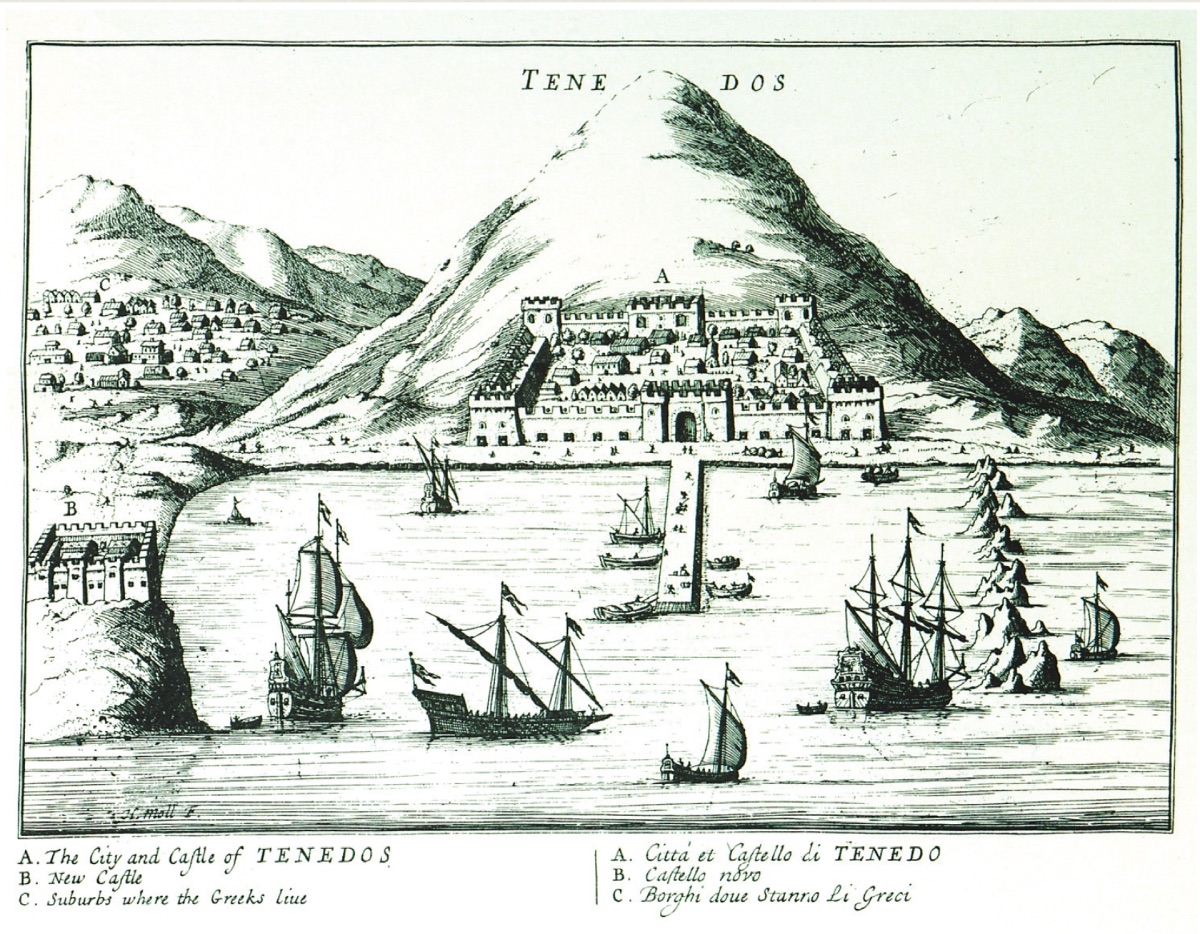
Saturday, December 26. I was a bit unwell in the morning. I must have caught a chill while sweating during hunting on the shallow beach the day before. All day, the wind blew strongly from the north and northeast, and the sea was very rough. The foresail tore and was almost flying away. We stayed near the island of Lesbos all night and anchored in ten fathoms of water off Tenedos at around four in the afternoon. We immediately sent our chief treasurer to meet with his friend, the agha, and shortly after, through the treasurer's mediation, we were invited to the shore and told we could take whatever we wanted. The agha sent us some fish, including various species, a fish with a long fin along its back (our captain called it that) and bass-like fish with spiny fins on both sides of its back, and (as the sailors say) bright yellow fish with exactly eleven veins or decorative lines running parallel from head to tail.
The next day, the bottles and provisions requested by the agha from our captain, including muscat wine with a full, sweet, and heavy taste, were taken to him by our treasurer who went ashore. As I was too ill to go ashore, I will tell you what I saw on another visit here.
Tuesday, December 27. At around five in the morning, we set sail and by ten we were at the mouth of the Hellespont. On the southern shore of the Sestos and Abydos castles, directly opposite Magla (formerly known as Madgla), there is a narrow beach surrounding a sharp point. Our second captain on watch, trying to take advantage of Eddy (flowing westward from here), attempted to pass this point more easily by following the southern current, but he brought the ship too close to the southern shore and ran it aground.
However, there was a light wind blowing, just enough to hold against the current. The place where we ran aground was soft sand and mud, so it wasn't very dangerous. We freed the ship by reversing (as is customary in such situations) and continued on our way, heading out to sea.
Wednesday, December 28. At around ten in the morning, we anchored in twenty fathoms of water off Gallipolis (as the Greeks still call it) in front of Çanakkale. We stayed for no more than two hours before setting off towards Constantinople."