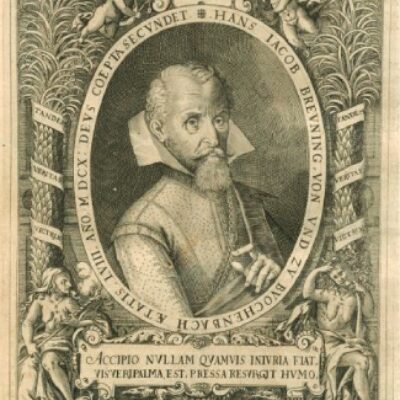
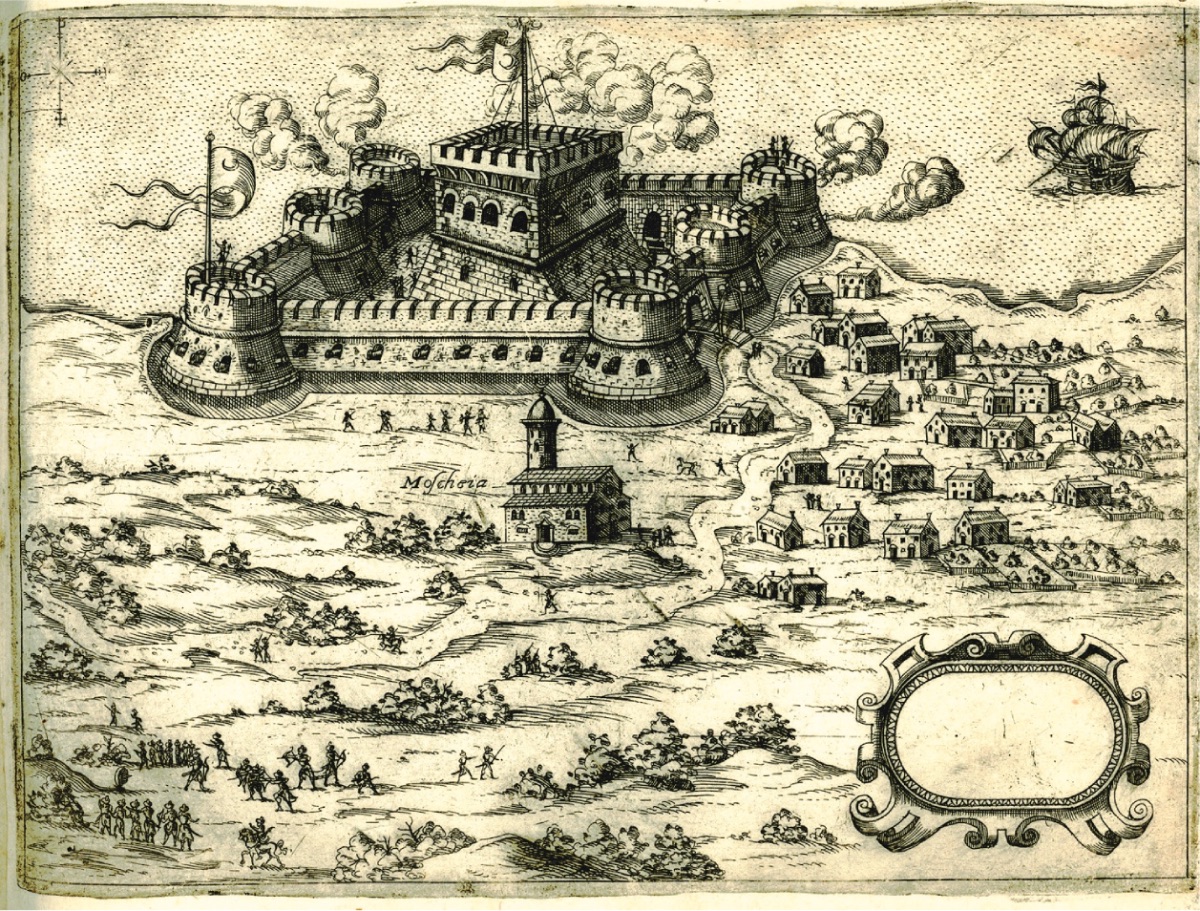
Seddülbahir Castle (1574, Giovanni Francesco Camocio) Hans Jacob Breuning von Buchenbach, believed to have been born around 1552 in southern Germany, received education on classical cultures at the University of Tubingen. He befriended Jean Carlier de Pinon in Paris and London, and in 1579, they embarked on a pilgrimage to the Holy Lands together. He gained fame with his book "Orientalische Reyß-Doğu Yolculuğu," published in Strasburg in 1612. He distinguished himself from other travelers by describing the traditions and beliefs of Eastern countries without prejudice. However, after his death, he was heavily criticized for having borrowed many of the illustrations and some sections of his writings from travelers like Rauwolf and Belon.
Hans Jacob Breuning's visit to the Çanakkale region occurred during his journey that began on April 30, 1579, from Venice, passing through the Aegean islands and the Dardanelles, and arriving in Istanbul on June 22. Here, he repeats what previous travelers wrote and later continues his journey to Jerusalem, carrying books by ancient authors with him. After various assignments, in 1595, he led the embassy delegation to Queen Elizabeth I of England. Hans Jacob Breuning died in Germany in 1616:
"Ahead on the left was the island of Bozcaada (Tenedos/Tenedo), and we saw the fortress adjacent to the sea. On the hills, there were numerous windmills. It is said that there is a miraculous water source on this island; it flows abundantly between 3 and 6 in the morning during summer and winter days, but decreases and completely dries up during the rest of the time. To the right of Tenedo, on the other side of the water passage (about three miles away), the remnants of Troy can be seen on the coasts of Asia Minor (Asia minori) and Anatolia (Nattolia). We waited on the Asian coast because there was not enough strong wind to pass through the Dardanelles (Hellespontum) or the Strait of Gallipoli (il stretto de Gallipoli). Because this sea is not like the others, sometimes it turns into a water full of ships flowing so strongly...
...Here, Mysia is located in the midnight direction, but Phrygia, also called Dardania and Troas, is located towards noon, where we saw the ruined walls surrounding a mountainous area or hill of the city of Troy...
...
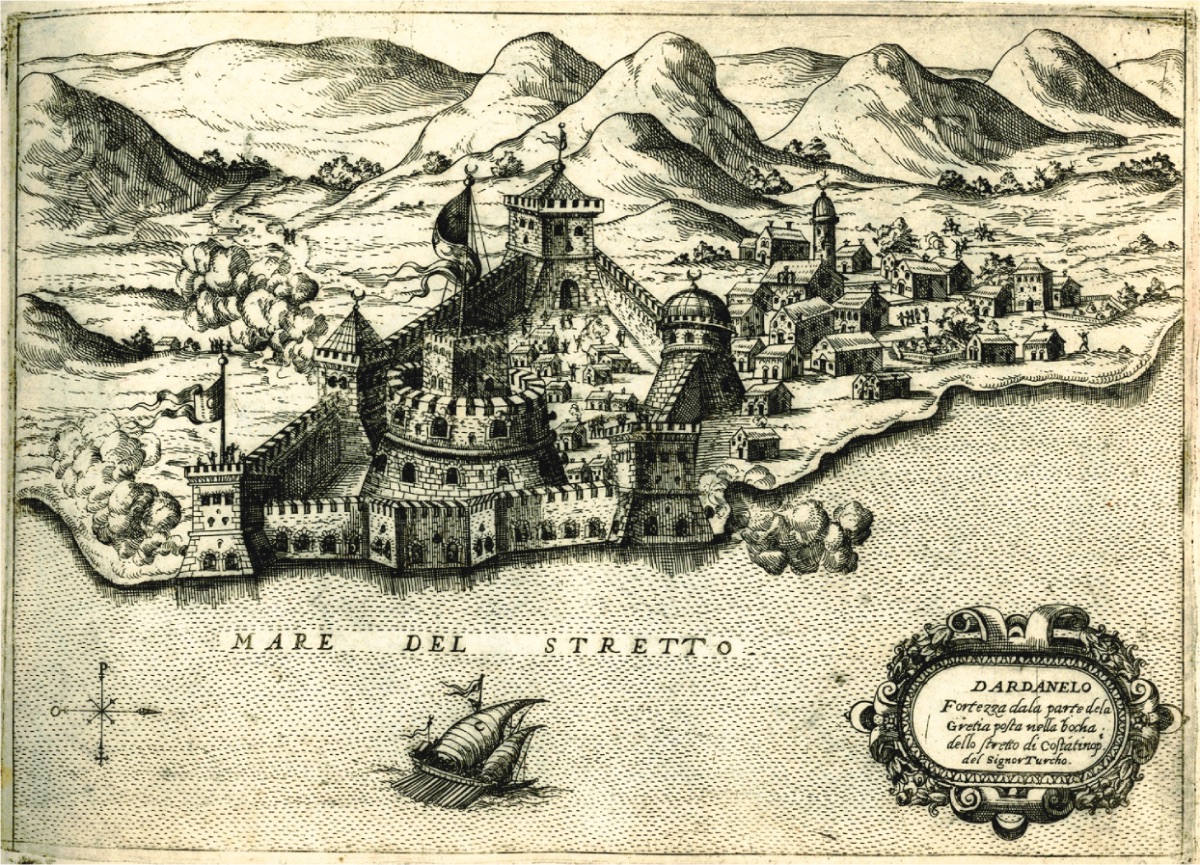
On June 21, before sunrise, we set out and unfurled the sails again. With a good wind, we began to round the Peninsula (Archipelago), and after a while, we reached the cape known as Yenişehir Burnu/Sigeion (capo de Janitzeri). Here, a tower and the ruined walls of Troy can be seen. But this cape extends as far as the eye can see into the mountainous area inland, and it is also seen that many ruined walls belonging to the destroyed city of Troy and many other places continue. This cape marks the end of the peninsula (Anatolian peninsula) and the beginning of the Strait of Gallipoli (Il stretto de Gallipoli), the old Dardanelles (Hellespontus). Before noon, we reached the place where the castles called Constantinople/also known as Dardanelli are located, just in time. Yenişehir Burnu (Capo de Janitzeri) is 12 miles away from here... Kilitbahir Castle (1574, Giovanni Francesco Camocio)
The castle on the right side in Anatolia (Nattolia) is called Abydos. Built on a flat area with a circular plan, it has numerous slightly elevated four-cornered towers (Çimenlik Castle), and next to this castle, there is a village inhabited by Turks and Jews. The castle on the left side in Thrace (Thracia) is called Sestos. It is built with a leaf-like plan resembling a hill and is protected by three surrounding walls (Kilitbahir Castle). It is also surrounded by other hills... After passing the castle on the left side, we saw the small town called Eceabat (Madytos/Majeto). There are windmills on both sides of this town, and it is surrounded by very beautiful vineyards..."