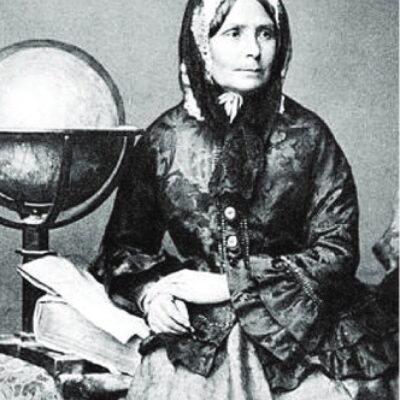
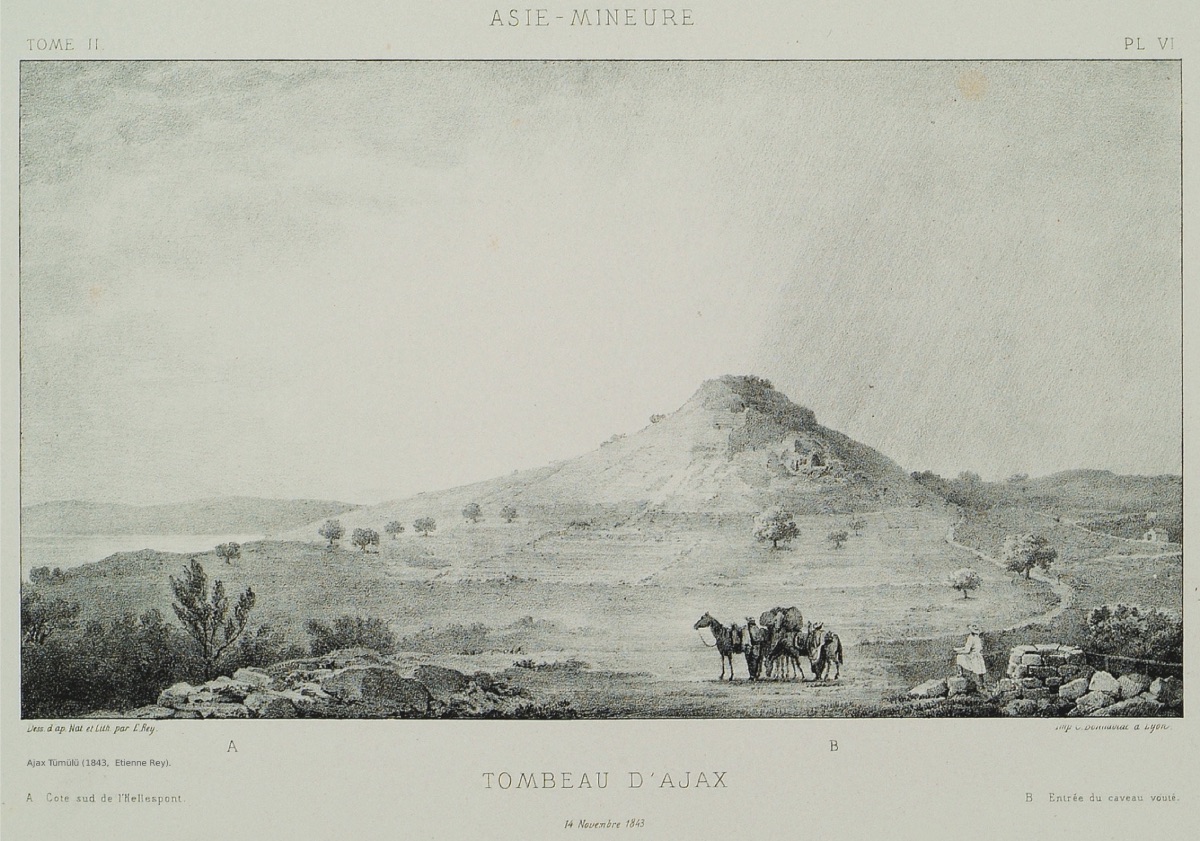
Ajax Tumulus (1843, Etienne Rey) Born in 1797 as the daughter of a wealthy Viennese merchant, Ida Pfeiffer grew up with six brothers. She married a lawyer at the age of 22, but the marriage ended shortly thereafter. At the age of 45, she decided to explore the world and embarked on a journey to Jerusalem in 1842; she undertook two more world tours in 1846 and 1851. In 1856, she traveled to Madagascar, but returned to Vienna ill after that trip and died there in 1858. Ida Pfeiffer's account of her visit to the Dardanelles through Istanbul by ship in May 1842 is adorned with Homeric epics and heroes, in line with the 19th-century European cultural perception:
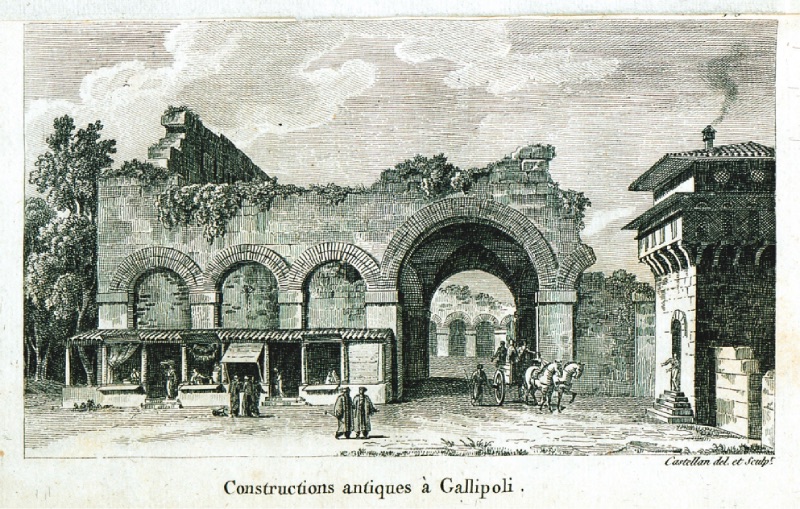
"May 18, 1842/Dardanelles (Hellespont) or Gallipoli, a small town situated on an elevation on the shore, was reached early in the morning. The ruins, almost entirely in a state of decay, offer enough material for passersby to imagine the glorious ancient times. There was only fifteen minutes to make room on deck for new passengers boarding here.
The sea, twenty-five nautical miles long to Seddülbahir, is so narrow that it gives the impression of a canal dug to connect the Sea of Marmara with the Aegean islands; hence it is rightly named the Dardanelles strait. On the left is the mainland of Asia, and on the right is the mainland promontory of Europe, ending at Seddülbahir. Both sides of the coastline are treeless and barren. As every sensitive traveler does, when compared to the Bosphorus, it creates a great contrast. Ahh, what do these lands offer? What heroic stories does the history of this region hold? Every minute we are getting closer to the classical lands. Passing by some Greek islands that are not destined for us. I console myself with thoughts of the past, without seeing the events and places of the ancient Greeks and their heroes. How can I describe what I felt as we approached Troy? Ancient Ruins in Gallipoli (1811, Antoine-Laurent Castellan)
I stood on deck to miss nothing, and when I saw the plain of Troy, I almost forgot to breathe.
This famous city must have been somewhere around here, these elevations perhaps are the tombs of Achilles, Patroclus, Ajax, Hector, and who knows what other similar heroes who fought for their homeland but were unfortunate enough not to have their names remembered in later times.
As the day progressed, we passed many islands. In the foreground, the peak of Mount Hydra was visible. Now Samothrace appeared, and shortly after, we sailed very close to Bozcaada (Tenedos). This island does not initially offer a very beautiful view, but immediately after passing a promontory, we saw the beautiful castle stretching along the coast, giving the impression that it was built to protect the city behind it."