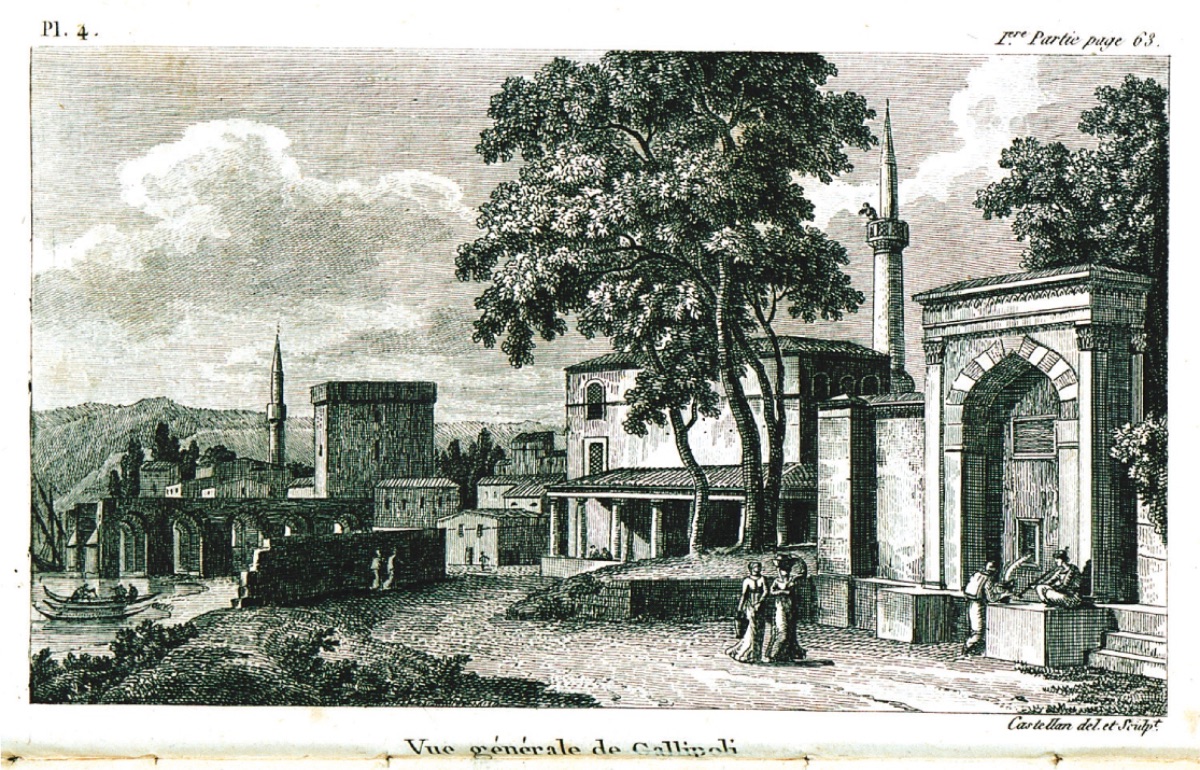
Gelibolu Harbor and Surroundings (1811, Antoine-Laurent Castellan) The letters of the French diplomat Tancoigne, who came to Turkey on a diplomatic mission, consist of his three-year observations in Ottoman Turkey. The work contains information, analyses, opinions, and evaluations, especially on the historical geography, sociology, trade, and international relations of the Ottoman Empire, with a focus on the geographical features of the Dardanelles:
"31st July 1718:
I left Istanbul on the sixth of last month. Despite all my desires to share with you the pleasure of my journey in the most beautiful part of the world, the first port where I could finally send a single letter was Tunis. In the most beautiful region of the world, every scene reminds one of a poetic view:
On the morning of December 27th, as the sun rose from the horizon, we entered the Dardanelles, which is half a league wide. As we sailed past Gallipoli with a tailwind, the grandeur of the cannons fired from the city on the occasion of the Eid al-Adha celebrations could be heard. At noon, we anchored in front of the second fortress of Asia and the small town where European consuls reside.
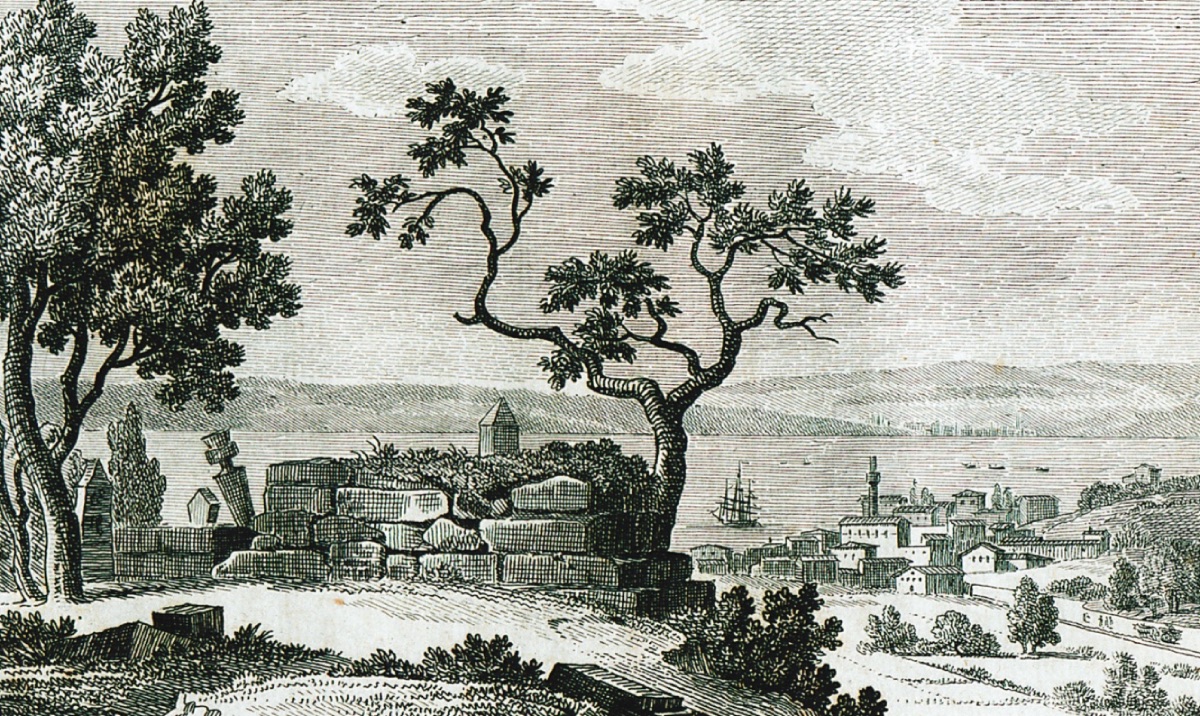
It is difficult to find a view as impressive as that of the Dardanelles elsewhere. Europe and Asia, separated by a simple sea channel on which all kinds of ships and boats sail in every direction, offer the traveler perhaps one of the most dazzling views to be found anywhere. In some places, the contrast created by both shores is particularly striking. On the Asian side, the land is flat, with cheerful greenery, clusters of trees, towns, and villages settled on this flat terrain. On the European shore, there are forested mountains and all the scenes that wild nature can offer. Lapseki and the Strait from Lapseki Cemetery (1811, Antoine-Laurent Castellan)
After the routine inspection carried out by the customs officers of Çanakkale, who personally came to our ship, we paid a courtesy visit to the French Consul and continued our journey towards the exit of the Strait. We passed between the first fortresses of Europe and Asia and, albeit from a distance, watched the shores of Troy illuminated by the setting sun.
At six in the evening, with a cool north-east wind, we exited the Dardanelles. The wind blew so favorably all night that by the morning of the 28th, at dawn, we had already reached the southwest of the island of Lesbos."