
Born in 1792, William Turner was assigned to the British Embassy in Istanbul in 1811 at the age of 18 and remained in Turkey until 1816. The British Ambassador of the time, Robert Liston, sent Turner on trips extending to the Near East. Turner published his travel impressions in 1820. The long journeys he undertook during his diplomatic career played a significant role. From August 1813 to June 1814, he traveled officially to the Ionian Islands, Epirus, and Northern Peloponnese. During his second journey, he visited many places in the Mediterranean geography. He especially toured the regions of Izmir and Troas in detail. His observations in Çanakkale and its vicinity, particularly his views on Troy and Homer, demonstrate how knowledgeable he was on the subject despite his young age. During his visit to the Dardanelles, he attempted to swim across the strait like Leander and Lord Byron. However, he stated that swimming from Asia to Europe was more challenging than what Lord Byron described. Byron replied to Turner with a letter containing quotes from ancient epics. Turner returned to his country in 1816 and came back to Istanbul in 1824, this time as the secretary to the British Ambassador, and continued this duty until 1829. The rich coin collection Turner gathered during his travels remained with his family until 1987, after which it was donated to the British Museum in London:
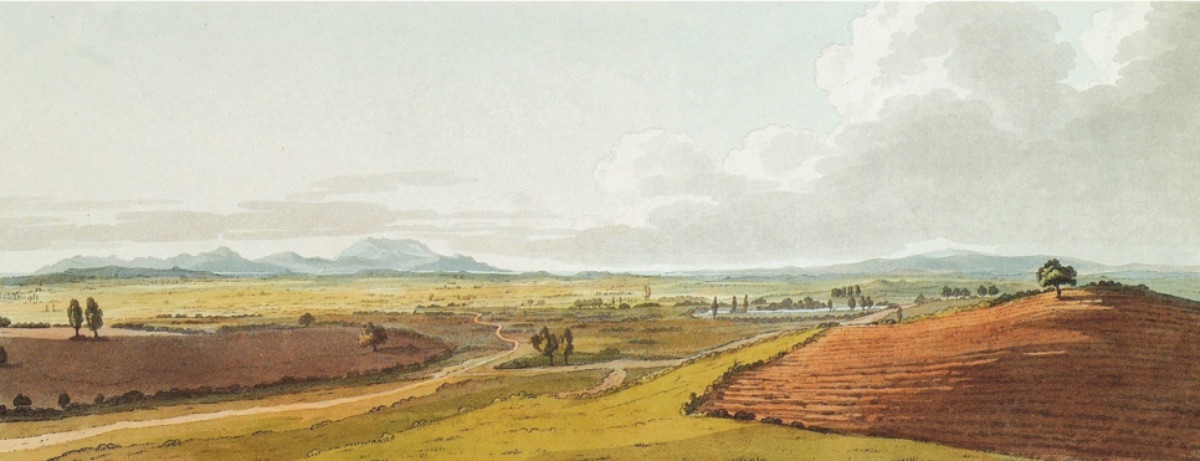
"The wind turned favorable on June 7, and we set sail from the island of Milos early in the morning. By noon on June 12, we passed Tenedos (Bozcaada) and anchored at the entrance of the Dardanelles (Çanakkale Boğazı) two hours later. The news of the Ambassador's arrival was immediately conveyed to Mr. Stratford Canning in Constantinople (Istanbul) since the British Minister was there. We waited on the frigate's deck until the 16th, during which time we received a message from the Turkish Governor of the Çanakkale Fortresses inviting us ashore free of charge. We had anchored off the mountainous and wooded coast of Asia, enjoying the view of Alexandria Troas and part of the plain of Troy from the ship. On the 16th, I went ashore to the village of Kumkale with three members of our crew, where I found the horses of the Governor of Çanakkale waiting for us. Two Turkish servants and a Jew, the brother of the consul's assistant sent to aid and guide us, were also there. Accompanying us was a simply made cart drawn by two oxen (described in detail by Dr. Clark and referred to in antiquity as ∆ῖΦΡΟζ...) carrying our belongings. We passed through the poor village of Kumkale and, after crossing the Simois and Skamander rivers, which were fifty feet wide and knee-deep at their intersection, we proceeded across the plain (most of which is flat and green, with intensive agriculture) to Pınarbaşı (Bounarbashi), where the village Agha, who was very attentive, greeted us hospitably with his household. After dismounting, exchanging greetings, and having coffee together, we began to walk towards the hill that Mr. Gell's work (whose detailed description and drawings are highly commendable) identified as Troy; from above, there was a commanding view of the wide plain. According to some writers, this hill, now just a pile of stones overgrown with bushes and grass, was Hector's tomb. One of the group who visited here 18 years ago said there was a large hole on the hill at that time, now filled in. Regular plots of stones on the hilltop are noticeable. Perhaps they are remnants from the Turkmen who, like the gypsies in England, live here during the summer. Near the elevation referred to as Hector's tomb, to the west, there was a small quarry with break marks on the stones. On the other side of the hill, on the small descending path, there is a second larger one, covered entirely with branches of wild fig trees, as is customary in this region. From the base of the hill flows the river called Simoeis, which today is no wider than four feet (1 foot = 30.48 cm. R.A.). However, the riverbed, now dry and sandy, which flows in winter, is, I estimate, 12 or 14 feet wide. The greenery bordered by trees, with the wind blowing across the plain, looks very beautiful from a distance. The valley and fields on the west side of the hill are the most intensively cultivated and fertile places I have ever seen. Reluctantly leaving this beautiful view, we returned to the Agha's house in Pınarbaşı. Here we ate Turkish meals and slept (or rather spent the night). Because of some live animals that travelers in the Levant always complain about having to share their beds with, sleeping was almost impossible. The next morning, we had breakfast with the Agha under the vines in his garden, at what one might fancifully call the site of Priam's settlement.
After parting from him, we passed by the Kırkgözler (Keerkios) springs, thought to be the source of the Skamandros. The two springs we measured with a thermometer were normal cold water. No place is as beautiful as here, where clear water flows from the rocks, under the shade of poplar trees, with dim contrasting light seen in the surrounding plain. The women washing clothes at the springs remind me of the Trojan women Homer describes from times of peace. When our stay here ended, we headed towards Alexandria Troas, six hours away (the Turks call this place Old Istanbul). The path was only a trail, so it was entirely covered with brushwood, but as I advanced towards the mountains, I felt as if I were among only Englishmen. There were many pieces of ancient columns around, and other ancient ruins were along the path; I saw inscriptions on some, damaged. The number of such ruins increased as we approached the ruins, surrounded by trees (especially oak trees producing acorns), resembling almost a wild nature. An hour before reaching the city, we saw the remains of a large arch. It was of enormous size, but one of the group mentioned that a large piece was missing since their last visit to the ruins. This is not surprising at all, as Alexandria Troas has served as a kind of quarry depot for centuries and still does for the cannons in Istanbul and the surrounding structures.
Our visit was quite rushed, and I could only see the city entrance, a small theater, and bath structures among the ruins. The latter was quite dilapidated and distinguishable from the others. The dried canal that carried water from the springs here was quite evident. On the west side of the river and closer to here, there were the often-mentioned hot springs. Their temperatures were at boiling water level, salty, and had a very unpleasant taste. These hot springs were used by the Turks for bathing and treating illnesses. On the other side of the river, there was an abundant cold water spring, sweet and pleasant in taste. The ruins were made of large stones, some entirely made of assembled rock stones. We ate under the trees and returned in the evening. On our way back, we lost our way, and without bright moonlight, we found ourselves in quite a difficult situation. After walking for about an hour, constantly jumping over brushwood and entertained by our guide's foolish shouts, we finally reached Kumkale at two in the morning and, seeing a boat waiting for us, immediately set sail and boarded the frigate's deck. While sailing, I was amazed by the numerous meteors, referred to as falling stars, I observed in the clear sky. In just half an hour, I counted nineteen of them. While waiting for news from Istanbul, we rowed ashore in boats to get a view of the mound referred to as Achilles' tomb and other previously described interesting locations in the plain.
On the morning of the 22nd, our messenger returning from Istanbul brought back a letter with information that Mahmet Agha had gone to the capital to see the ambassador (The Sultan, fearing harm from the capital, had banned the entry of all European ships into the Bosphorus or the Dardanelles. This ban was primarily against Russia; because in 1816, the current Russian minister in Turkey, Baron Straganoff, had passed through the Bosphorus and anchored his ship opposite the Russian palace in Büyükdere. Seeing that their ban was not heeded, the Turks made no attempt to welcome the minister. During my stay in Istanbul, British warships had passed unnoticed through the Dardanelles; but as soon as the ban information arrived, the ships immediately turned back without delay).
In Çanakkale, he was waiting for us with a Giovani di Lingua from the Embassy (a language student accompanying the translator R.A). In the evening, after thanking the officials for their courtesy, we boarded our boats and departed. These sailing boats were long sailboats used by eight or ten Greek rowers, against the strong current (covering about four miles in an hour) towards Çanakkale on the Asian side, about sixteen miles from the ship. We arrived at ten o'clock and immediately lay down at the house of Señor Tarragona, a Levantine Jew who had been serving as the British Consul's assistant for several generations in Çanakkale, hoping to rest and sleep. The next morning, we were introduced to the good-looking Turkish Mehmed Agha, who had served as a steward in the palace of the old and white-bearded Sultan, but held a higher rank than the Sürreh Emin, who organized the pilgrimage journeys to Mecca among the Turks. Considering the advantage of being on an important trade passage south of the capital, I was very surprised that the settlement was quite ordinary. The Turks named it Çanakkalesi, derived from the word Çanak, due to the pottery factories here. There are about two thousand houses, most made of wood. The streets (as in all Turkish cities) are narrow, stone-paved, and dirty. Despite the coarse and clumsy nature of the ceramics produced, it is quite remarkable that they are famous throughout the Levant. The fortresses are quite strong and impassable when manned. There are strong batteries on both sides. When they fire together, no ship can pass. The fortress on the Asian side is commanded by the Bey of the city, whose authority is also valid on the European side, and they never fire without communicating with each other. In 1806, the cannons that fired stone balls at our fleet are still immovable, near the batteries on the Asian side, fixed in place from the south. The diameter of the cannons is about two feet, and I can easily gauge them with my eyes. The estimated gunpowder weight that can be loaded is sixty-three okka, and the weight of the stone balls is one hundred forty-two okka. During this visit to Çanakkale, I will also take the opportunity to test the historicity of Leander. Lord Byron's assertion that it was possible for Leander to swim across the strait against the current, after his attempt to swim from Europe to the easiest point on the Asian side, intrigued me greatly. The tide here flows not down the strait but parallel to the shore, swiftly towards the Eceabat (Maydos/Maito) bay, and in response, flows under the opposite shore. Therefore, at the narrowest point of the gulf, the current moves diagonally from the European side to the Asian side and then redirects with great force towards the peninsula. Consequently, anything thrown into the current on the European side reaches the Asian side. Both Leander and Lord Byron, who imitated him, have only accomplished this. (According to Dr. Clark, the servant of the Imperial Consul swam both from Asia to Europe and from Europe to Asia. However, his superiors, whom I met, who are Jews from the city, told me he only swam from the European side to Asia; therefore, one must approach these claims with skepticism). I attempted to swim from the Asian side to the European side, north of the fortress; however, the current was so strong that, despite my continuous effort, I could not swim more than a hundred yards (1 yard = 0.9144 cm) for twenty-five minutes and was quite exhausted. As someone who has been swimming since childhood, I can confidently say that no one can swim a mile and a half against such a current at the narrow part of the strait.
The strait widens so much either up or down that changing its position makes it impossible for a swimmer to cross with less effort. Therefore, I believe the story of Leander swimming across the strait from both sides should be considered one of the many myths the Greeks invented to name history."