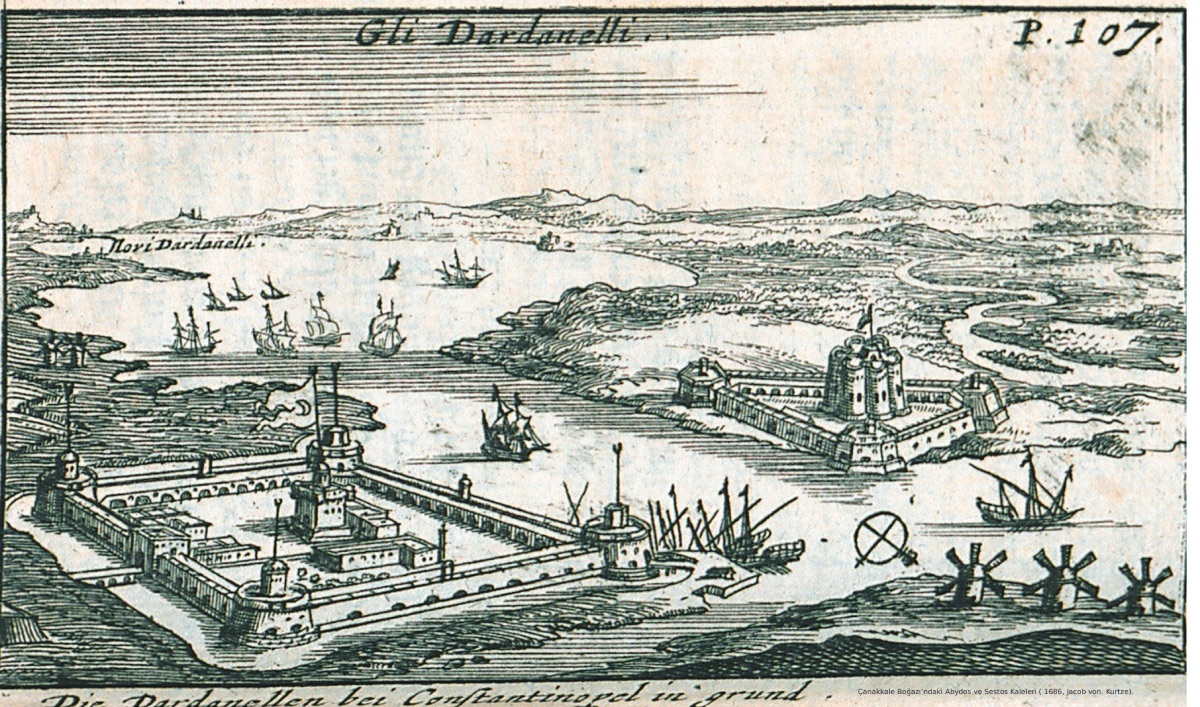
The Fortresses of Abydos and Sestos in the Dardanelles (1686, Jacob von Kurtze) Born in Southern Germany, engraver and publisher Jacob Enderlin became one of the renowned publishers of his time with his history-geography themed books published in the late 17th century. Enderlin, who did not travel to the places he published about but compiled from the books of other travelers, is like a collection of what travelers of that period narrated and depicted. The books he published mostly contain scenes of the wars of the "Holy Alliance" in Europe against the Ottoman Empire (1684-1690). The main source Enderlin used was the books of V. M. Coronelli, which began to be published in 1686. Until 1693, Enderlin published at least one book a year. Most of the engravings in his books are copies of previously published images. Enderlin skillfully copied and republished the subjects processed by Τ. Porcacchi in 1620, S. Münster in 1544, and the human types by N. Nicolay (1563):
"The Dardanelles (Hellespont)
The strait that connects the two seas named Marmara (Propontis) and Aegean (Archipelagos) takes its name Hellespont from Helle, the daughter of Thebe's king Athamas. Because his brother Phrnrus, their mother Nephele, and their stepmother Ino forced them to leave the country with his sister Helle; they crossed from the Greek land to Asia with a great treasure and a ship guided by a ram, as they wanted to continue the same life. Helle, who was weak in structure, could not endure this sea journey and died, and the place where her body was buried in the sea is called Hellespont because of her name.
His brother Phrnrus continues the sea journey and reaches the region of Colchis and leaves his treasure to King Aeta, and according to the Portik legend, Phrnrus crosses over the sea on the back of a ram; later he slaughters it and brings its fleece to King Aeta.
This strait named Hellespont is 10 German miles long and has the world-famous fortresses called Dardanelli at its narrowest point in the middle.
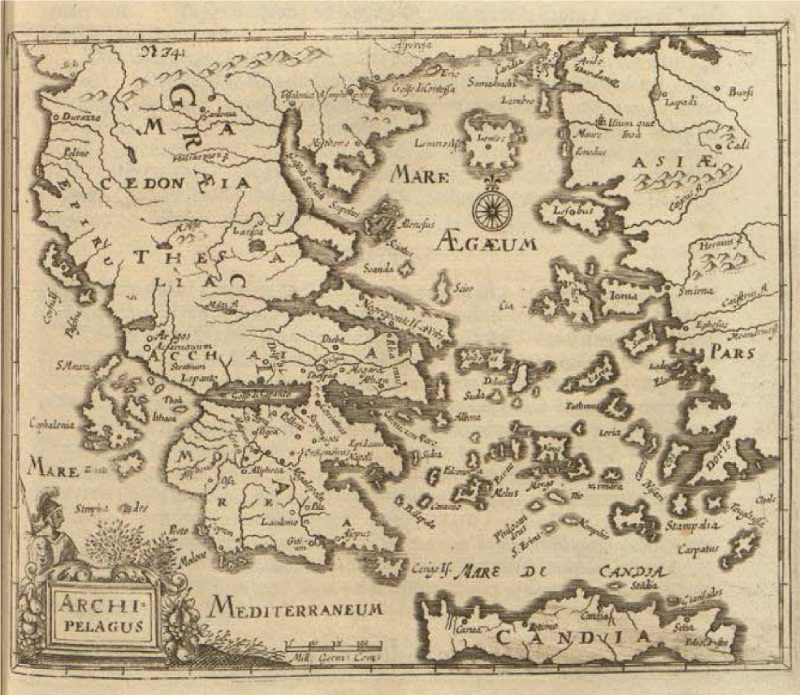
Region of Troas and Mount Ida (1686, Jacob Enderlin)The city of Çanakkale (Dardanelli)
The place, named after the famous ancient city Dardanos (Dardano) that once existed here, is called Dardeli or Boğaz Hisarı, meaning the fortresses of the strait, by the Turks. However, especially the name Denizin Kilidi was given to the fortress on the Asian side, actually named Dardanello, and later this name was used for other fortresses as well. There are four fortresses on the shores of Hellespont...
Bozcaada (Tenedos)
The island located below the Sigeion Sigranik (Yenişehir) coast, with a city and fortress named after it, rises northward in the form of a mountain and then continues flat. The island, where heavy wine grapes are grown, is named Tenedos after Tenes, the son of Eneni from the city of Kolonede in Troas. According to the story, after his stepmother accused him of impropriety, his father threw him to the seaside to die, but he swam to this island and managed to survive; he continued to live here later. Because a musician helped his stepmother, he banned musicians from entering the Apolollini Sminthio temple built to protect the island.
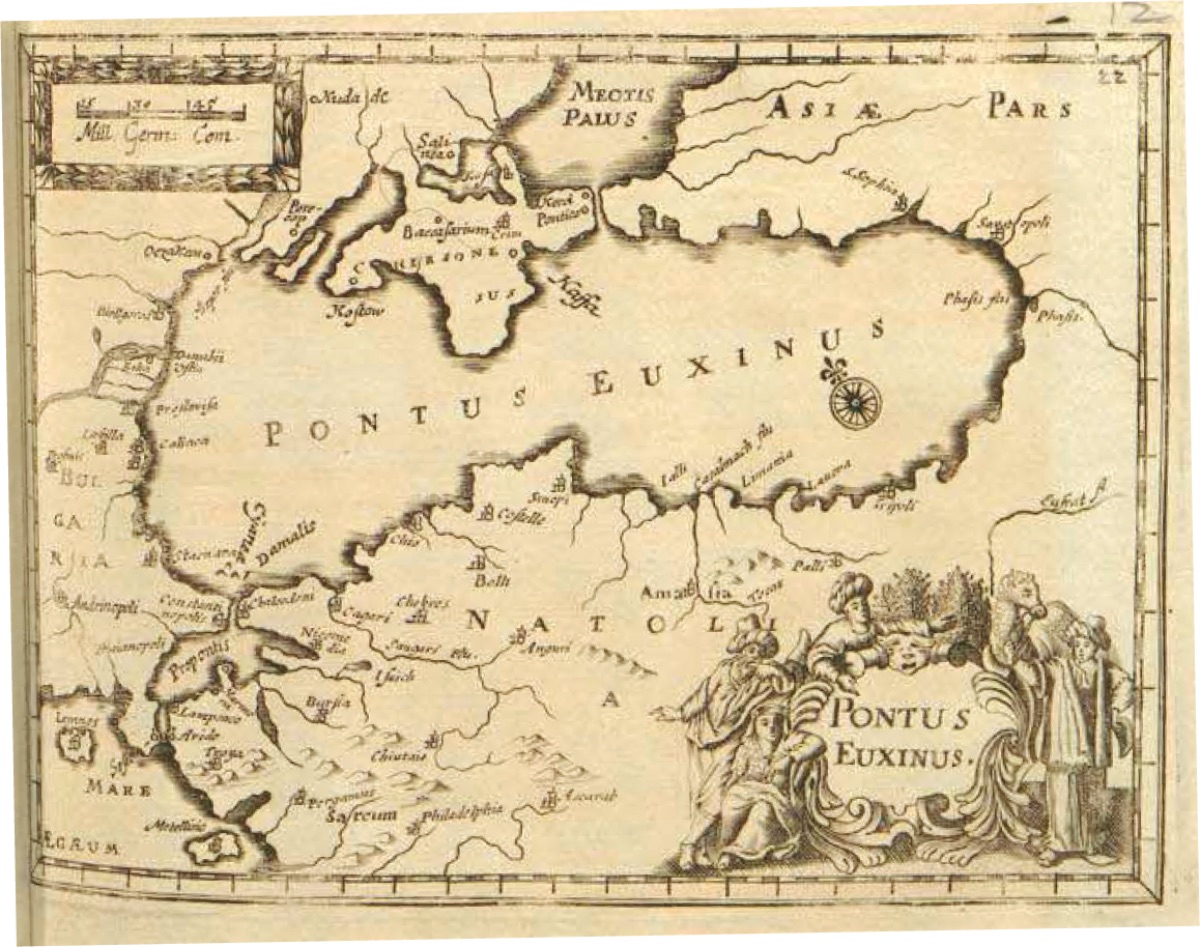
However, during the Trojan War, Tenes was killed by Achilles, and his slaves built a temple in his honor. The distance from one end of the Tenedos island to the other is about 10 German miles. Western Anatolia and the Dardanelles (1686, Jacob Enderlin)
Troy
This place is located 6 German miles from the island of Tenedos and 26 German miles from Dardanelle, near the Simoeis (Simores) river. Ilus, when the valleys were flooded with stone waters, was the first person to flee and establish Ilium, which was later named Troy. Rheteium is located 2 German miles away from here, between the deep, wide valley and Mount Ida by the seaside. In the city that was once located on the Aegean Sea coast, the lords from the Greek land used to live, but after the 10-year war, it was completely destroyed. After the war in the 3106th year of the world when the Israeli king and prophet David lived, nothing has remained to this day, only ruins and wall blocks made of hard black stones can be seen. Nothing remains of the once beautiful structures, the hot baths..."