Olfert Dapper - Christian van Wolf - Johanna G. Hettinger
Listen
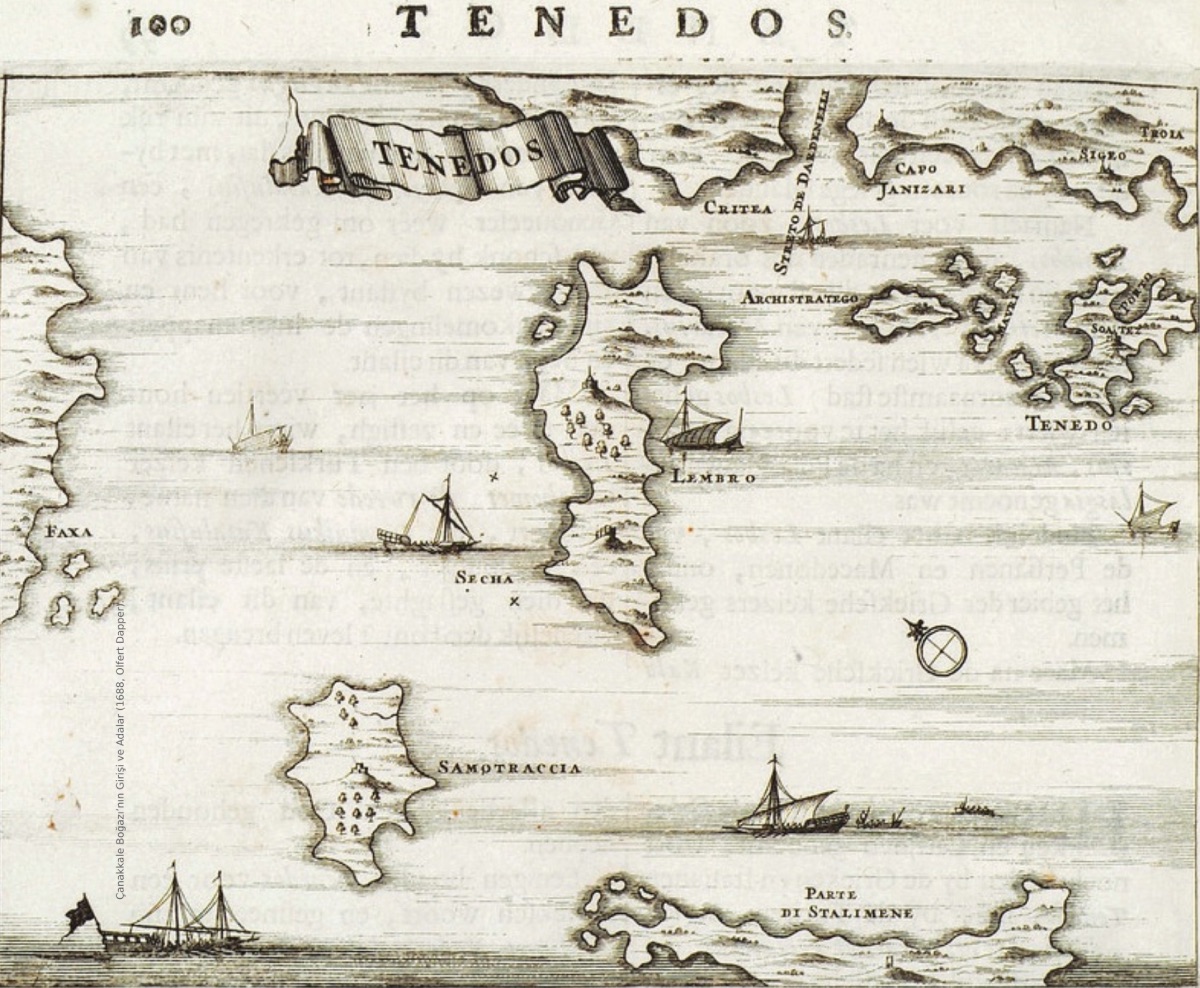
Entrance of the Dardanelles and Islands (1688, Olfert Dapper) Known for his anthropological travel writings about foreign countries, Olfert Dapper (1636-1689) is one of the most famous Dutch authors. He studied physics and history in Amsterdam. He began his writing career in 1663 with a book about the history of Amsterdam and later translated Herodotus's famous history book into Dutch (1659). After this translation, he became interested in writings about distant, foreign countries and published travel books on the subject. Although Dapper never traveled, he utilized publications about those countries, letters from travelers who visited those places, and unpublished sources. A year before his death, he published a book covering Greece, Anatolia, and the Mediterranean Region. Dapper's works, which were quite popular during his time, were translated into French, German, and English:
"Bozcaada (Tenedos);
...The island, named Tenedos by the ancient Greeks and Latins, is currently called Tenedo island by the Greeks and Italians. The Turks, on the other hand, call it Bozcaada (Bogge Island), meaning the passage island or the road to Istanbul (Constantinople), because it is near the Dardanelles (Hellespont)...
...Some claim that the word Bozcaada (Tenedos) is a Greek word and say it means Tenou Hedes, or the place of Tenes. The founding of the city is attributed to him. Cicero shares the same view... However, Bochart argues that the word Tenedos is of Phoenician origin and suggests that the word Ten-edom means red soil, and that beautiful pottery was made from clay here, as in Samos... In ancient times, Tenedos was also named Leukofrys, Kalynda, Fenyce, and Lyrnessos (Strabon/Plinius). According to Strabon, it was called the city of Eolis, and in the city with two harbors, there was a temple dedicated to Smynteon Apollo, as Homer also described... Before the fall of Troy, the city of Tenedos was a famous and wealthy island (Vergilus, Cicero). Today, it is not such a place. Du Loir traveled the entire island to find the beauties of that time but found nothing. According to Plinius, there should have been a fountain at the foot of the highest mountain, but Dy Loir could not find this fountain. One should not doubt what Plinius said, as the fountain may have dried up.
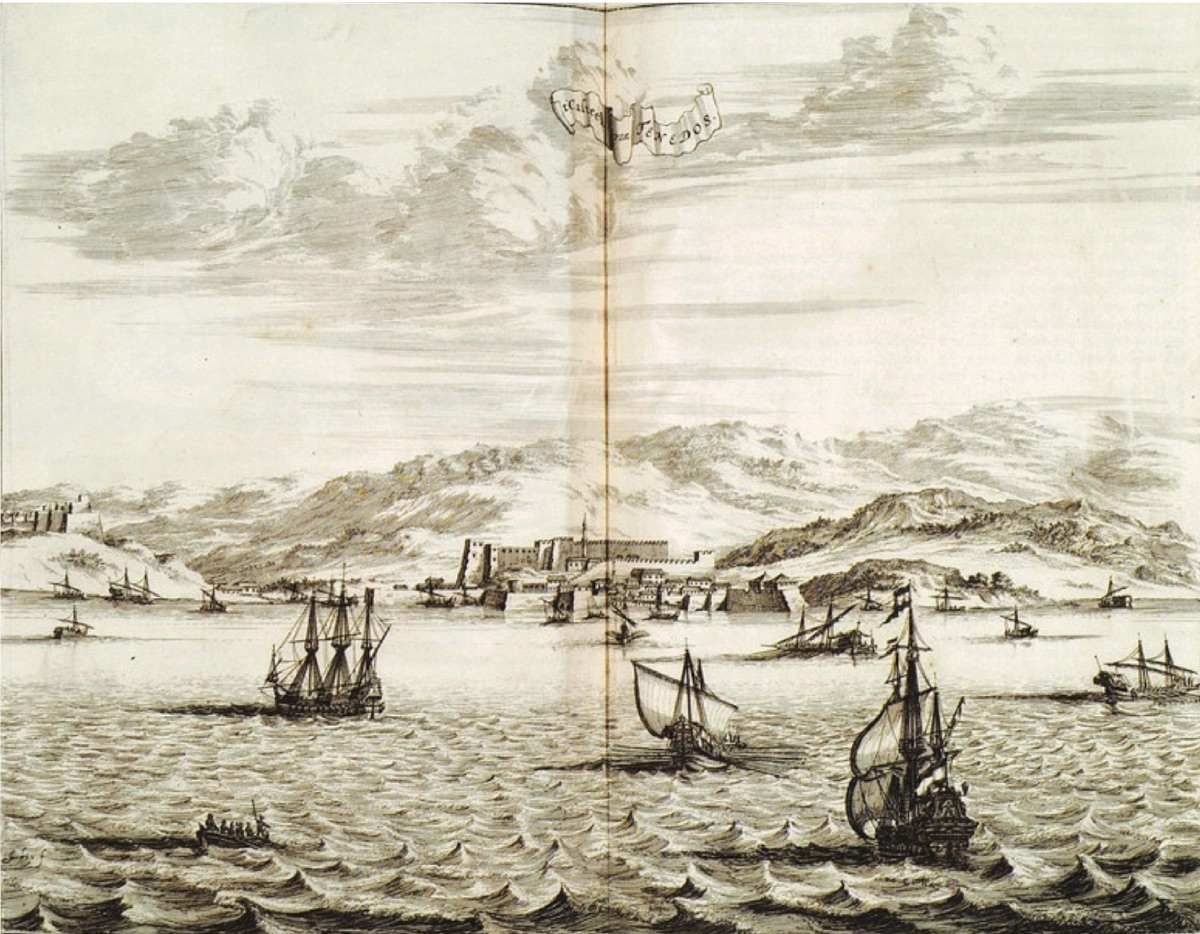
On the slopes of the hill, the Turks built a triangular-shaped castle. The walls made of cut stones surround the castle, and the walls are protected by only a few towers in the old style...
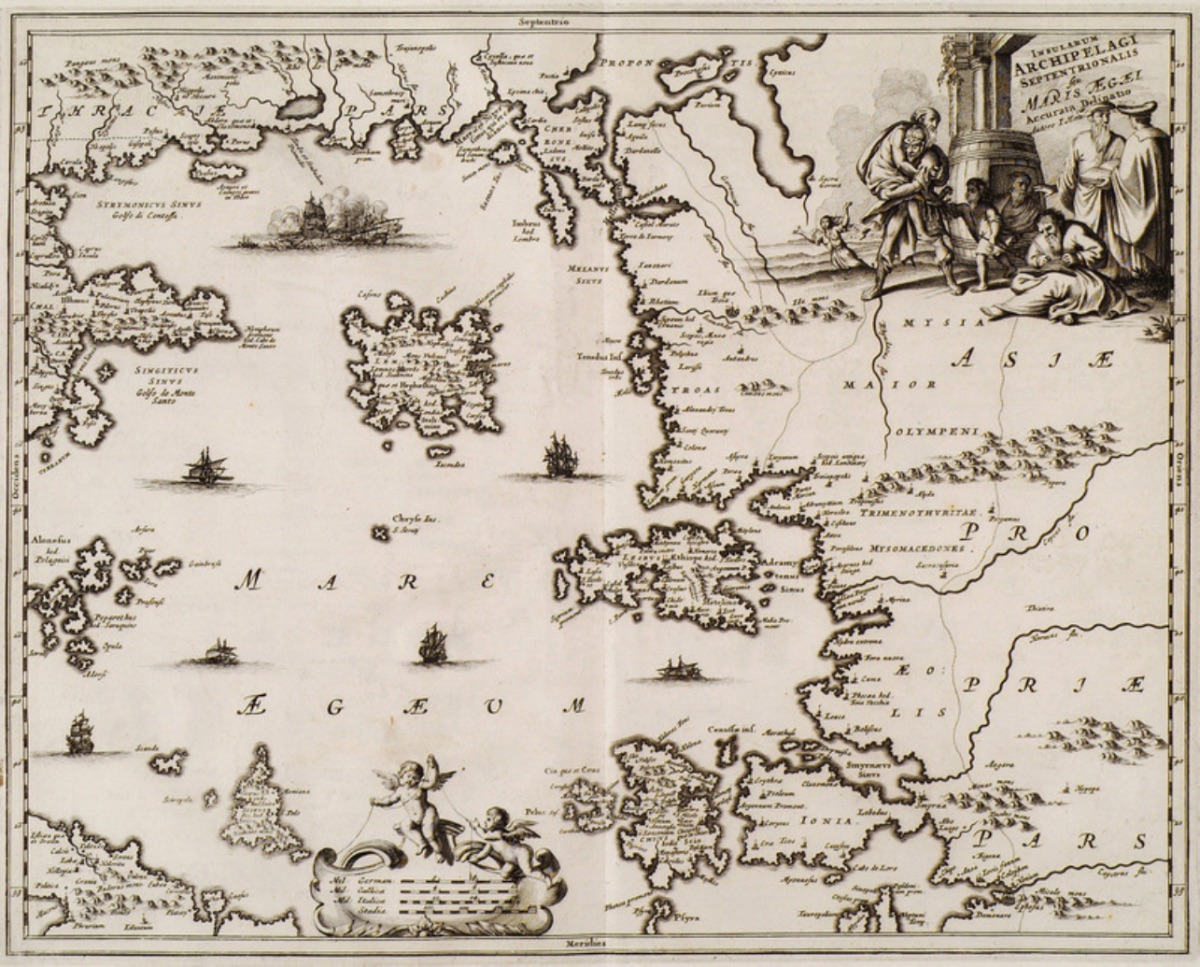
The island's inhabitants are largely Christians and Turks. Christians live in the port area, while Turks reside in the castle. Besides, there are other inhabitants like Jews on the island. Aegean Islands and Western Anatolia and Troad Region (1688, Olfert Dapper)
What is surprising on this island is the vineyards or vines growing on the low rocky hills, and therefore there is plenty of wine here. Especially the magnificent muscat wine of this place is the best wine in the Levant... There are also many, but quite large, wild chickens with a bad taste. The soil is not fertile, and almost every part of the hills is rocky. There is little wheat grown, but melons are quite abundant. In the south, there is a valley where different types of watermelons and melons are grown in abundance. There are types of melons with yellow skin and flesh that can last all summer without spoiling.
Gökçeada (Imbros Island):
The island, named Imbroz or Imbrus by the ancient Greeks and Latins, is called Embaro, Lembro, or Imbro by the Italians... There used to be a city with the same name on Imbros island. Now, there is a place with 4 settlements and a castle called Imbros. The island has quite high mountains. Especially beautiful pear trees grow here... In the mountains and forests, there are wild animals like pigs and rabbits... The water of the fountains is very nice. In the countryside, fig trees, vineyards, basil, and other types of trees grow on their own.
Dardanelles or Hellespont or the Sea of Marmara Passage;
...
The strait is currently called the passage or Gelibolu (Golfo die Gallipoli) by Italian "sailors"; this is because of the nearby city of Gelibolu (Gallipoli), and due to the two castles here, it is also called Stretto die Dardanelli (Dardanelles Passage) in Italian.
The same passage is also called Braccio di San Georgio, meaning the arm of Saint George; this is explained by the presence of the arm of this holy person in the church at a place called Peristassi above the city of Gelibolu. In Italian, it is also called Bocca di Dardanelli, meaning the Mouth of the Dardanelles. The Turks call it Staboul Denghiz, meaning the Sea of Constantinople (Istanbul Sea) passage.
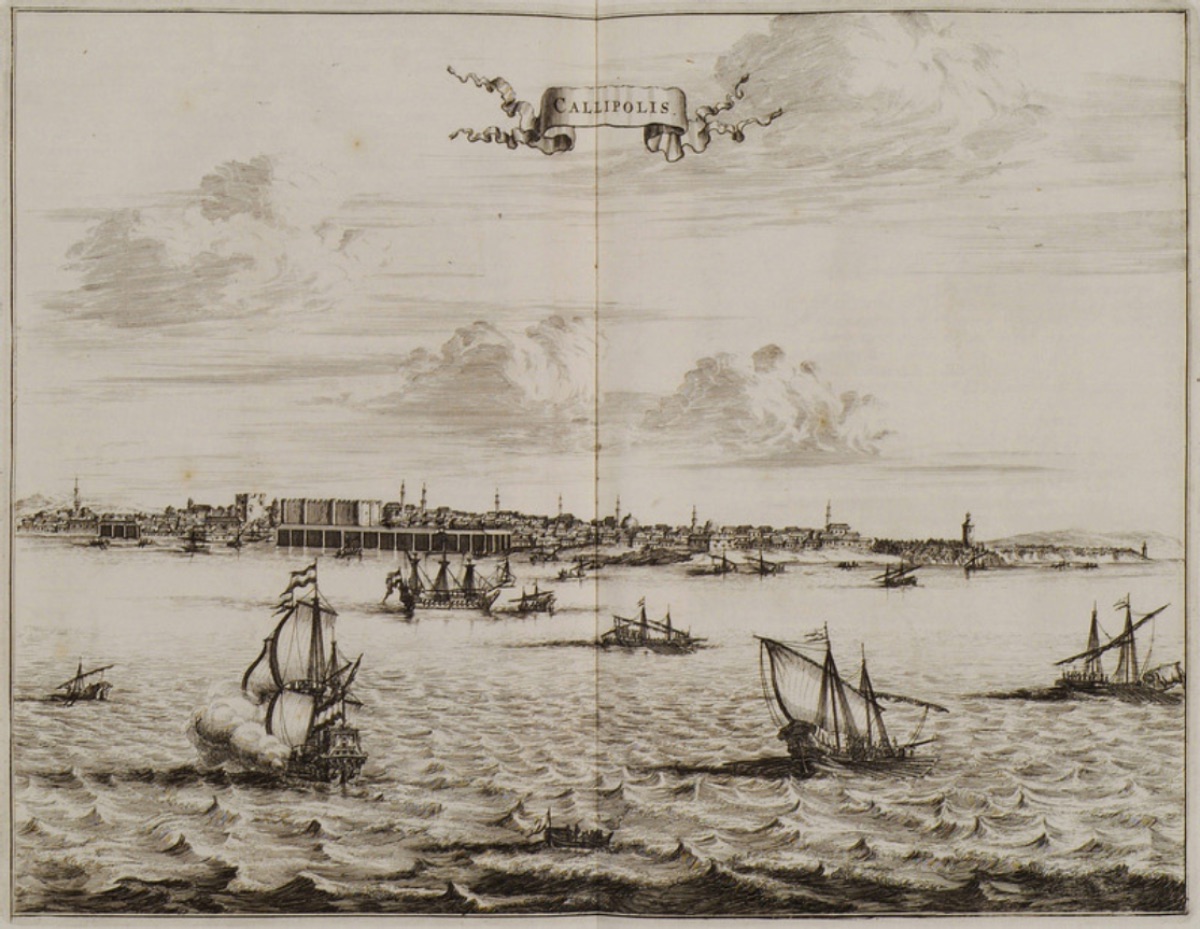
Gallipoli (1688, Olfert Dapper) The Castles of the Dardanelles (Çanakkale)
The new castle on the European side is currently called Rumeli Hisarı (Roumeli Inhgissar) by the Turks. The other castle on the Asian shore is called Anadolu Yeni Hisarı (Natoli-ingh-issar) in Turkish.
Both castles are also referred to as Yeni Hisar (Inghiissar), because the names of the other two old castles at the entrance of Propontis, the Sea of Marmara, are also Dardanell. The Turks call these castles Boghas (Boğaz), meaning channel. Both castles were built a few years ago by the 23rd sultan of the Turks, Mehmed IV.
Between Anadolu Hisarı and the Yenişehir (Janissiar) cape, there is a small village in the north called InhhiIssarkioi, meaning New Castle Village. There are 8 windmills side by side here. As in every part of Turkey, each mill has 8 blades. This might be why the bread in Turkey is not as white as our bread.
...
After passing these castles, one reaches the settlement of Gelibolu (Gallipoli)."