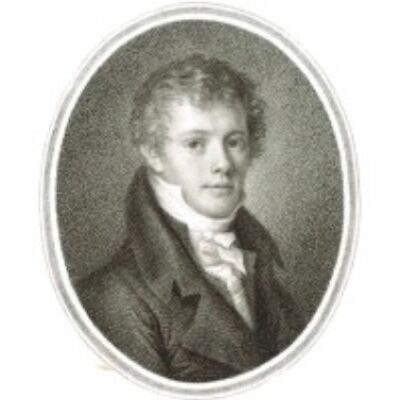
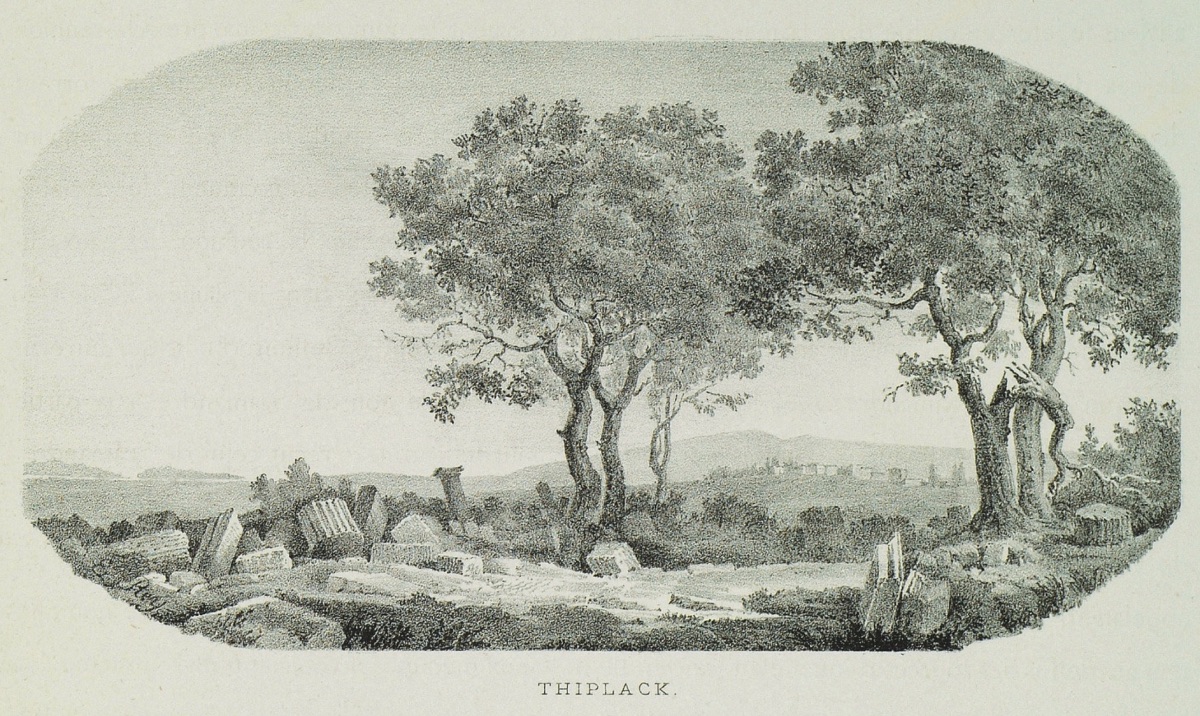
Dedelik with Relics Taken from Troy Near Çıplak Köyü (1867, Etienne Rey) Born in 1792 in Neu-Kusthof, within the present-day borders of Estonia, von Richter studied classical philology and Eastern languages at Heidelberg University. In 1808, he became a member of the most important German-Baltic education group of the time in Heidelberg and traveled to Egypt and Africa with Sven Frederik Lidman from 1815 onwards. In 1816, he embarked on a journey to Istanbul and Anatolia, during which he died in Izmir on August 13, 1816, at the age of twenty-four due to an illness. After his death, his letters were compiled and published by J. P. Gustav Ewers. In his travel impressions, von Richter is noted for his keen interest in ancient historical relics:
"After a few attempts, we made our way down to Mussakçı (Misakça, R.A) through the bushes and thorns on a rather difficult mountain. The suffocating weather had already signaled a downpour. I had witnessed very strong showers both before I arrived and after I got there. While eating in a house where we took shelter, I noticed the interesting attire of the beautiful women I had seen earlier in Apollonia (Lake Ulubat, R.A.). Poor peasant women generally wear men's clothing and walk around in trousers instead of skirts.
The village is located at the foot of the mountain; at the beginning of the large, fertile but unhealthy Tahir Plain, due to its marshes, where the Gönen River (Aespus) flows broadly and powerfully into the sea. Near the village, on a narrow elevation where the connection with the sea is cut off, there are two windmills. The vegetation in the fields and meadows is quite rich, the thistles are so large that it's difficult to pass even on horseback; the animals almost disappear among the grasses. The view of the amphitheater-shaped green mountains surrounding the wide plain and the Marmara from the Kyzikos peninsula is very beautiful. We crossed the river with some trepidation and arrived at the farm of Demotkia Ağa, where we were very hospitably received by the workers at midnight. We spent the night in a clean room surrounded by windows, but towards the morning, I felt cold.
Early in the morning (June 8), we set out towards Karaboa (Karabiga R.A), known as ancient Priapos. The plain gradually turns into a non-agricultural, marshy area, but it's full of herds of cattle and horses. Here, I encountered a Yörük (nomadic villagers) settlement made of branches and tents.
In Mussakçı (Misakça, R.A.), I saw gypsies living in tents and in Kazdağı (Ida), I saw Turkmens.
...
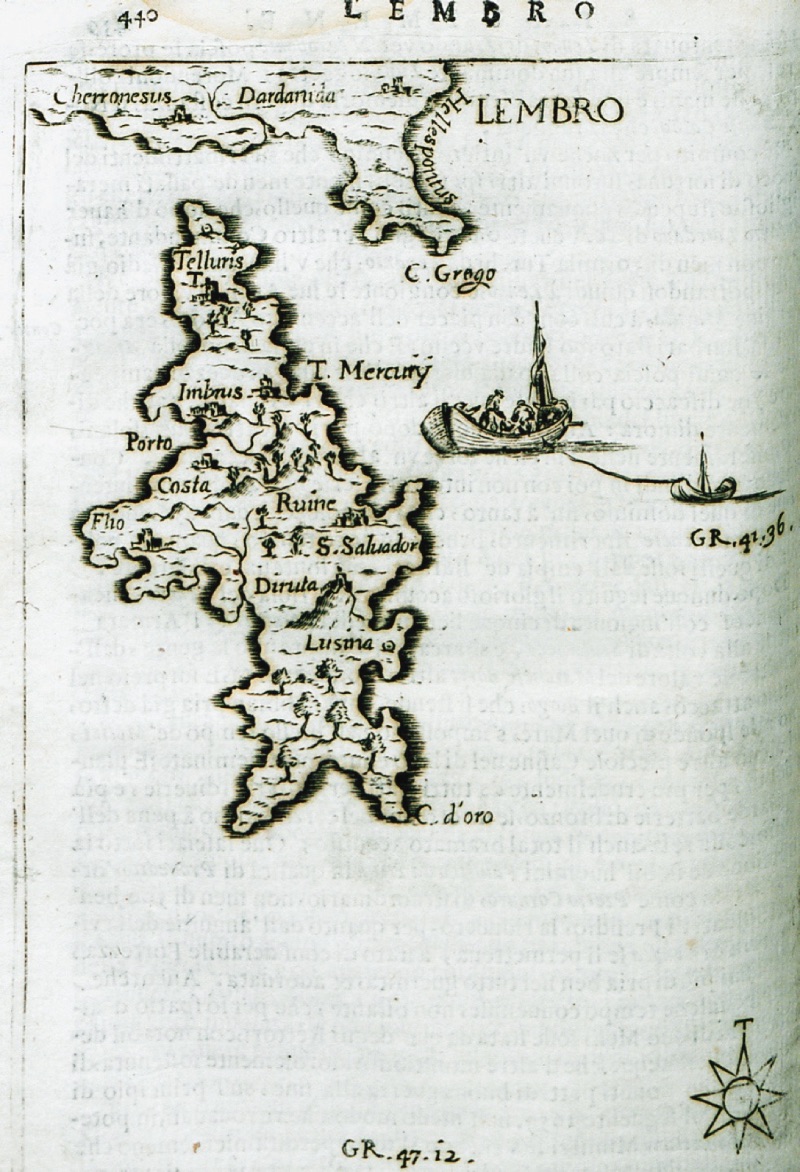
I crossed the bush-covered mountain on horseback and reached Ortlukca (Örtülüce ?, R.A), a small village where an entire house was given to me for lodging, as the sun was setting. However, the next day, to my surprise, I learned that while our guide was eating in my room, our two horses, the ones he and I were riding, had disappeared. Our guide said he searched for the horses until he was exhausted under the moonlight that night, but then went to sleep, hoping the horses, which might have wandered off on their own, would return in the morning. In the morning, he went out to search for the horses again, and after searching all the valleys and farms in vain, he was convinced that a rather cunning thief had stolen the horses during dinner. Meanwhile, I learned from the villagers that such incidents frequently occurred and that thieves took the horses to Rumili from the many small bays along the coast. Later, we were surprised to learn that many people we encountered on the road had experienced the same things. After the fruitless search efforts in the morning hours, our guide took the first horse to check a few nearby villages, and I took the other. Kirkor loaded my belongings onto a four-cornered cart pulled by two oxen, which we rented with great difficulty from the villagers, who were suspicious despite our offers of money and guarantees, fearing a scam or attack. Finally, someone who wanted to receive the money in advance took 10 Piaster (a currency used in the Mediterranean region and within Ottoman borders in the 19th century. In 1912, 1 Turkish piaster was worth 5.715 Marks. R.A) and slowly moved the ox cart. Gökçeada (1688, Francesco Pianceza)
In a small village called Çakırlı, I found an ancient piece in a well, possibly brought from Parium. After crossing the mountain, we reached a wide valley narrowing towards the sea. I went ahead on horseback and sat down to draw the aqueducts at the entrance of the old city of Parium, which the Turks call Kemer, possibly derived from the new Greeks' name Kamaris. Here, there are three arches partially made of large stones, and immediately below, the Turkish well is visible, and the surroundings of the ruins are covered with brushwood.
Kemer is a small town or a real village with a branch of the stream flowing on its left, a mountain on its right, and the sea extending to a valley in front...
...
In the streets of the settlement, many pieces of channeled columns can be seen, and one of them is patterned in the same way on three sides; as far as can be seen, the snakes deeply carved, instead of rising relief, deepen, and in the middle, if I'm not mistaken, there is a tripod. After filling my stomach with good fish, we went for a walk. To the northeast of Kemer, a mountain extends northward to the sea. There are two windmills on the nearby hills, and just below them is a small shipyard. The valley connects with the coast where the current settlement is located, providing transportation from behind the mountain. In this valley, there is a dry stream bed; it most likely flows from the front of Kemer to the sea during the winter months. On the two sides of the valley where these elevations are located, the old Parion is situated. If you start climbing from where the current settlement is, first, on the hill descending towards the sea, there is a structure resembling a tower with three walls, and among the brushwood, there are piles of ruin stones. Finally, at the far end, there is a similar four-cornered structure made of small stones. The walls are so firmly held together with mortar that, unable to remove even a single piece from the outside of the structure without damaging the walls, a corner and two walls were dismantled to gain entry; as a result, one-third of the structure and two walls remained suspended in the air. Since this structure has no entrance; as I often see in cisterns, the interior is lined with small stones tightly mortared and plastered with lime, I guess this is a water reservoir related to a covered waterway, as indicated by some foundations in the same direction. In my opinion, the absence of large stones throughout the structure and the fact that only the interior is deliberately made to be water-permeable demonstrate this.
Climbing over this mountain, I cross a small valley and reach the elevation where the windmills are located. This must be the acropolis, and a wall is visible continuing from the land side. It is protected by numerous towers from one harbor to the other; one made of particularly large stones has been very well preserved. From here, a wall is seen advancing towards a hill further ahead on the lower sea side. Below is the first windmill; above the wall is a semicircular recess; foundations protrude towards the hill among the brushwood. I think this structure is a theater. In the valley, roughly opposite here, a bridge seems to cross the dry stream, and further up, the foundation of a wall with a branch in the harbor is visible, and another one on the mountain on the other side. Above the old city, a flat, long valley extends with foundations and huge walls visible; the structure of the ruins indicates the presence of a stadium.
My poor Armenian had returned after searching in vain for the lost horses in Karabiga and other settlements (June 10). As a good person, I should give him all his money as if he had taken me to Çanakkale, so he could cover some of his losses. I was almost stuck in Kemer instead of Alania. There were no horses to rent, and you couldn't find a boat to Çanakkale for less than 130 Piaster. But luckily, I found a ship anchored there, going from Istanbul to Gelibolu, which would quickly take me across for 15 Piaster, even though the captain and crew didn't seem very reliable.
We immediately set sail, but unfortunately, the ships were initially good enough to row; later, the sails had to be opened. But a favorable wind did not blow for us; on the contrary, the wind pushed us backward every moment and sent the sea waves towards us, so much so that the entire ship was submerged. Despite having an umbrella and a cloak, I eventually got wet from below. The Anatolian mountains, or rather Mount Ida, were shining in the sun with their fresh green color and were very beautiful, but I couldn't enjoy the view out of impatience. Finally, zigzagging, we were dragged to Keçiburnu and Taşar hill, and it was said that the old Paisos settlement was on the hill as we passed. Our bad situation continued until the evening, and suddenly a favorable wind blew and brought us to the Gelibolu harbor; but right at the harbor entrance, it stopped again, and the ships were forced to row.
We found our guide named Pellegrini, a Jew, sitting on the dock with his long beard and European clothes. He immediately took us to our Çanakkale consul, Mr. Salomon Tarragona, who happened to be there. The consul treated me very well. I was placed with the former vice-consul Hacı Musa, and soon found myself in the comfort of an Eastern Jewish mansion, with a very attentive and respectful owner. In Kemer, I couldn't even find a loaf of bread before leaving; if a good traveler at the coffeehouse hadn't given me bread from his share to eat with coffee and onions, I would have been much hungrier. Here, however, I had a much better meal in the evening and a comfortable sleep.
In the city, which has a very important position in the Strait, known more for its traditions than its Sasian (?) factories, 16,000 people live.
After talking, I definitely wanted to return to Çanakkale with Mr. Tarragona, but there was an adverse wind. Therefore, I spent time buying a few medallions and visiting the castle said to have been built by the Genoese. The castle was in ruins and had two courtyards surrounded by walls and towers; it was also surrounded by a moat with a wall built in front. The four-cornered pool on the sea side was surrounded by strong walls and protected by a tower. A mosque was built on the embankment separating this pool from the harbor, and therefore the entry of boats was prohibited. On either side of the castle gate, there is a beautiful inscription engraved on white marble, but one half is placed upside down, and some words are missing in the middle. At the house of the Greek metropolitan, they showed me a very beautiful low-relief sculpture, which I drew. It depicts three women being led to an altar by a man, sitting in front of Pan with winged feet playing the flute. They are most likely being led to be sacrificed. Above all, there is a cave where two doves are seen.
Mr. Tarragona waited until noon to set off, then we joined the crowd, which included many Jewish women and the consul's children, and took our place at the back of the boat with a Sicilian merchant named Pasquale. Initially, there was a very favorable wind, but later the wind stopped in the strait; the helmsman fell asleep at the helm, with one hand in the tobacco pouch. The other Turkish sailors also lay down to rest after eating; with great effort and pleading, they would wake up and take to the oars. Once they made up their minds, they didn't start working immediately; one hand on the oar, the other on the pipe, they stirred the water as if stirring a soup bowl. They completely confirmed the prejudiced views about the people of Gelibolu, being both arrogant and lazy. Finally, a cool wind began to blow, but it stopped across from Çanakkale; it was impossible to get the rowers to move for the very short distance. Instead of working for half an hour, they preferred to spend the whole night across the harbor. Fortunately, the currents slowly drifted us forward, and after sunset, despite the beautiful shores of the Çanakkale Strait, we finally arrived at the harbor after a long, tedious journey.
After Gelibolu, we passed in front of a famous spring on the Thracian coast; called Kalo nero, meaning beautiful water. Then we crossed a valley called Galata, perhaps Aigos Potamos, and then another beautiful valley called Ilgar Stream appeared; from afar, it is shown with a series of large hills; it is said that the army commander's tent and the Sancak-ı Şerif were here. A little further on, at Akbaş cape, a beautiful tekke and the remains of the castle conquered by Süleyman Pasha are seen. Then we pass Eole portus and the hills on the mountain in the background, this hill, like many others on this coast, may be Enossema hill. Then the Rum village Eceabat (Madytus/Maito), opposite Çanakkale on the Asian coast, comes into view.
The Asian coast was much more beautiful, so I was very sorry that I couldn't travel to Çanakkale by land. First, Lapseki (Lampsakos) appears, advancing inward among gardens and vineyards. Then a much more beautiful place, Bergas, the old Perkote, with mountains covered with greenery in the background and the palace of King Merop appearing in the inland valley, quite far from the sea. Then we pass very close to Nağara Cape; the remains of two large hills where old Abydos was located are visible, and then a very beautiful tekke is seen under the cypresses by the sea.
First, with Mr. Tarragona and Pasqualle, we took a walk along the banks of the Rhodius, a very beautiful river with a large wooden bridge, flowing into the sea from the west of the castle. The river passes through a very beautiful meadow surrounded by large plane trees. From there, we passed through the gardens and went to Ahmed, who, according to the doctor's diagnosis, had been suffering from chronic wounds and nerve disorders for years. His rooms were very charming and beautiful, and his manners showed that he had close relations with the Franks.
Although I woke up early in the morning, our ship was ready at 9 o'clock, and we set sail. We constantly progressed close to the European side, as there was never a favorable wind, they had to row constantly, and they did so diligently; they were not lazy like the Turks in Gelibolu. The Thracian coast is steep and uncultivated; bare rocks are covered with weak grasses. We passed quite close to Sahan Castle(?). Then a valley with the Panasgia monastery came, and then the old castle Seddül Bahir on the European side, known as the king of the sea, appeared. On the opposite Asian coast, Kum Kale, and on the elevation beyond it, Yenişehir, the old Sigeion famous for its tombs, were visible. In the distance, the Rum settlement İntepe, the Dark Harbor, and Ajax's tomb were seen. From afar, Bozcaada (Tenedos) was visible.
Finally, we left Çanakkale and progressed along the barren Thracian coast, then turned towards the opposite Gökçeada (Imro, Imbros). First, we landed on the shore in front of a sandy elevation, but then we turned and passed it. There were low but cross sand and soil deposits extending towards the sea. These elevations, called Kefala, extend broadly to the northeast, enough to see the Thracian coasts. On the other side, there is a deep bay and a place with a few houses where ships from Thrace and Çanakkale dock. We arrived here after sunset. Besides us, there was a Turkish sailboat and some small open boats. Some boats came here from Yenişehir to fish. The place is surrounded by green mountains; in some places, shepherd fires are visible. These and the sailors from different groups gathered around many fires, the murmuring water of the fountain, and the phosphorescent reflection of the calm sea made the evening quite enjoyable. Shortly after, the moon also rose, enveloping the surroundings in a much more beautiful light.
When I woke up on the morning of June 15, our diligent sailors were rowing. We turned to a rather steep coast that gave the impression of chimneys (Cheese rocks. R.A), which I found very interesting because the surface was not clearly visible due to the cross lines at different heights towards the sea. I counted thirty regular stacked lines, the rocks seemed to resemble a structure from a distance. Shortly after, we docked at a small harbor at the foot of a rock where the ruins of Imbro castle were located. The interior and exterior of the structure were destroyed, but the walls were still standing; among them, there were a dozen solid ones, and I identified Byzantine inscriptions engraved on marble stones used in the walls...
...
Journey from Çanakkale to Pınarbaşı (Ilion), Old Istanbul (Alexandria Troas), and Behram:
At night, in foggy weather but with a not very strong favorable wind, we set sail. We reached Çanakkale (Dardanelles) an hour before noon, first rested and washed, and then went out to see the place named after the ancient Dardania. The city has at most 5000 inhabitants, among whom Jews seem to play an important role.
The fertile lands are well cultivated, and besides cereals, there are vegetables, fruits, grapes, and cotton.
In the evening, I went for a walk on the shore where consuls, circumcised and uncircumcised, meet, conduct their business, chat, and watch the ships coming and going.
Mr. Taragano had hired a guide with four horses for my Troy trip. The guide was accustomed to Europeans visiting this region and their ancient period research, and he knew all the ancient cities, roads, but especially the places with inscriptions very well. I was paying him six piasters per day for each horse (a European currency used extensively in the 19th century in Ottoman territories, worth about 2 Sterling today. R.A) and he would bring me back to Çanakkale.
We progressed in the mud with hidden canals in almost a dozen large and small swamps where the Sarıçay (Rhodius) flows into the strait, watering the fertile and cultivated lands. There is a long wooden bridge on the main branch of the river west of the city. Today, the entire land we passed with horses was densely planted with grain, and the harvest was being done, and the mountains were quite varied. Four hours away from Çanakkale, there is a village in the mountains with three names: Turks, as usual, call it Gavurköy because Greeks live there; they themselves have named it Erenköy; perhaps this name is a transformation of the old Ophrynion name where Hector is buried. Besides, it has a bad reputation as a den of robbers; according to what the consul told me, for this reason, it is also called İt Gelmez village, meaning a place where even a dog doesn't come, or a place where one cannot pass without being robbed.
The Russian consul has hired a Greek scribe here, the reason being that ships are forced to anchor under the village due to bad winds. He was not at home, but his wife hosted me; she offered eggs, grape juice, and coffee. In the room, as furniture and furnishings, there were many towels hanging and many beds and quilts leaning against the wall, showing the wealth of the house. Nearby, there is a church with a damaged relief figure with ivy wrapped around its head, visible at first glance. The structure is dark, and the figure is covered from below with a wall, and next to it is a four-cornered Corinthian column. In front of the church, there is a relief depicting a man holding a child's hand with his right hand, holding a book resembling a cross with his left hand, and above it is an unreadable inscription. In the distance, as usual, there are column pieces, door jambs with leaf patterns, and finally, a piece of a tomb inscription on the corner of a marble.
The village is surrounded by very beautiful vineyards and fields, and we were descending towards the fertile Dümrek (Thymbra) valley, surrounded by lower elevations. My guide took me to the old cemetery of Halileli village, whose name is likely derived from the Turkish Halil, which can trace its origin to the Greek Helios (sun god R.A.). A poor Turkish village.
In this place, there must have once been the Thymria Apollo temple... However, the channeled marble columns and cornices I saw, but at the same time, the granite columns seem unrelated to each other, meaning these remains do not belong to just one structure; but at the same time, it is not possible that these pieces were brought from far away. In my opinion, they all come from the same place. Many pieces were scattered around the god's house in the small village of Çıplak, and while going to this village, I had passed over the ruined bridge on the Dümrek (Thymbrius) stream and through the brush-covered elevation where the village of Çıplak is located. In this area of the Simois Plain (Dümrek Plain, R.A.), Homer mentions the well-built hilly Kallikone.
Behind the old cemetery area of Çıplak village, there is a field with many granite columns standing, some of which are upside down. In my opinion, this is not a cemetery. This must be the place Hammer (Purgstal) marked as Old Hisarlık and Villa Iliorum (Troy, R.A.) on his map..."