
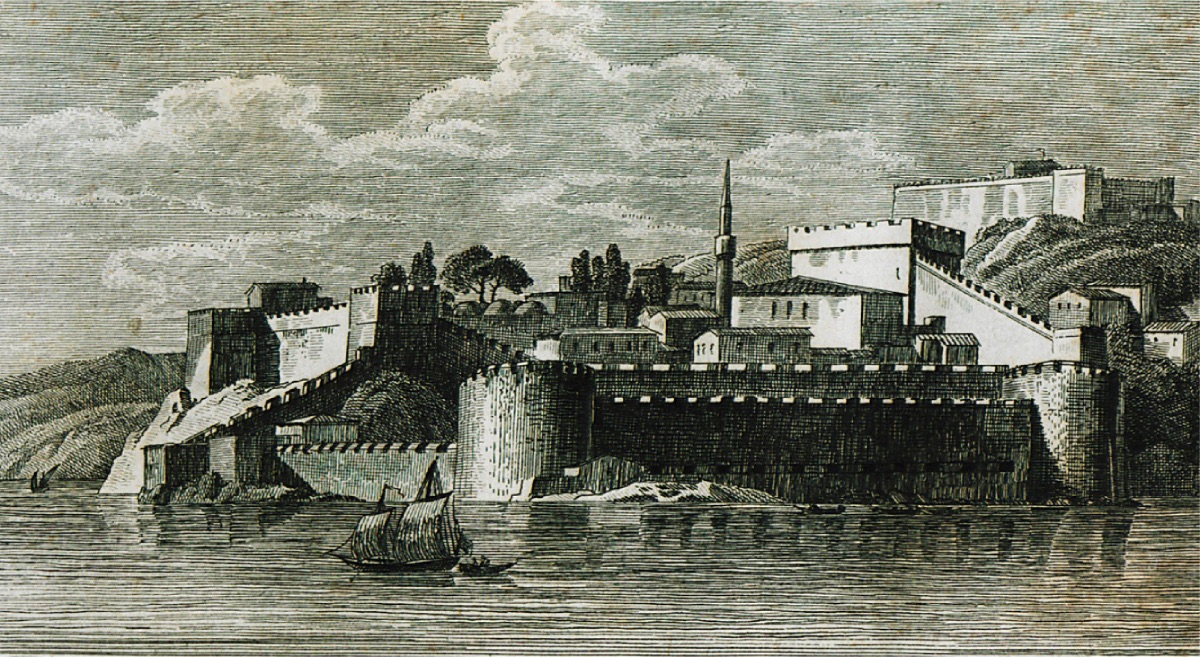
"We set sail towards the peninsula, passing the island of Lesbos, once visited by St. Paul. This is the first island captured by the Turks. Later, we reached Lectum, known as Baba Burnu, at the far end of the gulf. The town of Baba is famous for the knives and daggers produced there. I reached Bozcaada (Tenedos) and was told about a man named Hadımoğlu, famous for his wealth, who, due to the jealousy of some in the palace, was exiled from Istanbul (Constantinople) and had to build a fortress for himself. This place was ravaged by the Russians a few years ago in retaliation for the killing of a crew on their ships. Nearby, on the opposite shore, lies Troy, but although I approached the shore within a few miles, I did not see it as I could not get permission. Moving forward, we reached the promontory of Yenişehir (Sigian-Sigeion) at the mouth of the Dardanelles or Hellespont, with a European fortress on one side and an Asian fortress on the other. I observe that the Dardanelles narrows so much further down that I believe some English crew might be able to swim across. It is forbidden for English warships to pass here during peacetime. As we proceeded, it was quite windy, and all sails were set. But suddenly, an unexpectedly strong wind arose, making it difficult for the sailors to lower the sails, and thus the ship found itself in the midst of a storm. The wind rises so suddenly that it can turn from a very calm weather to a storm in an instant. The shores of the Dardanelles are very beautiful, and an Englishman might think himself on the River Thames. This entire coast is strongly defended with heavy artillery, with granite cannonballs on the coastal heights aimed at enemy ships. Later, I found myself in the Sea of Marmara, and finally, we reached Istanbul (Constantinople)."