
Not much is known about the life of William Knight, but it is known that he traveled independently and published his experiences. Knight came to Çanakkale in 1839 and published his experiences about the place in different years. It is believed that William Knight, who is known not to have traveled for diplomatic or military purposes, was an English nobleman who traveled independently for cultural purposes:
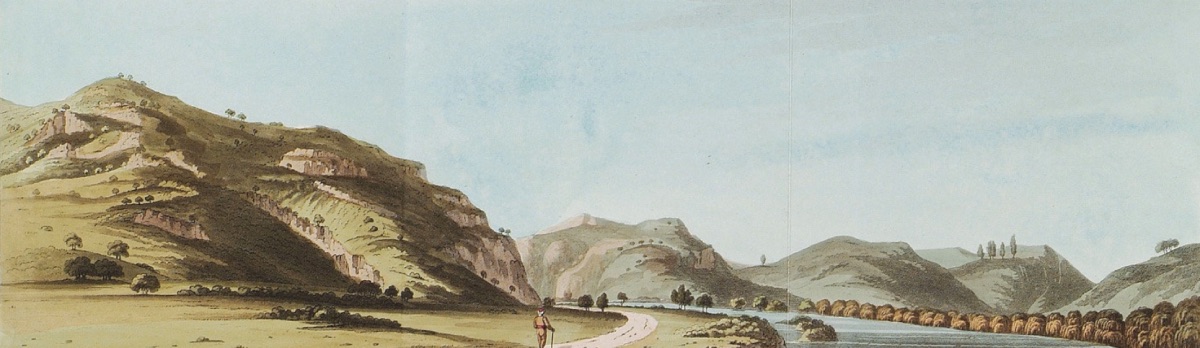
"We landed on the Asian shore before sunset. During our one-hour walk, hundreds of red-legged partridges were flying, and we saw many turtles. The Austrian sailors caught many of the latter and took them to the deck for dinner. Early the next morning (the etesian winds were still blowing), I decided to go to the town of Çanakkale (Tchanak Kaleh) on the Asian shore, about six miles from where we anchored, generally referred to as Sultanieh Kaleh, directly opposite Killid Bahr. The Çanakkale Strait (Hellespont) is only three-quarters of a mile wide between these two towns and fortresses. This is the narrowest part of the strait; the distance between the new fortress in Europe and Asia is four leagues, and the width from shore to shore is two miles. The name Tchanak Kaleh comes from the pottery in the town and also carries a similar title. There are six hundred soldiers and twenty cannons and eighteen stone cannons here. We passed under the fortress by boat and landed immediately below it. I will never forget the scene I saw. In a fire that occurred in the summer of 1836, many consulate buildings, the pasha's palace, a mosque, and several hundred houses were completely burned down. Twelve months after this event, the ruins were still standing. The minaret of the mosque stood like a long column, blackened all over by the effect of the fire, as if it were a witness to that event. Around it, tents were set up in corners where there was water, and necessary work was being done; there were so many goods inside that cheap shopping could be done. It is said that the goods belonging to the sultan in this part of the town will be rebuilt as an open space near the fortress for the military purposes of the officers. The general appearance of the square was quite remarkable. Here and there, piles of garbage could be seen, flags of some consulates in national colors; the city stretched out in the background, the fortress walls on the right, and the smoke of the potters on the left; we wandered among colorful tents. It was Wednesday, the day of the city market. Camels were lazily carrying all kinds of goods or kneeling to unload them somewhere...
I will never forget a person wandering in the crowd. His shoes were not typical of Easterners. The reason I mention him is that I want future travelers to know that this person is the grandson of someone who served as the British consul in Çanakkale for many years. The family is currently in a very difficult situation; few know the hospitality of the British in the past; that the Tarragona family was under the protection of the British flag, how well they treated the Franks in difficult times, and that a civil servant did this honorably and successfully. Very few people passing through Çanakkale know how this family once was and do nothing to correct this situation. Many feel responsible for helping this family in return for the kindness shown to their families. Lord Palmerston has pledged to give this family a thousand piastres every year...
The chief administrator in Çanakkale, the Pasha, usually resides in Çanakkale (Tschanak Kaleh) rather than in Kilit Bahr. The old fortress is stronger, but it has a flaw, which is the lack of sufficient accommodation for the soldiers. The barracks are half an hour away from the fortress. The Pasha does not reside here; he stays in a palace behind shops in a narrow street. For his harem, he prefers the healthier Killid Bahr on the European side. Their palace, when viewed, is adjacent to a fortress that resembles a heart. All Frank consuls reside in Tchanak Kaleh, except for the Englishman Bay Lander; unfortunately, his house has been destroyed by fire twice. Therefore, he also resides in the neighboring Erenköy (Erin-Keuy)... In March 1838, I visited Bay Lander in Erenköy (Erin-Keuy), where I was welcomed not only with generous hospitality but also with quite intellectual conversation...
Çanakkale (Tchanak Kaleh) is established on a plain, with the fortresses at the southernmost part of the settlement, overlooking the small rivers named Rhodius and Dardanus. To the north, the road passes through an open area cleared by fire. On the right is the British consulate with a suitable pier, and there are many shops facing the street, filled with pottery. On the left are many consulate buildings, on the right is the steamship office and a small mosque. As you proceed straight, the street widens, passing by a wine shop and the small cemetery of Hacı Cafer; this is the favorite place for those who want to swim. Next to the Russian consulate, on the left, is a series of windmills. There are also potters here and a large cemetery with a few cypress trees. There are no horsemen here or nearby. As you leave the city and draw a circle around Sarıçay (Rhodius), there are generally reed beds, with a few magnificent gardens that are quite wooded inside. The right bank of the river is surrounded by a wall to protect against floods in the winter months. The gardening work in this area was left by the Russians in 1832 for the benefit of Ibrahim Pasha after the battles of Homs and Konya. There are about two thousand houses in the town, generally made of wood and divided into neighborhoods. These are separated from each other as Jewish, Greek, Muslim, and Armenian. The main street is more beautiful, the houses here are uniform, clean, generally with open facades. Coffeehouses (cafeneh), barbers (behrberhs), or pastry shops (şekeljee) are the most noticeable. The air here is different from inside Çanakkale (Tschanak Kaleh), with little English influence; Cacoucho Ruso, the assistant (dragoman) of the British consul, has enough space for a small group. The entertainment life in the town is not enough to occupy travelers for a few days. However, the surroundings, the Plain of Troy, are visited by many. Caocoucho Russo, although not the best, is a good guide for a trip to Karamenderes (Scamender) and Dümrek Stream (Simois).
I stayed at his house for a few days; they treated me with great respect. I tasted the Turkish-style dinner, sat on the sofa or carpet, ate on a round tin tray instead of a mahogany wooden table, and at night slept on a bed on the floor, under the softest cotton Bursa sheets, covered with a red silk, gold-embroidered quilt. Thus, I slept more comfortably than the sultan, enjoying pilaf and dolma and many other delicious Turkish dishes. If not as comfortable as the sultan, I was more comfortable than his viziers. Although I did not see "Karagöz" or camel wrestling during the day, I spent my time walking the streets. I visited the mosque and synagogue; every Sunday evening at eight o'clock Frank time, I had an interesting conversation with Hacı Hasan Efendi, the head of the whirling dervishes at the "Tekke," and during the week, I tried the skills of a fortune-telling woman, known as the "hoca woman" or the wife of the harbor master. Sometimes I watched funeral ceremonies in the cemetery, trying to mingle with people of all classes. I visited many Jewish families. With the help of the consulate assistants (gragooman), I enjoyed the new game Tchelendron. I listened to almost endless tales of "The Pious and the Dervish and Where the Salt of the Sea Comes From"; I drank coffee, ate sweets, and smoked from the pipe, and saw how skillfully beautiful women smoked the hookah or how much they suffered to have their children vaccinated...
From above the roofs of Çanakkale, a dozen mosque minarets can be seen, each indicating where the mosques are. From the small, spiral galleries of the minarets, the imam calls the congregation to prayer five times a day. In the town, if I am not mistaken, there is a Greek church where the British consul, who was buried a few years ago, is located. Besides this, there is a small house where Christians worship. The Catholic priest Fumelli, who came here from Istanbul, started his duty here in the spring of 1838. His congregation is not large, about fifteen or sixteen people."